We've captured 1,083 MSE Supplies ads in ChatGPT and Google AI Overviews since Mar 30, 2026. None ran in the last 7 days. Most seen: “MSE Supplies Optical Profilometer Analytical Service”.

MSE SuppliesSponsored
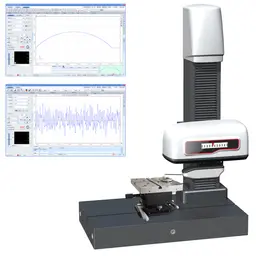
MSE Supplies Optical Profilometer Analytical Service
Overview An Optical Profilometer is an analytical tool used to measure and analyze the surface characteristics of materials with high precision. It employs non-contact optical techniques, typically using light interference or confocal microscopy, to generate detailed 3D surface images. This method allows for the accurate measurement of surface roughness, texture, and profile without damaging the sample. Optical profilometers are valuable in various fields, including materials science, semiconductor manufacturing, and precision engineering, providing crucial insights into surface quality and structural details essential for product development and quality control. Our Optical Profilometer can measure surface morphology, roughness, and height. Sample Requirement Samples should be flat, with a surface roughness of less than 300 μm. Sample size should not exceed 50 x 50 mm. Avoid testing powders; consideration will only be given for observing the surface morphology of piled powders in special cases. The powder should be fine, with an average particle diameter not exceeding 30 μm. * The price on our website is for reference only. * Note: Data analysis service is not included in the list prices. Highlights: High Quality Data, Competitive Pricing, Technical Support by Scientists. Analytical Service Minimum order requirement: $250 per order. A $200 handling fee will be applied if order is below $250. Please contact [email protected] for additional information and instructions on our Analytical Services program. Confirmation of the sample(s) requirements, SDS sheets and additional information is needed prior to processing the Analytical Service order. ***Please do not ship any samples without authorization from MSE Supplies*** | Optical Profilometer Analytical Service

MSE SuppliesSponsored
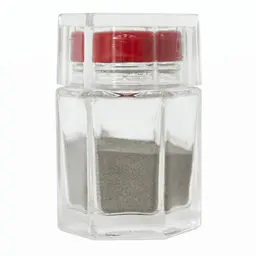
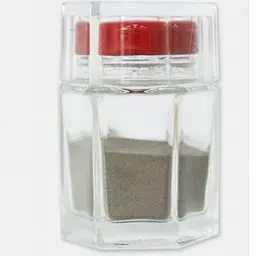
MSE PRO IN625 Inconel 625 Nickel Based Metal Powder for Additive Manufacturing (3D Printing) | 45~105 um
Product details: Inconel 625 additive manufacturing metal powder can be used to make Inconel 625 alloy by additive manufacturing or 3D printing. Inconel 625 is a nickel-based super alloy that possesses high strength properties and resistance to elevated temperatures. It also demonstrates impressive protection against corrosion and oxidation. Its ability to withstand high stress and a vast range of temperatures, both in and out of water, as well as being able to resist corrosion while being exposed to highly acidic environments makes Inconel 625 a fitting choice for nuclear and marine applications. SKU#: MP0170 (particle size: 0~25μm) MP0171 (particle size: 0~45μm) MP0172 (particle size: 15~45μm) MP0173 (particle size: 45~105μm) MP0174 (particle size: 75~180μm) Chemical Composition: Chemical Composition (wt%) of Inconel 625 Item Fe C Mn Si Ni Cr Mo V W Al In625 ≤5.0 ≤0.1 ≤0.5 ≤0.5 Bal. 20.0~23.0 8.0~10.0 - - ≤0.4 Mg Cu Ti Nb Zr P S Co - ≤0.07 ≤0.4 3.15~4.15 - ≤0.015 ≤0.015 ≤1.0 Oxygen≤400 ppm; Nitrogen≤300 ppm Particle Size (This size is D50): 0~25μm, 0~45μm, 15-45μm, 45~105μm, 75-180μm. (A variety of particle size metal powder can be customized upon request) Applications: Inconel 625 additive manufacturing metal powder can be used in laser/electron beam additive manufacturing (SLM/EBM), powder metallurgy (PM), spraying and other processes. Nickel-based metal powder is widely used in industrial and aviation turbines, petrochemical industry, nuclear reactors, laser cladding and other fields. Applicable Equipment: Powder can be used in various types of metal 3D printers, including Renishaw from the UK, EOS (EOSINT M series) from Germany, Concept Laser, 3D systems from the United States and many other laser melting equipment. Minimum Order Quantity: 1kg Note: The metal powder price varies due to the particle size range and the raw material price. | MSE PRO IN625 Inconel 625 Nickel Based Metal Powder for Additive Manufacturing (3D Printing) | 45~105 um, 45-105 um

MSE SuppliesSponsored
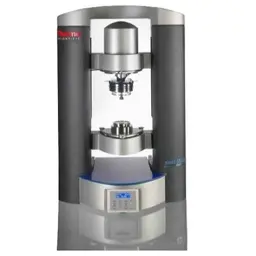
MSE Supplies Rheometer Analytical Service
Introduction to Rotational Rheometer Measurement Systems (Rotors): Coaxial Cylinder System (CC): Typically used for low-viscosity liquids but suitable for a wide range of fluids from low-viscosity to viscoelastic materials (e.g., from water-like samples to semi-solid creams). Easy sample loading with volume markers in the measurement cup. The large external surface area of the cup enables effective temperature control and prevents low surface tension fluids from spilling. Solvent evaporation can be minimized using special shields or evaporation covers. Frosted or grooved surfaces prevent wall slippage, and disposable cups and cylinders are available for testing hard-to-clean samples. Double Gap Measurement System (DG): According to ISO/WD 3219-2, this system uses a special rotor to maximize the contact surface area between the sample and the measurement system. Ideal for low-viscosity liquids like water, with high torque resolution. Advantages include a large surface area, excellent thermal stability, and minimal turbulence even at high shear rates. Cone-and-Plate Measurement System: Suitable for a wide range of fluids with minimal sample volume requirements. For dispersions, the maximum particle size must be limited (˂10 µm). Provides consistent shear conditions and is easy to clean. Rapid temperature adjustment ensures quick thermal equilibrium. Accessories like protective shields or solvent evaporation covers can be used to minimize solvent loss. Parallel Plate Measurement System: Recommended for testing pastes, gels, soft solids, or high-viscosity polymer melts, requiring relatively small sample volumes. Adjustable gap settings allow flexible measurement conditions. Suitable for high-viscosity samples (including uncrosslinked silicone), dispersions with large particle sizes, gels (with 3D superstructures), and soft solids (e.g., cheese, elastomers). Offers quick and easy cleaning. Testing Modes: Dynamic Viscosity Testing (Rotational Mode):Measures the fluid's viscosity under rotational motion. Modulus Testing (Oscillatory Mode):Determines the complex modulus (G*), storage modulus (elastic modulus, G’), loss modulus (viscous modulus, G’’), tanδ, and complex viscosity. Thixotropic Loop Test:Evaluates the thixotropic properties of materials, indicating their structural recovery capability. Structural Recovery Test:Assesses the material's ability to rebuild its structure after being disrupted. Creep Recovery Test:Measures deformation under stress and the recovery behavior once the stress is removed. Yield Stress Test:Determines the yield stress of the material. Sample Requirement Liquid Samples: Prepare 5–30 mL of the sample. For low-viscosity liquids, prepare a larger volume; for high-viscosity liquids, a smaller volume is sufficient. Solid Samples: Determine the appropriate solvent for dilution and specify the concentration. Solid Samples (Disk Form): Solid samples can be prepared as disks with specific dimensions, typically 20 mm or 35 mm in diameter and 1–3 mm in thickness, for testing in oscillatory mode. Multiple Tests: If testing the same sample in different modes, it is recommended to prepare multiple portions of the sample. As a general rule, liquid samples are standard. For semi-solid or solid samples, please notify in advance. The samples should have a certain degree of flowability. * The price on our website is for reference only. * Note: Data analysis service is not included in the list prices. Highlights: High Quality Data, Competitive Pricing, Technical Support by Scientists. Analytical Service Minimum order requirement: $250 per order. A $200 handling fee will be applied if order is below $250. Please contact [email protected] for additional information and instructions on our Analytical Services program. Confirmation of the sample(s) requirements, SDS sheets and additional information is needed prior to processing the Analytical Service order. ***Please do not ship any samples without authorization from MSE Supplies*** | Rheometer Analytical Service, Room temperature

MSE SuppliesSponsored
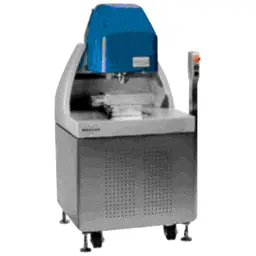
MSE PRO Profilometers for Optics Surface
MSE PRO™ Profilometers for Optics Surface MSE PRO™ Profilometers for Optics Surface is a versatile measurement solution designed for the optical lens industry. It can measure both surface roughness and profile in a single scan. The profilometer includes a dedicated software module for the measurement and analysis of large aspheric surfaces, making it ideal for optical lens applications. Additionally, this profilometer is suitable for measuring the profile and roughness of large, curved surfaces, such as bearings, artificial joints, precision molds, gears, and blades. This versatility makes it widely used in precision machining, automotive, bearings, machine tools, molds, precision hardware, and other industries. Product Features: Simultaneous profile and roughness parameter evaluation from a single scan. Superior precision, stability, and repeatability. Specialized aspheric optical software module. Advanced software analysis system with intelligent management. Built-in intelligent protection system for safe scanning. User-friendly manual control options. High-performance vibration isolation system for enhanced stability. MSE Supplies offers various optical metrology instruments. Please contact us for more information. Specifications: SKU# MA2229 Profile Measurement Measuring Range X 0~100 mm Z 0~300 mm Z1 ±6 mm (Optional: ±12 mm) Resolution 0.001 um Accuracy Z1 ≤ ± (0.5+0.03 H) μm (H, mm) Pt Pt ≤0.2 μm Standard Balt ≤ ± (1+R/20) μm (R, mm) Angle ≤ ±1' Moving Speed X 0~20 mm/s Z 0~20 mm/s Scanning Speed 0.05~5 mm/s X Straightness ≤0.15 μm/100 mm Measuring Force 0.5 mN, 0.75 mN, 1 mN, 2 mN, 3 mN (Adjustable) Roughness Measurement Ba Measurement Range Ra 0.012 μm ~ Ra 12.5 μm Accuracy Ra 0.012 μm~Ra 3.2 μm: ≤ ± (3 nm+2.0% A), A(Ra) μm Ra 3.201 μm~Ra 12.5 μm: ≤ ± (3 nm+3.5% A), A (Ra) μm Repeatability(1σ) 18 ≤ 1 nm Measurement Residual Rq ≤ 3 nm Filter Gaussian filter, 2RC filter, zero phase filter Sampling Length 0.008, 0.08, 0.25, 0.8, 2.5, 8.0 or 25 mm Selectable Evaluation Length Auto calculation Size (L×W×H) 600×350×890 (mm) Weight 195 kg | MSE PRO Profilometers for Optics Surface

MSE SuppliesSponsored
IN738LC Inconel 738 Nickel Based Metal Powder for Additive Manufacturing (3D Printing) | 45~105 um | MSE PRO
MSE PRO™ IN738LC Inconel 738 Nickel Based Metal Powder for Additive Manufacturing (3D Printing) IN738LC (also commonly known as Inconel 738) powder is based on the nickel-based superalloy IN738LC. Its formulation focuses on providing exceptional high-temperature strength, oxidation resistance, and creep resistance, making it ideal for demanding applications in extreme environments. Designed for AM techniques such as selective laser melting (SLM) and direct metal laser sintering (DMLS), IN738LC powder enables the production of complex and high-performance components. The composition of the powder, which includes nickel, chromium, cobalt, and other alloying elements, ensures excellent mechanical properties and superior resistance to corrosion and oxidation at elevated temperatures. IN738LC is more suitable than Hastelloy X to used in gas turbine engine components, such as turbine blades and vanes, where high-temperature strength and creep resistance are crucial. It finds extensive use in industries such as aerospace, power generation, where components must endure extreme conditions. By harnessing the advantages of AM, IN738LC powder allows for the creation of intricate geometries with precise repeatability, providing design flexibility, and optimizing production efficiency. SKU#: MP0185 (particle size 0~25um) MP0186 (particle size 0~45um) MP0187 (particle size 15~45um) MP0188 (particle size 45~105um) MP0189 (particle size 75~180um) Chemical Composition: Chemical Composition (wt%) Item Fe C Mn Si Ni Cr Mo V W Al In738LC ≤0.1 0.09-0.13 ≤0.35 ≤0.35 Bal. 15.5-16.5 1.5-3.0 - 2.4-3.0 3.2-3.7 Mg Cu Ti Nb Ta P S Co ≤0.01 - 3.0-3.5 0.5-1.1 1.5-2.0 ≤0.015 ≤0.015 8.0-10.0 Oxygen≤400 ppm; Nitrogen≤300 ppm Particle Size (This size is D50): 0-25μm, 0-45μm, 15-45μm, 15-53μm, 45-150μm. (A variety of particle size metal powder can be customized upon request) Applications: Powder can be used in laser/electron beam additive manufacturing (SLM/EBM), powder metallurgy (PM), spraying and other processes. Nickel-based metal powder is widely used in industrial and aviation turbines, petrochemical industry, nuclear reactors, laser cladding and other fields. Applicable Equipment: Powder can be used in various types of metal 3D printers, including Renishaw from the UK, EOS (EOSINT M series) from Germany, Concept Laser, 3D systems from the United States and many other laser melting equipment. Minimum Order Quantity: 1kg | MSE PRO IN738LC Inconel 738 Nickel Based Metal Powder for Additive Manufacturing (3D Printing) | 45~105 um, 45-105 um

MSE SuppliesSponsored
MSE PRO IN738LC Inconel 738 Nickel Based Metal Powder for Additive Manufacturing (3D Printing) | 15~45 um
MSE PRO™ IN738LC Inconel 738 Nickel Based Metal Powder for Additive Manufacturing (3D Printing) IN738LC (also commonly known as Inconel 738) powder is based on the nickel-based superalloy IN738LC. Its formulation focuses on providing exceptional high-temperature strength, oxidation resistance, and creep resistance, making it ideal for demanding applications in extreme environments. Designed for AM techniques such as selective laser melting (SLM) and direct metal laser sintering (DMLS), IN738LC powder enables the production of complex and high-performance components. The composition of the powder, which includes nickel, chromium, cobalt, and other alloying elements, ensures excellent mechanical properties and superior resistance to corrosion and oxidation at elevated temperatures. IN738LC is more suitable than Hastelloy X to used in gas turbine engine components, such as turbine blades and vanes, where high-temperature strength and creep resistance are crucial. It finds extensive use in industries such as aerospace, power generation, where components must endure extreme conditions. By harnessing the advantages of AM, IN738LC powder allows for the creation of intricate geometries with precise repeatability, providing design flexibility, and optimizing production efficiency. SKU#: MP0185 (particle size 0~25um) MP0186 (particle size 0~45um) MP0187 (particle size 15~45um) MP0188 (particle size 45~105um) MP0189 (particle size 75~180um) Chemical Composition: Chemical Composition (wt%) Item Fe C Mn Si Ni Cr Mo V W Al In738LC ≤0.1 0.09-0.13 ≤0.35 ≤0.35 Bal. 15.5-16.5 1.5-3.0 - 2.4-3.0 3.2-3.7 Mg Cu Ti Nb Ta P S Co ≤0.01 - 3.0-3.5 0.5-1.1 1.5-2.0 ≤0.015 ≤0.015 8.0-10.0 Oxygen≤400 ppm; Nitrogen≤300 ppm Particle Size (This size is D50): 0-25μm, 0-45μm, 15-45μm, 15-53μm, 45-150μm. (A variety of particle size metal powder can be customized upon request) Applications: Powder can be used in laser/electron beam additive manufacturing (SLM/EBM), powder metallurgy (PM), spraying and other processes. Nickel-based metal powder is widely used in industrial and aviation turbines, petrochemical industry, nuclear reactors, laser cladding and other fields. Applicable Equipment: Powder can be used in various types of metal 3D printers, including Renishaw from the UK, EOS (EOSINT M series) from Germany, Concept Laser, 3D systems from the United States and many other laser melting equipment. Minimum Order Quantity: 1kg | MSE PRO IN738LC Inconel 738 Nickel Based Metal Powder for Additive Manufacturing (3D Printing) | 15~45 um, 15-45 um

MSE SuppliesSponsored
MSE Supplies Coordinate Measuring Machine (CMM) Analytical Service
Overview A Coordinate Measuring Machine (CMM) is a precision instrument used to measure the physical geometries of an object by determining its coordinates along the X, Y, and Z axes. Using a probe that touches the surface of the object or a non-contact sensor, the CMM captures precise data points to create accurate measurements of size, shape, and position. It is commonly used in manufacturing, engineering, and quality control to ensure components meet design specifications, verify tolerances, and produce detailed 3D models. CMMs are essential for high-precision applications, such as in aerospace, automotive, and tool manufacturing. Our Coordinate Measuring Machine (CMM) can test various geometric properties, critical for ensuring precision in manufactured components. Key properties include: Dimensional Accuracy: Measures exact dimensions (length, width, height) of parts to verify compliance with specifications. Flatness and Parallelism: Assesses the flatness of surfaces and the parallelism between surfaces or features. Perpendicularity and Angularity: Checks if features are perpendicular or at specified angles relative to other surfaces. Surface Contour and Profile: Evaluates the contour or profile of complex surfaces, such as curves and arcs. Hole and Cylinder Properties: Measures hole diameter, depth, roundness, and cylinder straightness. Position Tolerance: Determines the precise position of features relative to a defined coordinate system. These measurements are essential for quality control, ensuring components meet design and tolerance requirements in industries like automotive, aerospace, and precision engineering Sample Requirement We only accept bulk samples, and the sample must be completely clean and free of contamination. The sample dimensions should be between 30 to 150 mm in length, width, and height. Direct engineering drawings can be created from the sample measurements, and it can be used to test surface parallelism and hole depth. For hole measurements, the diameter should be no less than 2 mm. The instrument we used is: Miracle NC6105 * The price on our website is for reference only. * Note: Data analysis service is not included in the list prices. Highlights: High Quality Data, Competitive Pricing, Technical Support by Scientists. Analytical Service Minimum order requirement: $250 per order. A $200 handling fee will be applied if order is below $250. Please contact [email protected] for additional information and instructions on our Analytical Services program. Confirmation of the sample(s) requirements, SDS sheets and additional information is needed prior to processing the Analytical Service order. ***Please do not ship any samples without authorization from MSE Supplies*** | Coordinate Measuring Machine (CMM) Analytical Service

MSE SuppliesSponsored
MSE Supplies In-Situ Scanning Electron Microscopy (SEM) Analytical Service
Overview In-situ scanning electron microscopy (SEM) is an electron microscopy technique that allows real-time observation and analysis of samples under in-situ conditions, such as temperature changes, stretching, and compression. By collecting and analyzing various types of information during in-situ experiments, this technique enables the study of the sample's microscopic morphology, composition, and crystal orientation, as well as its macroscopic properties, such as mechanical and thermodynamic characteristics. It is primarily applied in fields such as materials science, nanotechnology, and biological sciences. In-situ testing under tensile, compressive, and variable temperature conditions is available. Currently, the available temperature range extends from a minimum of -180℃ to a maximum of 1500℃. * Note: Data analysis service is not included in the list prices. Highlights: High Quality Data, Competitive Pricing, Technical Support by Scientists. Note: The listed price is for reference only. Please request a quote for the final pricing. Analytical Service Minimum order requirement: $250 per order. A $200 handling fee will be applied if order is below $250. Please contact [email protected] for additional information and instructions on our Analytical Services program. Confirmation of the sample(s) requirements, SDS sheets and additional information is needed prior to processing the Analytical Service order. ***Please do not ship any samples without authorization from MSE Supplies*** | In-Situ Scanning Electron Microscopy (SEM) Analytical Service, Compressive Mode

MSE SuppliesSponsored
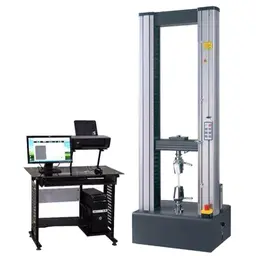
MSE Supplies Electronic Universal Testing Analytical Service
Overview The electronic universal testing machine can test various mechanical properties such as tensile, compressive, bending, and shear strength for both metallic and non-metallic materials. It integrates control, measurement, and operation into a single structure, incorporating advanced contemporary technologies. It offers high precision, a wide speed adjustment range, compact structure, convenient operation, and stable performance. It is widely used across industries such as metals, non-metals, composite materials, pharmaceuticals, food, wood, copper, aluminum, wires and cables, paper, plastics, films, rubber, textiles, and aerospace, enabling the testing of various mechanical performance indicators. Sample Requirements Tensile Testing: Metal Samples: It is recommended to follow the national standard GB/T 228.1-2010. For other samples, the parallel section should be >20mm, with a length-to-width ratio of approximately 5:1, and a thickness greater than 1mm. Non-Metal Samples: For plastics, sample preparation can be done according to the national standard GB/T 1040. For other samples, the parallel section should be >20mm, with a length-to-width ratio of approximately 5:1, and a thickness greater than 1mm. Compression Testing: Metal Samples: It is recommended to follow the national standard GB/T 7314-2017. For other samples, the height should be 1-50mm, the diameter should be 60mm, with no specific requirements for thickness or width. Shear Testing: Refer to the relevant national standards, such as GB/T 7124-2008, or discuss specific sample dimensions for testing. Puncture Testing: Refer to the relevant national standards, such as GB/T 10004-2008, or discuss specific sample dimensions for testing. Peel Testing: Refer to the relevant national standards, such as GB/T 2792-2014, or discuss specific sample dimensions for testing. General Notes: Each sample type should generally include multiple specimens to account for potential testing inconsistencies or individual sample defects. Providing additional specimens is advised to ensure reliable results. * The price on our website is for reference only. * Note: Data analysis service is not included in the list prices. Highlights: High Quality Data, Competitive Pricing, Technical Support by Scientists. Analytical Service Minimum order requirement: $250 per order. A $200 handling fee will be applied if order is below $250. Please contact [email protected] for additional information and instructions on our Analytical Services program. Confirmation of the sample(s) requirements, SDS sheets and additional information is needed prior to processing the Analytical Service order. ***Please do not ship any samples without authorization from MSE Supplies*** | Electronic Universal Testing Analytical Service

MSE SuppliesSponsored
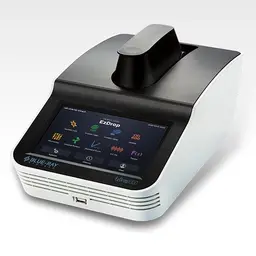
Blue-Ray Biotech Blue-Ray EzDrop 1000 Micro-Volume Spectrophotometer
Blue-Ray EzDrop 1000 Micro-Volume Spectrophotometer Buy Blue-Ray products from MSE Supplies at the best value. The EzDrop 1000 Micro-Volume UV/Vis Spectrophotometer is designed to accelerate your research by providing fast and reliable results. Capable of measuring sample concentrations in just 3 seconds, the EzDrop 1000 covers a dynamic full-spectrum detection range of 190-1000 nm. Its sample window, treated with Nano hydrophobic coating, ensures accurate and reproducible measurements, making it an ideal choice for various applications. Fast Results in 3 Seconds: Speedy sample quantification with an adjustable pathlength selector. High Accuracy: The coefficient of variation (CV) of absorbance is less than 1%, ensuring consistent results. Versatile Data Management: Compatible for both standalone operation and PC connectivity for flexible data handling. Comprehensive Operation: Built-in functions allow measurements of nucleic acids, proteins, cells, and more, with simple touch-button controls. Convenient Design: Automated measuring features and a built-in assist light enhance user experience, minimizing placement errors. Quality Assurance: Nano hydrophobic coating on the sample window promotes the formation of a proper sample column, while the replaceable window system reduces the risk of contamination. Durability: The cushioned detection arm minimizes experimental errors by reducing impact during measurements. MSE Supplies offers a variety of Spectrophotometers. Please contact us for more information. Specifications: Minimum Sample Volume 1 µL Pathlength 0.5 mm / 0.05 mm Light Source Xenon flash lamp Detector Type 2048 element CMOS Wavelength Range 190 - 1000 nm Wavelength Accuracy +/- 1.0 nm Spectral Resolution 1.5 nm (FWHM at Hg 253.7 nm) Absorbance Precision Raw: 0.0015 A (0.5 mm); 0.03 A (1 cm equivalent) Absorbance Range (1 cm equivalent) 0.04 - 400 A Absorbance Accuracy 1.5% at 1.0 A at 300 nm Detection Range dsDNA: 2 - 20000 ng/µL; BSA: 0.06- 600 mg/mL Measurement Time < 3 seconds Operating System Custom Linux based OS PC Software Requirement Windows® 7, 10 and 11, 64 bit Display 7” touch screen, 1280*800 high-definition color display Connectivity USB-A port x1 (Data output); USB-B port x1 (PC connection) Footprint Dimensions (W x D x H) 206 x 333 x 166 mm (8.1 x 13.1 x 6.5 In.) Weight 3.3 kg (7.3 lbs.) Glove Compatibility All common lab gloves Internal Storage 32 GB flash memory Operating Voltage Input: AC 100-240 V, 50/60 Hz; Output: DC 24 V, 2.08 A Certifications CE | Blue-Ray EzDrop 1000 Micro-Volume Spectrophotometer, 3 years and 6 months

MSE SuppliesSponsored
MSE PRO LDT261TA-50 Ball Screw Ball Screw Motorized Liner Translation stage
MSE PRO LDT261TA-50 Ball Screw Ball Screw Motorized Liner Translation stage MSE offers a wide range of Optical Positioning & Optomechanical Components for R&D applications. Please visit our collection page to explore available products. Specification SKU OP0070293 Model LDT261TA-50 Structure Description Travel Range 50mm Table Size 90*125mm Lead Screw Specification Ball Screw (Lead 1mm) Guide Rails Precision Crossed Roller Guide Stepper Moto 42 Stepper motor Main Material Aluminum Alloy Surface Treatment Anodized Black Load Capacity | MSE PRO LDT261TA-50 Ball Screw Ball Screw Motorized Liner Translation stage

MSE SuppliesSponsored
IN718 Inconel 718 Nickel Based Metal Powder for Additive Manufacturing (3D Printing) | 0~25 um | MSE PRO
Product details: IN718 Inconel 718 additive manufacturing metal powder can be used to make Inconel 718 alloys by additive manufacturing or 3D printing. The Alloy Nickel Inconel 718 is a nickel-chromium alloy with high strength and corrosion resistance. It is used at temperatures ranging from -423° to 1300°F (-253° to 705°C). As an age-hardenable alloy, the alloy Nickel Inconel 718 can be readily fabricated in very complex parts, and its welding characteristics are also outstanding. It also has good tensile, fatigue, creep, and rupture strength, which combined with easy fabrication and corrosion resistance.Due to its combination of properties, the Nickel Inconel 718 is used for a wide range of applications, such as liquid-fueled rockets, rings, and casings, various formed sheet metal parts for aircraft and land-based gas turbine engines, cryogenic tankage, and for fasteners and instrumentation parts. SKU#: MP0180 (particle size 0~25um) MP0181 (particle size 0~45um) MP0182 (particle size 15~45um) MP0183 (particle size 45~105um) MP0184 (particle size 75~180um) Chemical Composition: Chemical Composition (wt%) of Inconel 718 Item Fe C Mn Si Ni Cr Mo V W Al In718 Bal. ≤0.08 ≤0.35 ≤0.35 50.0~55.0 17.0~21.0 2.8~3.3 - - 0.2~0.8 Mg Cu Ti Nb Zr P S Co ≤0.01 ≤0.3 0.65~1.15 4.75~5.5 - ≤0.015 ≤0.015 ≤1.0 Oxygen≤400 ppm; Nitrogen≤300 ppm Particle Size (This size is D50): | MSE PRO IN718 Inconel 718 Nickel Based Metal Powder for Additive Manufacturing (3D Printing) | 0~25 um, 0-25 um

MSE SuppliesSponsored
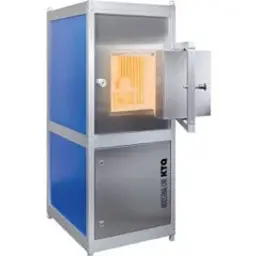
KITTEC KTQ 5-1700 INDUSTRIAL-LINE MODEL SERIES KTQ SINTERING KILNS, UP TO 1,800°C
KITTEC KTQ 5 - 1700 INDUSTRIAL-LINE MODEL SERIES KTQ SINTERING KILNS, UP TO 1,800°C The KTQ model series developed for you is the result of decades of experience in industrial kiln construction. Our atmospheric sintering kiln for demanding thermal processes combines well-tried technology and innovative components. With chamber volumes of 5 l to 120 l, the KTQ model series covers the individual requirements of sintering kilns for your demanding thermal processes up to 1,800°C. By customer request, the system can be equipped with automatic exhaust flap control, which is freely programmable by the operator within the temperature range of < 800°C. Programming and process gas control take place using the well-tried, self-developed input system via an HMI or an industrial controller.Furthermore, an air supply system with and without air preheating, a process gas regulator or fibre-free insulation is optionally available.The heating elements made from molybdenum disilicide or SiC with the optimised arrangement are the guarantee of uniform chamber temperatures and gas emission-free sintering. All heating elements are connected in parallel, meaning that in the event of an element break, only the affected one fails and the remaining ones continue to operate. Their symmetrical wiring and ease of access make quick replacement easier. Features of model series KTQ: Two-sided heating SiC or molybdenum disilicide-heated kiln chamber Heating elements with optimised arrangement Very fast ramp rate and fast cooling Fail-safe sintering process by means of parallel connection Compact TC 707 program controller for firing curves with up to 99 segments and program storage locations. Solid brick base Universal loading options Stable frame with 4 crane eyelets (not with KTQ 5) KTQ 5 models are constructed as table-top models. Specifications: Model KTQ 5 - 1700 Form Chamber Kiln Firing chamber width [mm] 150 Firing chamber depth [mm] 160 Firing chamber height [mm] 200 Volume [l] 5 External width [mm] 750 External depth [mm] 530 External height including base [mm] 700 Max. temperature [°C] 1700 Voltage [V] 400 3N~ Weight [kg] 200 | KTQ 5-1700 INDUSTRIAL-LINE MODEL SERIES KTQ SINTERING KILNS, UP TO 1,800°C

MSE SuppliesSponsored
KITTEC KTQ 40-1600 INDUSTRIAL-LINE MODEL SERIES KTQ SINTERING KILNS, UP TO 1,800°C
KITTEC KTQ 40 - 1600 INDUSTRIAL-LINE MODEL SERIES KTQ SINTERING KILNS, UP TO 1,800°C The KTQ model series developed for you is the result of decades of experience in industrial kiln construction. Our atmospheric sintering kiln for demanding thermal processes combines well-tried technology and innovative components. With chamber volumes of 5 l to 120 l, the KTQ model series covers the individual requirements of sintering kilns for your demanding thermal processes up to 1,800°C. By customer request, the system can be equipped with automatic exhaust flap control, which is freely programmable by the operator within the temperature range of < 800°C. Programming and process gas control take place using the well-tried, self-developed input system via an HMI or an industrial controller.Furthermore, an air supply system with and without air preheating, a process gas regulator or fibre-free insulation is optionally available.The heating elements made from molybdenum disilicide or SiC with the optimised arrangement are the guarantee of uniform chamber temperatures and gas emission-free sintering. All heating elements are connected in parallel, meaning that in the event of an element break, only the affected one fails and the remaining ones continue to operate. Their symmetrical wiring and ease of access make quick replacement easier. Features of model series KTQ: Two-sided heating SiC or molybdenum disilicide-heated kiln chamber Heating elements with optimised arrangement Very fast ramp rate and fast cooling Fail-safe sintering process by means of parallel connection Compact TC 707 program controller for firing curves with up to 99 segments and program storage locations. Solid brick base Universal loading options Stable frame with 4 crane eyelets (not with KTQ 5) KTQ 5 models are constructed as table-top models. Specifications: Model KTQ40-1600 Form Chamber Kiln Firing chamber width [mm] 300 Firing chamber depth [mm] 400 Firing chamber height [mm] 360 Volume [l] 40 External width [mm] 680 External depth [mm] 930 External height including base [mm] 1750 Max. temperature [°C] 1600 Voltage [V] 400 3N~ Weight [kg] 370 | KTQ 40-1600 INDUSTRIAL-LINE MODEL SERIES KTQ SINTERING KILNS, UP TO 1,800°C

MSE SuppliesSponsored
KITTEC KTQ 5-1800 INDUSTRIAL-LINE MODEL SERIES KTQ SINTERING KILNS, UP TO 1,800°C

MSE SuppliesSponsored
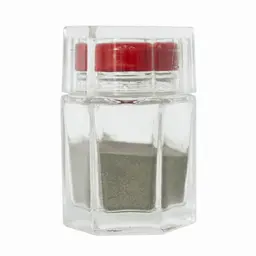
MSE PRO IN738LC Inconel 738 Nickel Based Metal Powder for Additive Manufacturing (3D Printing) | 0~25 um
MSE PRO™ IN738LC Inconel 738 Nickel Based Metal Powder for Additive Manufacturing (3D Printing) IN738LC (also commonly known as Inconel 738) powder is based on the nickel-based superalloy IN738LC. Its formulation focuses on providing exceptional high-temperature strength, oxidation resistance, and creep resistance, making it ideal for demanding applications in extreme environments. Designed for AM techniques such as selective laser melting (SLM) and direct metal laser sintering (DMLS), IN738LC powder enables the production of complex and high-performance components. The composition of the powder, which includes nickel, chromium, cobalt, and other alloying elements, ensures excellent mechanical properties and superior resistance to corrosion and oxidation at elevated temperatures. IN738LC is more suitable than Hastelloy X to used in gas turbine engine components, such as turbine blades and vanes, where high-temperature strength and creep resistance are crucial. It finds extensive use in industries such as aerospace, power generation, where components must endure extreme conditions. By harnessing the advantages of AM, IN738LC powder allows for the creation of intricate geometries with precise repeatability, providing design flexibility, and optimizing production efficiency. SKU#: MP0185 (particle size 0~25um) MP0186 (particle size 0~45um) MP0187 (particle size 15~45um) MP0188 (particle size 45~105um) MP0189 (particle size 75~180um) Chemical Composition: Chemical Composition (wt%) Item Fe C Mn Si Ni Cr Mo V W Al In738LC ≤0.1 0.09-0.13 ≤0.35 ≤0.35 Bal. 15.5-16.5 1.5-3.0 - 2.4-3.0 3.2-3.7 Mg Cu Ti Nb Ta P S Co ≤0.01 - 3.0-3.5 0.5-1.1 1.5-2.0 ≤0.015 ≤0.015 8.0-10.0 Oxygen≤400 ppm; Nitrogen≤300 ppm Particle Size (This size is D50): 0-25μm, 0-45μm, 15-45μm, 15-53μm, 45-150μm. (A variety of particle size metal powder can be customized upon request) Applications: Powder can be used in laser/electron beam additive manufacturing (SLM/EBM), powder metallurgy (PM), spraying and other processes. Nickel-based metal powder is widely used in industrial and aviation turbines, petrochemical industry, nuclear reactors, laser cladding and other fields. Applicable Equipment: Powder can be used in various types of metal 3D printers, including Renishaw from the UK, EOS (EOSINT M series) from Germany, Concept Laser, 3D systems from the United States and many other laser melting equipment. Minimum Order Quantity: 1kg | MSE PRO IN738LC Inconel 738 Nickel Based Metal Powder for Additive Manufacturing (3D Printing) | 0~25 um, 0-25 um

MSE SuppliesSponsored
Tribioscience Human RAGE Fast ELISA (TBS3247)
Tribioscience Human Fast ELISA (TBS3247)Research Use Only. Not intended for human use. Buy Tribioscience products from MSE Supplies at the best value. The TriboTM Fast Human ELISA is designed to quantitatively detect Human levels in different tissues including skin, muscle, neural, serum, and other biological samples. The main feature is that the kit uses our novel proprietary approaches to combine samples and detections into a one-step instead of the complicated traditional methods. It makes the assay simple, easy, accurate and fast. The measurement can be finished in 3 hours, with no need for 4-5 hours (Fig. 1). The detection range is from 7 to 500 pg/mL. The levels of human samples are parallel to the standard curves obtained using the kit standards linearly. These results indicate that this kit can be used to determine relative mass values for natural human protein. Typical Data This standard curve(R2=0.9995) is provided for demonstration only. A standard curve should be generated for each set of samples assayed. Fig. 3 is an example of typical Data. Sensitivity The minimum detectable dose (MOD) of human is typically 10 pg/ml. The Intra-assay CV is 3.79% the Inter-assay CV is ˂10%. Specificity This assay recognizes natural and recombinant human . For Research Use only Simple Procedures Simple Standard Preparation Standard Curve Kit Content and Storage Conditions Part Part# Description Storage of Opened/Reconstituted Human Microplate TBS3247A 96 well polystyrene microplate (12 strips of 8 wells) coated with a polyclonal antibody specific for human . Return unused wells to the foil pouch. Reseal along the entire edge of the zip-seal. May be stored for up to 1 month at 2-8 °C. Human Standard TBS3247B 30 µl of Recombinant human protein (25ng/mL). Aliquot and store at -20 ℃ for up to 1 month in a manual defrost the freezer. Avoid repeated freeze-thaw cycles. Detection A TBS3247C 2.1 ml of Biotin-Human antibody. May be stored for up to 3 months at 2-8 °C. Detection B TBS3247D 300 µl of Streptavidin-HRP. Assay Diluent TBS3247E 25 mL of a buffered protein base with preservatives. Wash Buffer TBS3000W 12 mL of concentrated solution (10x). TMB Substrate TBS3000T 12 mL of ultra-sensitive TMB substrate. Stop Solution TBS3000S 6 mL of 2 N sulfuric acid. Store the unopened kit at 2-8 ℃. Do not use past kit expiration dates.The kit contains sufficient materials to run an ELISA on one 96 well plate. | Human Fast ELISA (TBS3247), 1x96-well plate

MSE SuppliesSponsored
KITTEC KTQ 5-1450 Industrial-Line Sintering Kilns, Up To 1,450°C
KITTEC KTQ 5 - 1450 Industrial-Line Sintering Kilns, Up To 1,450°C The KTQ model series developed for you is the result of decades of experience in industrial kiln construction. Our atmospheric sintering kiln for demanding thermal processes combines well-tried technology and innovative components. With chamber volumes of 5 l to 120 l, the KTQ model series covers the individual requirements of sintering kilns for your demanding thermal processes up to 1,800°C. By customer request, the system can be equipped with automatic exhaust flap control, which is freely programmable by the operator within the temperature range of < 800°C. Programming and process gas control take place using the well-tried, self-developed input system via an HMI or an industrial controller.Furthermore, an air supply system with and without air preheating, a process gas regulator or fiber-free insulation is optionally available.The heating elements made from molybdenum disilicate or SiC with the optimized arrangement are the guarantee of uniform chamber temperatures and gas emission-free sintering. All heating elements are connected in parallel, meaning that in the event of an element break, only the affected one fails and the remaining ones continue to operate. Their symmetrical wiring and ease of access make quick replacement easier. Features of model series KTQ: Two-sided heating SiC or molybdenum disilicate-heated kiln chamber Heating elements with optimized arrangement Very fast ramp rate and fast cooling Fail-safe sintering process by means of parallel connection Compact TC 707 program controller for firing curves with up to 99 segments and program storage locations. Solid brick base Universal loading options Stable frame with 4 crane eyelets (not with KTQ 5) KTQ 5 models are constructed as table-top models. Specifications: Model KTQ 5 - 1450 Form Chamber Kiln Firing chamber width [mm] 150 Firing chamber depth [mm] 160 Firing chamber height [mm] 200 Volume [l] 5 External width [mm] 750 External depth [mm] 530 External height including base [mm] 700 Max. temperature [°C] 1450 Voltage [V] 400 3N~ Weight [kg] 200 | KTQ 5-1450 Industrial-Line Sintering Kilns, Up To 1,450°C

MSE SuppliesSponsored
KITTEC KTQ 5-1600 INDUSTRIAL-LINE MODEL SERIES KTQ SINTERING KILNS, UP TO 1,800°C
KITTEC KTQ 5 - 1600 INDUSTRIAL-LINE MODEL SERIES KTQ SINTERING KILNS, UP TO 1,800°C The KTQ model series developed for you is the result of decades of experience in industrial kiln construction. Our atmospheric sintering kiln for demanding thermal processes combines well-tried technology and innovative components. With chamber volumes of 5 l to 120 l, the KTQ model series covers the individual requirements of sintering kilns for your demanding thermal processes up to 1,800°C. By customer request, the system can be equipped with automatic exhaust flap control, which is freely programmable by the operator within the temperature range of < 800°C. Programming and process gas control take place using the well-tried, self-developed input system via an HMI or an industrial controller.Furthermore, an air supply system with and without air preheating, a process gas regulator or fibre-free insulation is optionally available.The heating elements made from molybdenum disilicide or SiC with the optimised arrangement are the guarantee of uniform chamber temperatures and gas emission-free sintering. All heating elements are connected in parallel, meaning that in the event of an element break, only the affected one fails and the remaining ones continue to operate. Their symmetrical wiring and ease of access make quick replacement easier. Features of model series KTQ: Two-sided heating SiC or molybdenum disilicide-heated kiln chamber Heating elements with optimised arrangement Very fast ramp rate and fast cooling Fail-safe sintering process by means of parallel connection Compact TC 707 program controller for firing curves with up to 99 segments and program storage locations. Solid brick base Universal loading options Stable frame with 4 crane eyelets (not with KTQ 5) KTQ 5 models are constructed as table-top models. Specifications: Model KTQ 5 - 1600 Form Chamber Kiln Firing chamber width [mm] 150 Firing chamber depth [mm] 160 Firing chamber height [mm] 200 Volume [l] 5 External width [mm] 750 External depth [mm] 530 External height including base [mm] 700 Max. temperature [°C] 1600 Voltage [V] 400 3N~ Weight [kg] 200 | KTQ 5-1600 INDUSTRIAL-LINE MODEL SERIES KTQ SINTERING KILNS, UP TO 1,800°C

MSE SuppliesSponsored
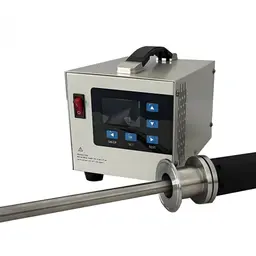
MSE PRO Ultrasonic Homogenizer (Sonicator), 35kHz, 0.2-5L
Wide processing range and suitable for facilities handling multiple batch sizes without buying separate units.

MSE SuppliesSponsored
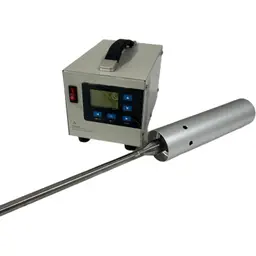
MSE PRO Ultrasonic Homogenizer (Sonicator), 20kHz, 0.5-5L

MSE SuppliesSponsored
MSE PRO 22.5 L Ultrasonic Cleaner with Heater, 40 kHz
MSE PRO™ 22.5 L Ultrasonic Cleaner with Heater, 40 kHz MSE PRO™ ultrasonic cleaner facilitates ultrasonic cleaning, emulsification, mixing, extraction, dispersion, degassing, cell crushing, and catalytic reactions. Built-in drains Liquid level protection 304 Stainless Steel tank material Digital control Comes with a bracket, basket and lid MSE Supplies offers variety of ultrasonic cleaner with different capacity, frequency, power, etc. Please contact us for more information. Specifications: SKU# MA2056 Power Supply 110 V 60 Hz Capacity 22.5 L Tank Dimensions W×H×D 500×300×150 mm Outer Dimensions W×H×D 531×326×375 mm Frequency 40 kHz Ultrasonic Power 500 W Ultrasonic Power Adjustable Range 40-100% Heating Power 800 W Temperature Setting Range Room temperature to 80 ℃ Time 1-480 min | MSE PRO 22.5 L Ultrasonic Cleaner with Heater, 40 kHz

MSE SuppliesSponsored
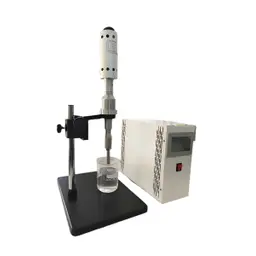
MSE PRO Ultrasonic Homogenizer (Sonicator), 28kHz, 0.2-5L
MSE PRO™ Ultrasonic Homogenizer (Sonicator), 28kHz, 0.2-5L MSE PRO™ Ultrasonic Homogenizer is a versatile powerhouse that harnesses the incredible forces of ultrasonic cavitation. This cutting-edge device delivers unparalleled performance across a wide range of applications, from homogenization and cell disruption to driving innovative sonochemical processes. Its high-intensity ultrasound generates intense shear forces, ensuring exceptionally fine and homogeneous mixtures that conventional methods cannot match. In biotechnology and life sciences, the Ultrasonic Homogenizer is an indispensable tool for precise cell disruption and extraction of valuable biomolecules like DNA, RNA, and proteins. Its potent cavitation effects efficiently disrupt even the toughest cell membranes, accelerating research and streamlining sample preparation. Ultrasonic cavitation creates extreme conditions, catalyzing unique chemical reactions and enabling groundbreaking innovations in nanoparticle synthesis, advanced material processing, and more. Applications: Homogenization, emulsification, dispersion, deagglomeration, and wet milling (particle size reduction) Cell disruption and lysis Degassing Sonochemical processes MSE Supplies offers various ultrasound equipment. Please contact us for more information. Technical Specifications: Equipment model MA2064 Continuous power 800 W Voltage 110 V Frequency 28 kHz Amplitude/power intensity 50%-100% Handling capacity 0.2-5 L Effective immersion depth 168 mm Standard probe diameter Ф14 mm Standard configuration Ultrasonic processor, Generator Optional accessories Alarm output, Remote control, Probe tip | MSE PRO Ultrasonic Homogenizer (Sonicator), 28kHz, 0.2-5L
MSE SuppliesSponsored
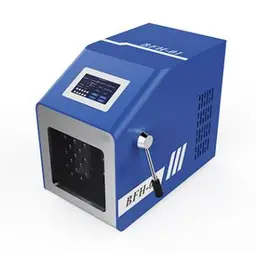
MSE PRO 200W Sterile Homogenizer
MSE PRO™ 200W Sterile Homogenizer The MSE PRO™ Sterile Homogenizer is a device designed for the homogenization of animal tissues and biological samples. It's widely used in various fields, including food, drug, cosmetics, clinical, molecular, toxin, and bacterial detection, particularly for preparing microbial test samples. The device features a 4.3-inch LCD touch screen with microcomputer control, allowing for precise setting of flapping time and speed. Its adjustable flapping spacing accommodates different sample amounts, while disposable sterile bags ensure hygiene and safety. A toughened glass window allows for easy observation of the homogenization process, and safety features include an anti-pinch function and a pause function. Precise Control: The 4.3-inch LCD touch screen and microcomputer control allow for precise adjustment of flapping time and speed, ensuring consistent and reproducible homogenization results. Versatile Sample Handling: The adjustable flapping spacing accommodates various sample sizes, making the homogenizer suitable for a wide range of applications. Enhanced Hygiene and Safety: The use of disposable sterile bags minimizes the risk of cross-contamination and ensures sample integrity. The anti-pinch function further enhances user safety. Easy Observation: The toughened glass window allows for convenient monitoring of the homogenization process without interrupting the operation. Wide Range of Applications: The homogenizer's versatility makes it suitable for numerous fields, including food safety, pharmaceutical research, cosmetics development, clinical diagnostics, and environmental testing. Brand: MSE PRO™ Manufacturer: MSE Supplies LLC MSE Supplies offers a variety of Sterile Homogenizers. Please contact us for more information. Specifications: SKU# BB0569 Flapping Time 0.1s~99min 59s or continuous operation Flapping Speed 3~12 times/s Flapping Spacing 0~50 mm adjustable Effective Capacity 3~400 ml Program Setting and Storage 10-segment combination programming Temp. Control Range / Disinfection Function UV lamp disinfection, disinfection wavelength 253.7nm Sterile Bag 17*30cm, standard 50 pcs Anti Pinch Function With automatic stop anti pinch function Start Mode Soft start Consumption 200W Power Supply AC110/220V External Size(W*D*H) 420*230*330 mm Net Weight 21 kg | MSE PRO 200W Sterile Homogenizer, 220V
See every ad you and competitors like MSE Supplies run in ChatGPT and Google AI Overviews, and the prompts that trigger them.
Data from Writesonic's ChatGPT and Google AI Overviews ad tracking, updated daily. How we collect it ↗ · Request a correction ↗