![AI Brand Reputation: How to Track and Manage It [2026 Guide]](https://cdn.sanity.io/images/uvdgu5ti/production/454034b3237f6549519275861e39179f405caffa-1600x900.jpg?w=1920&fit=max&auto=format&q=75)
Brand perception has always been shaped by more than what you publish. Customer reviews, forums, third-party content — these all influence how people view your brand.
Now, AI platforms like ChatGPT, Gemini, and Perplexity are part of that mix. Customers ask these tools for product advice, comparisons, and recommendations. The answers they get often shape their opinions — sometimes more than your website or campaigns.
That’s why tracking and maintaining a positive brand reputation has become more important than ever. In this guide, we’ll explain what exactly AI brand reputation is and how you can easily track and fix it.
What Is AI Brand Reputation?
AI brand reputation is the way AI platforms describe your brand — what they say about you, the context they place you in, and the tone they use. It’s shaped by data pulled from across the web: your site, reviews, news articles, and third-party content.
When users ask AI for product comparisons or recommendations, the language and associations in those responses directly influence how your brand is perceived. Whether the framing is positive or negative often depends on sources you don’t control.
Unlike traditional reputation channels, which are scattered, AI condenses everything into one unified impression — fast, scalable, and trusted by users.
If AI mentions your brand with terms like “overpriced” or “outdated,” that impression sticks. If it highlights “great support” or “easy setup,” the effect is more favorable.
Tracking how AI platforms frame your brand helps you understand — and improve — the reputation your customers now see first.
How to Track and Fix Your AI Brand Reputation
Visibility alone isn’t enough. To manage your AI brand reputation effectively, you need to interpret what the data is telling you and take action where it matters.
Each insight — whether it’s sentiment, source, or theme — helps you uncover how AI is shaping your brand story and what’s driving it.
The sections below break down specific problems you might face and how you can solve them easily using AI.
Catch Emerging Issues Early with Sentiment Analysis
You don’t always see reputation issues as they’re unfolding. Negative perceptions usually begin in other channels — reviews, blog posts, forums, or customer feedback.
Over time, those sentiments surface in AI responses, where they’re combined into a single narrative. When that happens, AI becomes one of the clearest places to see how those issues are being framed — and where they’re coming from.
By tracking how AI platforms describe your brand, you get a unified view of sentiment. You can pinpoint when negative language starts to appear, see which sources are influencing it, and take direct action to correct it.
Writesonic gives you that visibility through its sentiment analysis. It shows whether AI mentions about your brand are in a positive, neutral, or negative tone, and how that sentiment shifts over time.
You can see how many positive and negative keywords are associated with your brand and how frequently they are mentioned.
Notice the green keywords in the large font? Those are keywords that love your brand. They are positive and also frequently associated with your brand (hence the large font).
Click on any of those keywords to get deeper insights: which platforms are mentioning the keyword, how many times it is mentioned, and what sources are influencing the same.
What to look for:
- Spikes in negative sentiment
A sudden increase may signal dissatisfaction, misinformation, or unresolved issues being amplified. - How AI is framing your brand
Reviewing exact responses helps you understand the language being used and whether it aligns with how you want to be positioned. - Where those signals are coming from
Sentiment insights link directly to the source — so you know whether the problem started with customer reviews, media coverage, or legacy content.
What to do:
- Update or correct inaccurate sources
Revise outdated pages, replace old comparisons, or contact third-party sites to request corrections. - Respond to recurring concerns
If negative sentiment reflects valid product issues (say they were sourced from review sites), prioritize improvements and address them directly in your messaging. - Track whether your response is working
Use sentiment trends to confirm if the tone improves across platforms after you’ve made changes.
Say you notice “unreliable” appearing in AI answers tied to your brand. You trace it back to a 2022 review. After updating your SLA page and publishing recent performance data, sentiment improves in the following weeks as AI platforms pick up the updated context.
Measure if Your Marketing Actually Shapes Customer Perception
You invest in campaigns, publish new content, and update messaging with a clear goal: to shift how people perceive your brand.
But without structured feedback, it’s difficult to measure whether those changes are actually working. Standard engagement metrics can show reach, but they don’t reflect how your brand is being described or interpreted — especially across AI platforms.
Tracking sentiment trends helps close that gap. It shows how the tone of AI mentions evolves over time and whether your messaging efforts are having the intended effect.
Writesonic tracks sentiment every day, allowing you to catch even small changes in tone or associations.
Once you set up your account, you can view this data over days, weeks, months, or quarters, and link it back to specific launches, content, or messaging updates.
What to look for:
- Sentiment shifts after key campaigns
Use before-and-after comparisons to check if your messaging resulted in a clearer or more favorable tone. - Week-over-week movement
While small fluctuations are normal, if you notice a pattern, they can signal how specific ideas or value props are being picked up and repeated. - Sustained improvements or declines
Long-term trends also help you confirm whether the impact of a campaign is lasting or temporary.
What to do:
- Double down on what’s working
If you see momentum around a message — like fast onboarding or responsive support — use it more prominently in future content. - Refine underperforming themes
If sentiment stays flat or drops, review the sources and messaging behind it, then adjust accordingly. - Use the data to report impact
Weekly sentiment data can support internal reviews and help you validate content or positioning decisions.
For example, if you launch a support-focused campaign. Over the next two weeks, Writesonic shows a steady increase in positive sentiment tied to “customer service.” The shift confirms that the message is landing, and you expand it across web, ads, and lifecycle communications.
Uncover Sources Shaping Your Brand’s Narrative with Citation Tracking
You don’t always control which sources AI platforms use to describe your brand.
When someone asks a question and your brand appears in the answer, the citation may point to third-party content.
Some of it may be outdated, misinformed, or no longer relevant. Without knowing what those references are, it’s difficult to manage how your brand is being positioned.
Citation tracking gives you that visibility. It shows exactly which sources AI platforms are using when they mention your brand, and whether those mentions reflect the story you want told.
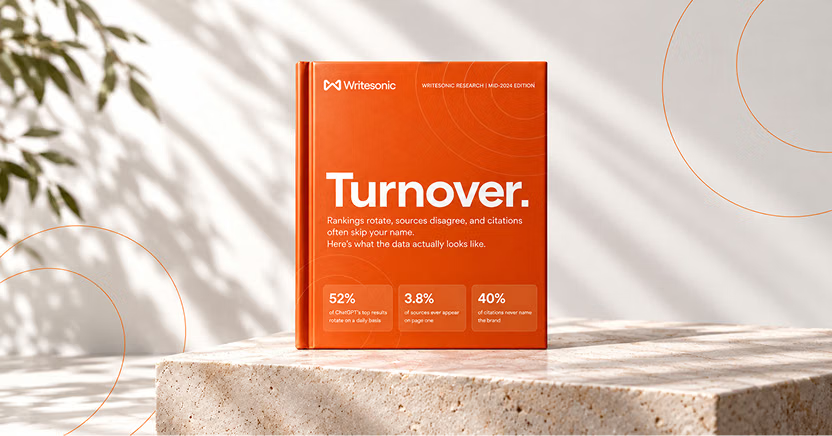
The #1 brand in ChatGPT changes 52% of the time.
Get the report and find out why.
By seeing the citations of a particular prompt or keyword, you can get the URLs, articles, and domains AI search engines reference when generating responses about your brand.
You can review them directly to evaluate accuracy and relevance.
What to look for:
- Old or incorrect citations
Some sources may reference outdated pricing, features, or positioning that no longer apply. - Mentions that come from non-authoritative sites
If AI is citing content you don’t control or trust, that may affect how your brand is framed. - Gaps in owned content
If your own pages aren’t appearing in citations, it may indicate a need to create more structured or AI-optimized material.
What to do:
- Update or replace outdated sources
Publish new content that provides accurate, detailed, and clearly structured information AI engines can use instead. - Fill in content gaps with owned assets
If third-party content dominates the citations, reinforce your domain with clearer product pages, comparison content, and explainer articles. - Reach out when needed
If a review site or publisher is sharing outdated or misleading information, request a correction or update.
For example, you see that AI responses about your pricing cite a two-year-old review that calls your product “overpriced.”
You update your pricing page with new plans, add a breakdown of value improvements, and publish supporting content. Over time, AI citations shift to your updated material, and the negative framing disappears.
Ensure Consistent Brand Representation Across Platforms
Your brand may not appear the same way across all AI platforms. ChatGPT, Gemini, and Perplexity each use different sources, citation patterns, and indexing methods.
That means your brand can come across as trustworthy in one place and outdated or inconsistent in another. These mismatches affect how users interpret your offering — and create confusion if the narrative isn’t aligned.
With a platform-level view, you can compare how your brand is framed across systems and take steps to correct the differences. This helps you maintain message consistency, avoid misrepresentation, and build trust across every touchpoint.
Writesonic’s platform-level breakdown lets you track brand sentiment and context across major AI engines. You can see where your brand is doing well, where it’s misaligned, and what content is driving the variation.
What to look for:
- Differences in sentiment across platforms
You may see positive framing in one engine and negative or neutral framing in another—often due to differences in the sources they rely on. - Citations that only appear on one platform
Some engines may surface outdated blogs or reviews that others ignore. These single-platform signals can distort your brand narrative. - Gaps in message delivery
If your positioning doesn’t show up consistently, users may get an incomplete picture of your product or value prop.
What to do:
- Review what’s being cited and why
Audit the platform showing the issue and identify which pages or domains it’s pulling from. - Update or create content that fills the gap
Make sure your site contains clear, structured, and up-to-date material that speaks directly to the theme or concern being misrepresented. - Recheck representation after publishing
Use Writesonic to confirm whether the changes are being reflected and if sentiment is stabilizing across platforms.
Say you notice Gemini associates your brand with negative “security” language, while ChatGPT shows strong positive sentiment.
Writesonic reveals that Gemini is citing an outdated blog post. You update your security documentation and publish a new trust page.
Over the next few weeks, Gemini starts referencing your updated material, and the sentiment becomes consistent across both platforms.
Decode the Context of Your Brand Mentions with Thematic Analysis
You have a clear idea of what your brand should stand for — speed, affordability, innovation, reliability.
But is that actually what people see when your brand shows up in AI responses? If AI platforms are emphasizing the wrong traits — or ignoring your strongest value props entirely — you may be sending the wrong message without realizing it.
Mentions alone don’t guarantee the right perception. What matters is the context — the themes and associations that surround your brand when it’s mentioned. If those don’t align with your positioning, users form their own version of your story.
Writesonic’s thematic analysis shows which topics AI platforms connect to your brand, and how those topics are split by positive or negative sentiment.
You get a clearer view of what people are likely taking away from AI-generated answers — and whether it reflects the brand you’re actually building.
What to look for:
- Themes that align with your strategy
If users see your brand linked to “simple setup” or “great customer service,” that suggests your intended message is landing. - Themes that conflict with how you want to be known
If AI mentions your product under “overpriced” or “difficult to use,” that may signal misalignment between perception and current reality. - Important themes that don’t show up at all
If you’ve invested in something core—like new AI features or security upgrades—but those ideas never appear, users may not know they exist.
What to do:
- Strengthen the right associations
Create or reinforce content around the themes you want to lead with—product pages, blog posts, structured data, FAQs. - Fix or replace recurring negative themes
Update documentation, improve UX, or address outdated reviews contributing to inaccurate framing. - Add what’s missing
If key messages aren’t surfacing, identify the gap and publish content that helps AI engines pick it up and reflect it accurately.
For example, you want to be known for an intuitive product experience—but AI mentions keep referencing “complex UI.”
You review your onboarding and help center, streamline the setup, and add new support content. Over the next few weeks, AI references begin to shift toward “easy to use,” confirming that perception is starting to realign.
Final Thoughts: Tracking and Managing Your AI Brand Reputation Isn’t Optional
Your brand reputation is no longer shaped only by what you say—but by how AI platforms interpret and present you.
When users turn to tools like ChatGPT or Gemini for recommendations, the narrative they see is often the one AI has assembled from third-party content, reviews, and outdated pages.
Tracking that narrative isn’t optional. It’s how you catch risks early, measure the real impact of your messaging, and make sure your positioning holds up across channels.
The Writesonic AI Brand Visibility tool helps you do exactly that. From monitoring sentiment shifts to tracing citations and uncovering misaligned themes, it gives you the clarity to act quickly — and the control to manage how your brand is seen where it matters most.
Start tracking your AI brand reputation today.
The #1 brand in ChatGPT changes 52% of the time.
Get the report and find out why.

Niyati Mahale is a SEO/GEO Content Writer @Writesonic. She specializes in artificial intelligence and B2B, with a flair for combining effective storytelling and SEO best practices to create impactful content.