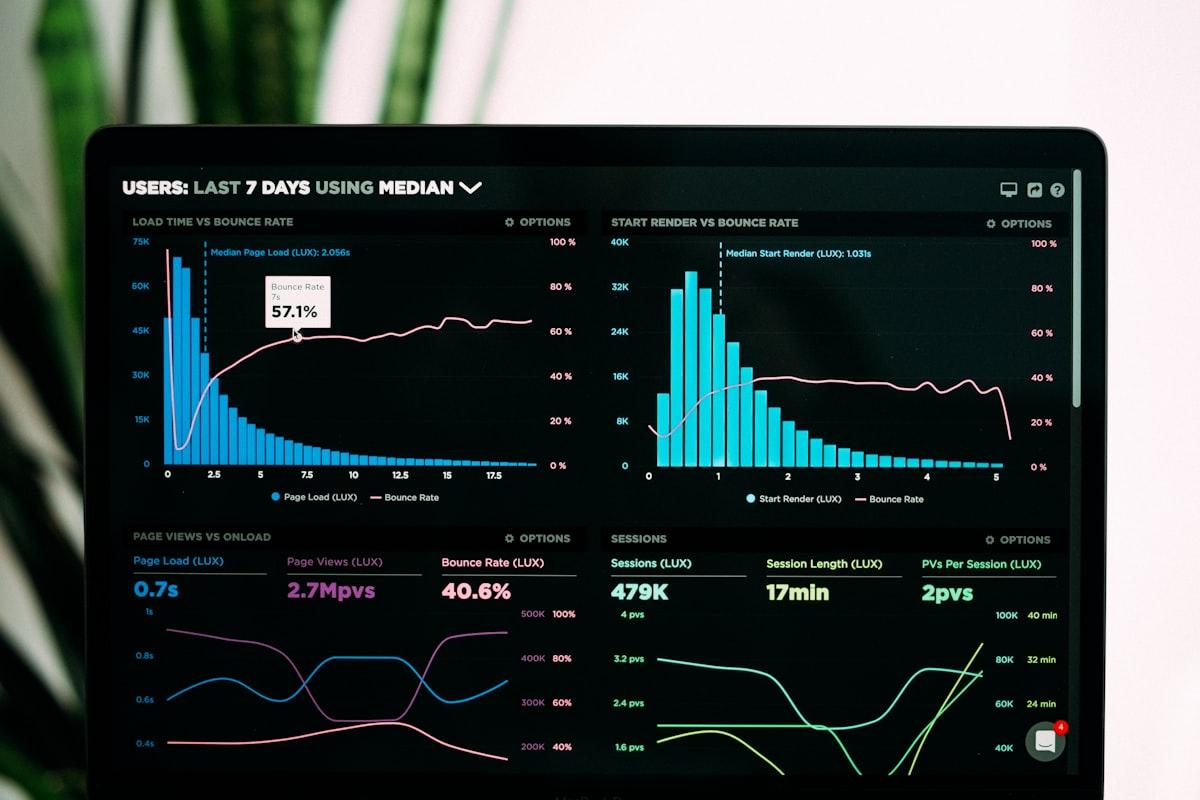
There are now dozens of tools that track your brand across AI search engines, ChatGPT, Perplexity, Gemini, Google AI Overviews. Call it GEO (Generative Engine Optimization), AEO (Answer Engine Optimization), or AI search visibility. The terminology hasn’t fully settled, but the tools all do the same thing: show you where you’re cited, where competitors are cited instead, how your visibility score changed this week. Some generate reports. A few are starting to add basic alerting.
But even the best case scenario right now looks like this:
A content strategist checks her dashboard on Monday. Or maybe she gets an email alert from one of the newer tools. Either way, she sees: “AI visibility dropped 18% on 15 pages.” She understands the problem. Then she exports to a spreadsheet. Opens a separate AI tool. Manually rewrites content. Logs into the CMS. Pastes it in. Waits two weeks. Comes back to the dashboard. Manually checks if it worked.
The insight happens inside the tool. The execution happens across 4 other tabs. And that’s if you’re lucky enough to use a tool that even alerts you. Most don’t. Most require you to log in and notice the drop yourself.
This is the state of the industry right now. The best tools show you the problem. None of them help you fix it.
The Execution Gap
94% of enterprise CMOs are increasing their AI search and GEO budgets this year. The AI search visibility market is projected to grow from $848M to $33.7B by 2034. There’s $200B in new value pools being unlocked by agentic AI in the next five years, according to BCG.
But most of that money is going to monitoring. Dashboards. Analytics. Reports.
Here’s a number worth thinking about: the global services market is $16 trillion per year. Software is $1 trillion. For every $1 spent on software, $6 is spent on services.
The monitoring tools capture the $1. The execution captures the $6.
The question every brand should be asking: who closes that gap for me?
The Industry Is Solving Execution the Wrong Way
Here’s what I see happening across the SEO, GEO/AEO, and content automation space right now: companies are building static, node-based workflow builders. Drag and drop. Connect box A to box B. Click run.
It’s 2026 and we’re building Zapier for content.
Meanwhile, marketers have already moved on. They’re using Claude Code with marketing skill packs. They’re running SEO audits in 90 minutes that used to take 8 hours. They’re generating and publishing content with AI agents that reason, adapt, and make decisions. 64% of high-growth marketing teams now use AI agents for technical SEO, automated page deployment, and API integrations.
The world moved to agentic AI. The tools industry is still shipping drag-and-drop flowcharts.
Static workflow builders have a fundamental limitation: they can’t think. Every decision must be hardcoded by the user upfront. “If word count < 800, expand.” “If readability score > 12, simplify.” What happens when the content needs a comparison table? What happens when the topic requires citing recent data? What happens when the page structure doesn’t match the template?
A static workflow breaks. An agent adapts.
The next generation of execution tools won’t ask you to design a flowchart. They’ll understand what needs to happen, do it, and show you the result for approval. The intelligence isn’t in the workflow diagram. It’s in the system that knows your data, understands the context, and makes decisions.
What Execution Should Actually Look Like
The model that wins is not “monitor” or “execute.” It’s the loop:
Monitor → Detect → Prioritize → Execute → Review → Publish → Measure → Feed back into monitoring.
Most tools do one or two of these steps. Some monitor. Some help you execute. Nobody closes the full loop.
Here’s why the loop matters. Imagine you refresh 50 pages to improve AI search visibility. Without measurement, you have no idea which changes worked. Maybe the FAQ additions helped. Maybe the meta tag rewrites didn’t. Maybe the pages that improved would have improved anyway.
But when measurement feeds back into prioritization, three things happen:
- The content team trusts the process. They see proof. They move faster next time.
- The system gets smarter. You learn which types of changes drive the biggest improvements for your specific content.
- You can prove ROI to leadership. Not “we ran 200 workflows” but “we improved AI visibility by an average of 12% on the 50 pages we refreshed, generating an estimated X additional AI-sourced visits.”
Without measurement, execution is a guess. With measurement, execution is a system that improves every cycle.
Not All Problems Are Equal (But Most Tools Treat Them That Way)
Here’s something that bothers me about every SEO and GEO tool I’ve used: they treat all problems equally.
“Page has no FAQ section” gets the same severity as “your highest-traffic revenue page lost 40% of its AI search visibility.” That’s insane.
A declining page that gets 10,000 impressions per month and drives revenue is worth 100x more attention than a blog post from 2019 that gets 3 visits per week.
The right approach is data-driven prioritization. Score every issue by:
- Traffic exposure — How many people actually see this page? (Using real search console data, not estimates. Traditional rankings still influence AI citations, so this data matters.)
- Issue severity — How critical is the problem? (Broken indexing is a 10. Missing alt text is a 2.)
- Fix potential — Can this be fixed quickly or does it need a full rewrite?
- Business value — Is this a revenue page, a lead gen page, or a random blog post?
When you combine these signals, the answer is obvious: “These 5 pages will have the most impact if you fix them this week.” Not “here are 200 issues sorted alphabetically.”
The gap in the market isn’t more monitoring. It’s intelligent prioritization connected to execution. A system that tells you what matters, does it, and proves it worked.
The Freelancer vs. The Department
AI agents are powerful. A solo marketer with Claude and the right skills can do remarkable things. Rewrite meta descriptions. Generate FAQs. Optimize pages for AI citations. One task at a time, they’re excellent.
But there’s a difference between a freelancer and a department.
What a single AI agent can’t do:
- Run across 500 pages in parallel with reliability and error recovery.
- Coordinate a team reviewing and approving content before it goes live.
- Maintain state across weeks of work. What was approved, what was rejected, what’s pending, what was published, what improved.
- Measure whether the fix actually worked and feed that back into the next cycle.
- Prioritize based on proprietary data. Your specific visibility scores, your citation patterns, your competitor benchmarks.
AI agents will keep getting better. The skills ecosystem will keep growing. But a platform that connects proprietary intelligence to reliable execution to measurement is a different category.
The agent is the freelancer. Useful for one task. The platform is the department. Runs the operation.
You probably need both. But the department is what scales.
What Happens When Intelligence Meets Execution
Think about the difference:
Intelligence without execution:
- System identifies 15 high-impact pages that need fixing. Ranked by business impact. Context provided.
- Content team exports the list. Opens 3 other tools. Rewrites 4 articles per week.
- Publishes via CMS. Hopes it works.
- Two weeks later: manually checks if visibility improved.
Intelligence with execution:
- Same 15 pages identified. Same ranking. Same context.
- You click “Fix these.” The system rewrites, restructures, adds FAQs, updates schema. All 15. In parallel.
- You review the changes side by side. Original on the left, updated on the right. Edit where needed.
- Approve 12. Reject 3. Publish to CMS.
- 14 days later: system re-scans automatically. “10 of 12 recovered. Average +11% visibility.”
The intelligence is the same in both cases. The difference is whether the system can act on its own analysis or just hand you a report and wish you luck.
Static workflows can’t do this well. They run the same way every time regardless of context. An intelligent system adapts. It knows your content, your data, your history. It makes different decisions for a pricing page than for a blog post.
Three Predictions for the Next 12 Months
Monitoring becomes a commodity.
Every SEO tool will add AI search tracking. Semrush, Ahrefs, Moz. When everyone tracks the same GEO/AEO metrics, the tracking layer loses pricing power. The differentiation moves to what you do with the data.
Static workflow builders hit a ceiling.
Drag-and-drop node editors were built for a world before AI agents. They’ll keep working for simple, repetitive tasks. But the complex, judgment-heavy work that actually moves the needle for brands will need something more adaptive. Something that reasons, not just executes. The same way spreadsheet formulas gave way to AI that understands what you’re trying to do.
The winners sell outcomes, not dashboards.
“Your AI search visibility increased 23% this quarter” is a different sale than “here’s a dashboard.” It’s a different price point. A different buyer (VP, not practitioner). And a different retention model. Outcomes are sticky, dashboards are not.
The global services market is $16 trillion. The software market is $1 trillion. The companies that figure out how to sell execution outcomes at software margins will define the next era of marketing technology. Not by building better dashboards. By making the dashboards unnecessary.
TLDR
The SEO and AI search industry is stuck between two incomplete solutions: monitoring tools that show you problems but don’t fix them, and static workflow builders that make you design flowcharts in the age of agentic AI. The future is intelligent execution. Systems that know what’s wrong, understand the priority, fix it at scale with human review, and measure whether it worked. The market is moving from dashboards to outcomes. Flowcharts to agents. Monitoring to action. The companies that close the full loop first will own the category.
If you’re thinking about this problem, I’d love to hear how your team handles the gap between monitoring and execution today. Ping me on LinkedIn or X.
If you want to see what closing the loop looks like in practice, talk to our team.
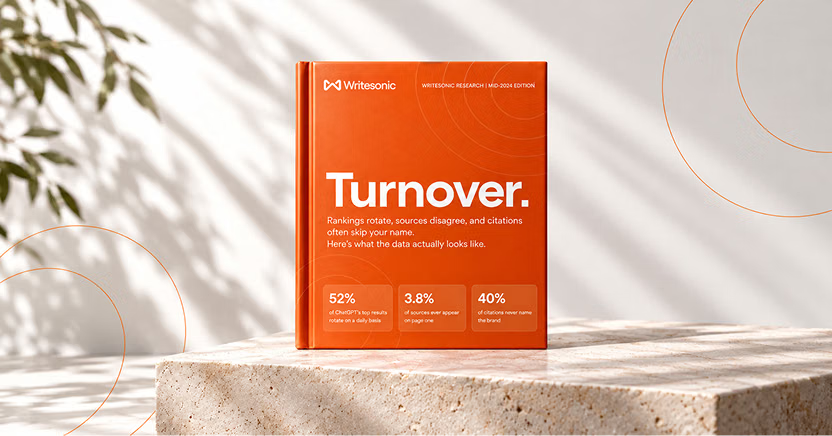
The #1 brand in ChatGPT changes 52% of the time.
Get the report and find out why.

Founder @ Writesonic
Samanyou is the founder of Writesonic, a platform that helps you track & boost your brand’s visibility in AI search. Two years before the launch of ChatGPT, Writesonic was already at the forefront, helping organizations automate their entire marketing workflow through specialized AI agents for SEO and content. Samanyou is a Forbes 30 Under 30 awardee and a winner of the 2019 Global Undergraduate Awards, often referred to as the junior Nobel Prize.