Picture a buyer researching your category. Before they ever land on your website, there's a good chance they've already asked an AI engine for a recommendation. ChatGPT alone has 1.2 billion weekly users. Google's AI Overviews reach over 2.5 billion people a month, and AI Mode has already passed 1 billion.
So when that buyer asks which product to pick, is your brand included? And if it is, what does the AI actually say about you? Is it describing your brand favorably? Accurately? Most marketing teams have no idea.
That's the gap generative engine optimization (GEO) tools fill. But the category has grown extremely fast, and every tool does a very different job. Some measure visibility, others diagnose problems, a few help you act, and a handful offer only free one-off checks.
What kind of GEO tool do you need? And what's the best option?
This guide ranks the best options by tool type so you can find the right fit faster. We'll break down what GEO tools do, rank the best options available today, and show you how to build a GEO program based on your team size and budget.
TL;DR
- What do GEO tools do? They track how often AI answers mention or cite your brand and explain why you ranked where you did. Some tools can even help you fix identified problems to close visibility gaps.
- What's the best overall tool for AI visibility? Writesonic. It shows the full answers, citations, and competitors behind every tracked prompt. Its AI agents then suggest fixes and rank them by priority to steadily improve your AI visibility.
- Already using an SEO suite? Its AI visibility add-on may be a useful starting point, but check whether it provides the prompt-level insights and execution workflows needed to improve visibility.
- Running a content team? Surfer, Frase, Clearscope, and AirOps pair content tools with lighter AI tracking.
- Just getting started? Use a free grader from HubSpot or Mangools to understand your baseline before you buy anything.
What GEO Tools Do
A GEO tool measures how your brand shows up in AI-generated answers. The better tools also tell you why engines ranked you the way they did and how you can improve your visibility.
However, all of these tools developed differently, so comparing GEO platforms isn't always apples-to-apples.
In reality, GEO tools do four different things:
- Tracking AI visibility. The tool checks a set of prompts on a schedule and reports mentions, share of voice, and position.
- Explaining your rankings. The tool shows which sources AI cites, whether it mentions you positively or negatively, and whether AI crawlers can read your website.
- Executing fixes. The tool identifies the prompts where you don't show up and creates or updates content to help you earn more mentions.
- Quick grading. The tool provides a free, one-time score so you know where you stand. AI answers change all the time, so a one-off tool won't track your ongoing performance. Free tools aren't a replacement for a full suite, but they can help you get a quick baseline.
A good GEO tool shows you where you stand and helps you improve your visibility with actionable insights (better yet, if it acts on those insights for you). And no, you can't limp by using a free tool, especially if you're serious about improving AI answer visibility.
SparkToro had 600 volunteers run the same prompts nearly 3,000 times. The odds of getting the same brand list twice were under 1 in 100. That's why you need to measure visibility across a lot of prompt checks and not just for a single answer. Free tools can't do that.
How To Evaluate GEO Tools
AI visibility tools vary a lot in what they track and how they track it. Use the six factors below to narrow your shortlist before you book demos.
For a deeper walkthrough, see our guide on how to choose an AI search visibility tool.
| Factor | What to check | Why it matters |
|---|---|---|
| AI platform coverage | Which engines each plan includes. Most buyers need ChatGPT, Perplexity, Gemini, Google AI Overviews, and AI Mode. | Many tools track only three engines on the entry plan and charge more for the rest. |
| Prompt-level depth | Whether you can open a single prompt and see the full answer, cited URLs, named competitors, and sentiment. | A score alone tells you something is wrong, but not what to fix. |
| Data collection method | Whether the tool captures answers the way a logged-out user sees them or queries model APIs, and how often it refreshes. | Surfer found that API and app answers named the same brands only 15.5% to 23.8% of the time. |
| Actionability | Whether the tool only reports or also recommends fixes and drafts content. | A report alone leaves you to figure out which changes will improve visibility. |
| Pricing model | Whether it bills per prompt, engine, credit, or seat. Model 100 to 500 prompts before you shop. | Credit-based and prompt-based plans are hard to compare without a realistic prompt set. |
| Security and compliance | SOC 2 Type II, HIPAA, GDPR, and SSO, backed by official security documentation. | Regulated teams should check this first. Writesonic is SOC 2 Type II, HIPAA, and GDPR compliant, with SSO on Enterprise. |
The Best Generative Engine Optimization Tools, By Category
The tools below are grouped by the job they do best. We open each category with a best pick and a runner-up.
GEO tools at a glance
| Tool | Job | AI engine coverage | Tracking | Content or action features | Starting price |
|---|---|---|---|---|---|
| Writesonic | AI visibility tracking | ChatGPT, Gemini, AI Overviews (10 on Enterprise) | Daily | AI articles, site audits, Action Center | $79/mo (annual) |
| Profound | AI visibility tracking | 3 on a free trial. Up to 10 on Enterprise | Daily | Agents with approval step | Free trial, then custom |
| AthenaHQ | AI visibility tracking | 5 on the free plan. 11 on the paid Starter plan | Not stated | Content optimization agent | Free tier; $295/mo |
| Peec AI | AI visibility tracking | Pick 3 of 8 total | Daily | None | $95/mo |
| Scrunch | AI visibility tracking | 7 engines | Daily | Page audits, AXP | $250/mo (annual) |
| Otterly.AI | AI visibility tracking | Pick 4 of 7 supported engines on Lite | Daily | None | $29/mo |
| Rankscale AI | AI visibility tracking | 17+ engines | Hourly to monthly | None | $99/mo |
| Evertune | AI visibility tracking | Up to 5 (Starter) | Not stated | Content Agent (Pro), AI ads | $60/mo |
| Goodie AI | AI visibility tracking | 5 models | Daily | 50 optimizations/mo | $295/mo |
| Semrush AI Visibility Toolkit | SEO suite add-on | ChatGPT, AI Mode | Daily | AI search site audit | $99/mo |
| Ahrefs Brand Radar | SEO suite add-on | 1 AI index at $199/mo. All 6 AI indexes at $699/mo. | Monthly (index), daily (custom) | None | $199/mo |
| SE Visible | SEO suite add-on | 5 engines | Daily | None | $89/mo |
| BrightEdge | SEO suite add-on | 5 engines | Not stated | Content briefs | Custom |
| Conductor | SEO suite add-on | Not stated by plan | Not stated | AI referral and bot reports | Custom |
| AirOps | Content and execution | ChatGPT (Solo), 10+ (Pro) | Not stated | Content workflows | Not listed (14-day trial) |
| Surfer SEO | Content and execution | ChatGPT (Standard), 5 (Pro) | Weekly or daily | Content Editor, Auto-Optimize | $99/mo with AI tracking |
| Frase | Content and execution | ChatGPT, Google AI | Not stated | Agent drafts, Content Guard | $39/mo (annual) |
| Clearscope | Content and execution | ChatGPT, Gemini, Claude | Not stated | Content grading, drafts | $129/mo |
| HubSpot AEO Grader | Free grader | ChatGPT, Perplexity, Gemini | One-time | None | Free |
| Mangools AI Search Grader | Free grader | Up to 6 models | One-time | None | Free |
AI visibility tracking platforms
Best pick: Writesonic, for prompt-level detail plus agents that fix visibility gaps for you.
AI search monitoring tools can come with a lot of bells and whistles, but at their core, they all answer the same question: Where does your brand show up in AI answers, and why?
Writesonic
Writesonic tracks how your brand appears across AI platforms and will even tell you why your brand shows up the way it does. Since it crawls AI platforms like a real user and not with APIs, you see the same information that your customers see. The core of the product is prompt-level drill-down. You can open any tracked prompt to see the full answer text, the URLs cited, and which competitors were mentioned instead of you. You can also filter by competitor, market, language, and intent.
Many platforms stop there. But Writesonic helps you take the next step by suggesting fixes for the visibility issues it's identified. Its Action Center uses AI agents to find what's hurting your visibility and prioritizes fixes by impact. Writesonic's agents then do the work across content, citations, and technical issues with your oversight. The platform even tracks performance before and after the changes so you can see what's working.
Writesonic packs a lot of features into one platform, covering:
- Visibility tracking: Writesonic tracks mentions, share of voice, and citations daily. It stores the full answers for every prompt so you can refer back to them if needed.
- Sentiment analysis: This feature calculates the tone AI uses about your brand, ranging from positive to negative.
- Agentic content creation: Are you missing certain prompts? Writesonic's Action Center has an SEO and content agent that generates AI articles and pages to help you show up in the GEO answers that matter.
- Fact Check and Citation Decay: This feature flags inaccurate claims AI makes about your brand and sources that are fading.
- AI Bot Analytics: Writesonic shows how AI crawlers hit your site. You can also test-drive this feature with its free AI Crawl Checker.
- Enterprise extras: You can do a lot with the lower-tier Writesonic plans, but an Enterprise subscription gets you the Prompt Explorer, Brand Explorer, Shopping and Agentic Commerce tracking, and Looker Studio. It also unlocks SOC 2 Type II and HIPAA compliance, as well as single sign-on (SSO).
- Outreach Agent: This feature finds the authors behind the sources AI cites and pulls the website owners' contact details. From there, your team can send an outreach email asking for a feature, and potentially win a new citation.
Best for: Marketing teams that want AI visibility tracking and agentic fixes in the same platform.
AI platforms covered: ChatGPT, Gemini, and Google AI Overviews on self-serve plans. Enterprise covers all 10 (adding Perplexity, Claude, Grok, Google AI Mode, Muse Spark, Bing, and Meta AI).
Notable feature: You can drill down into any prompt's answer to understand what your customers need. But instead of stalling progress in a spreadsheet, Writesonic's agent-run fixes happen in the same platform to speed up your time to value.
Pricing: Starter is $79/mo billed annually for 50 prompts. Basic is $199/mo for 100 prompts, Growth is $399/mo for 200 prompts, and Enterprise is custom. You can also sign up for a free 7-day trial.
Profound
Profound is an established player in AI visibility that focuses on large enterprises. Today, it serves over 1,000 enterprise brands. This GEO tool captures answers from the user interface, not APIs. It also includes features like Prompt Volumes, Agent Analytics, and publishing agents.
Best for: Large enterprises that want a sales-led platform with broad engine coverage.
AI platforms covered: Up to 10 on Enterprise, including ChatGPT, Perplexity, Google AI Mode, Gemini, Claude, DeepSeek, and AI Overviews.
Notable feature: Profound used over 1.5 billion real conversations to create its Prompt Volumes feature. This estimates how often people ask a given prompt, which can help you decide where to focus GEO efforts first.
Limitation: Profound retired its self-serve Starter and Growth plans in September 2026. You can now only get a free trial or, when that's over, a custom quote. Most customers say Profound isn't cheap, either. Sara, a VP of content, wrote on G2 that it's "rather expensive in comparison to other tools we've vetted."
Pricing: A free trial runs 50 prompts daily for 7 days. Enterprise pricing is custom.
AthenaHQ
AthenaHQ tracks 11 models on its paid plan and includes a content optimization agent. One credit equals one AI response, so you control where your budget goes.
Best for: Teams that want wide engine coverage, including Grok, DeepSeek, and Mistral, without an enterprise contract.
AI platforms covered: ChatGPT, Perplexity, AI Overviews, Gemini, and Copilot on the free tier. The Starter plan adds AI Mode, Claude, Grok, DeepSeek, Meta AI, and Mistral.
Notable feature: AthenaHQ includes unlimited seats on every plan, plus on-page and off-page action suggestions.
Limitation: The more engines you use, the more credits you'll use. Tracking more models across more prompts burns credits fast, so watch your usage if you're tracking all available engines.
Pricing: Essential is free with 300 credits. Starter is $295/mo for 3,600 credits, and Enterprise is custom.
Peec AI
Peec AI is a simple analytics tool for marketing teams. It tracks prompts daily, captures answers as a logged-out user, and provides unlimited seats on every plan.
Best for: Teams that want simple, understandable AI visibility reports.
AI platforms covered: Pick 3 from ChatGPT, Perplexity, AI Overview, AI Mode, Gemini, Naver AI Briefing, ERNIE, and Bing AI Mode. Extra engines cost $30 to $140 a month, depending on your plan.
Notable feature: You get access to regional engines, like Naver and ERNIE, which can help you sell in Korea or China.
Limitation: Peec reports on visibility but doesn't suggest fixes or create content to fix visibility problems.
Pricing: Starter is $95/mo for 50 prompts, Pro is $245/mo, and Advanced is $495/mo. Enterprise is custom.
Scrunch
Scrunch tracks seven engines on every plan and can even monitor AI agent traffic to your site. It can also conduct site audits and track your performance based on different customer personas.
Best for: Mid-market brands that want to track a lot of prompts and personas.
AI platforms covered: ChatGPT, Claude, Gemini, Perplexity, Google AI Mode, AI Overviews, and Meta.
Notable feature: The Agent Experience Platform (AXP) serves an AI-friendly version of your site to AI agents.
Limitation: It can be pricey. The entry plan starts at $250/mo, and the AXP feature is designed for enterprise, which requires a custom quote.
Pricing: Starter is $250/mo billed annually ($300 monthly) for 350 prompts. Growth is $417/mo billed annually. You can also sign up for a free 7-day trial.
Otterly.AI
Otterly.AI is a low-cost way to start tracking your AI visibility. Every plan includes unlimited seats and daily tracking, although this lower-cost platform does have some limitations.
Best for: Small teams and agencies testing GEO on a tight budget.
AI platforms covered: On the Lite plan, you pick four out of seven available engines and usage is billed based on credits. Most engines use just 1 credit per answer, but Claude uses 3.
Notable feature: Otterly offers API and MCP access, plus agent analytics on the Standard plan and up.
Limitation: The Lite plan covers only 16 prompts a month, which is way too few to map a full buyer journey.
Pricing: Lite is $29/mo, Standard is $189/mo, and Premium is $489/mo. Enterprise plans require a custom quote. Otterly also offers a 7-day free trial.
Rankscale AI
Rankscale AI covers more than 17 AI engines and lets you schedule checks anywhere from once an hour to every month. You can also get access to sentiment, exports, a REST API, and white-label reports with higher-tier plans.
Best for: Agencies and power users who want to track a lot of engines or run checks on a flexible schedule.
AI platforms covered: ChatGPT, Perplexity, Google AI Mode, AI Overviews, Gemini, DeepSeek, Mistral, Claude, Copilot, and more.
Notable feature: Rankscale's flexible prompt-checking schedule can protect your budget, allowing you to scale up during fast-moving launches or down during maintenance periods.
Limitation: Each prompt check costs about 0.25 credits, so you'll need to do some math to estimate your total monthly cost.
Pricing: The Pro plan is $99/mo, Pro+ is $229/mo, Growth is $385/mo, and Enterprise is $780/mo.
Evertune
Evertune pulls a ton of data to give you the biggest sample size possible. The Pro plan samples each prompt 100 times across every AI model, giving you a better idea of what engines (and customers) see. It also sells ads inside AI conversations.
Best for: Brand and media teams that want statistically sturdy numbers and AI advertising in one place.
AI platforms covered: Up to 5 engines on the Starter plan. Pro covers all major models, including ChatGPT, Claude, Gemini, AI Overviews, AI Mode, Perplexity, and Copilot.
Notable feature: Sampling prompts 100 times helps with run-to-run variance, so Evertune could be a good fit if you're concerned about accuracy.
Limitation: You need a paid Pro plan to access deep sampling and the Content Agent. Pro costs $800/mo billed annually, so that's not cheap. The Starter plan is mostly ad-focused.
Pricing: Starter is $60/mo and comes with a 7-day trial. Pro is $800/mo annually, and Enterprise is custom.
Goodie AI
Goodie AI pairs tracking with optimization credits and AEO strategist support. It offers revenue attribution and integrates with Google Analytics, Google Search Console, and Bing.
Best for: Ecommerce and DTC brands that care about product-level AI visibility.
AI platforms covered: The Core plan covers ChatGPT, AI Overview, Perplexity, AI Mode, and Copilot. The Pro plan covers 8 models and Enterprise goes up to 14.
Notable feature: The Brand Command feature tracks how often AI gets facts about your brand wrong.
Limitation: It's expensive for what you get. At $295/mo, the Core plan includes only 110 prompts.
Pricing: Core is $295/mo with 7 days free. Pro is $999/mo, but opting for annual billing will give you two months free.
SEO suites with AI visibility add-ons
Best pick: SE Visible, for the most daily prompts per dollar in this category. Runner-up: Ahrefs Brand Radar, for market-wide data from a huge search index.
While these tools may not have the firepower of a dedicated AI visibility platform, SEO suites with AI add-ons can make sense if you already use these platforms. You'll see your AI visibility scores next to your rankings and backlinks, saving you the hassle of checking multiple tools.
Still, they have less depth than a dedicated tracker, so keep that in mind.
Semrush AI Visibility Toolkit
The Semrush AI Visibility Toolkit provides an AI Visibility Score, prompt research, brand performance, and daily prompt tracking. It also includes an AI search site audit feature.
Best for: Existing Semrush customers who want AI data next to their SEO reports.
AI platforms covered: Semrush supports custom prompt tracking in ChatGPT Search, Google AI Mode, and Gemini. Its Brand Performance reports cover those three platforms plus Perplexity.
Notable feature: The Prompt Research feature shows volume, difficulty, and intent for AI prompts.
Limitation: The base plan includes just 25 tracked prompts, and there's no free trial.
Pricing: $99/mo for 25 prompts, plus $60/mo for each extra 50 prompts.
Ahrefs Brand Radar
Ahrefs Brand Radar runs a large prompt index across six AI platforms. You can also add custom prompts that run on your own schedule.
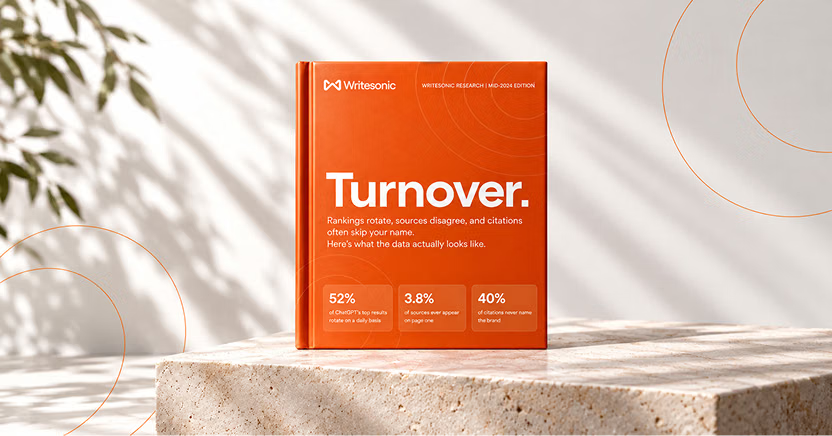
The #1 brand in ChatGPT changes 52% of the time.
Get the report and find out why.
Best for: Teams using Ahrefs that want a market-wide view of a whole industry.
AI platforms covered: AI Overviews, AI Mode, ChatGPT, Perplexity, Gemini, and Copilot. Claude is available for custom prompts.
Notable feature: Ahrefs includes an impressive index of 578 million prompts that it re-tests monthly.
Limitation: Ahrefs models index prompts from search keywords and not from questions buyers ask about your brand. It also refreshes data monthly instead of daily, unlike other GEO tools on this list.
Pricing: One AI Visibility Index is $199/mo. The $699/mo bundle includes all six AI indexes and 2,500 custom prompt checks per month. Ahrefs Lite and higher plans include some custom prompt tracking, and standalone custom prompt packages start at $50/mo.
SE Visible
SE Visible is SE Ranking's dedicated AI visibility platform. It collects answers through the browser interface and stores raw responses and sources.
Best for: Teams and agencies that want a lot of daily prompts at a mid-range price.
AI platforms covered: ChatGPT, Gemini, AI Mode, AI Overviews, and Copilot. Claude is only available on the Agency plan.
Notable feature: SE Visible offers API access on every plan, plus a Looker Studio connector and MCP.
Limitation: SE Visible is purely a reporting platform. It will tell you how your brand shows up in AI answers, but it can't create content or help you fix problems.
Pricing: The Basic plan is $89/mo for 75 daily prompts. Core is $189/mo and the Agency plan is $399/mo. SE Visible also offers a 14-day trial.
BrightEdge
BrightEdge is an SEO suite that provides AI visibility features through its AI Catalyst module. It separates brand mentions from citations and maps prompts to buyer-journey stages.
Best for: Enterprises already running SEO on BrightEdge.
AI platforms covered: ChatGPT, Perplexity, Google AI Overviews, AI Mode, Gemini, and more.
Notable feature: BrightEdge includes AI-powered recommendations to close visibility gaps, including content briefs your writers can use.
Limitation: BrightEdge doesn't offer a self-serve plan, so you'll need to book a sales call for pricing information.
Pricing: Not public. Request a demo through AI Catalyst.
Conductor
Conductor has a GEO add-on that adds AI search credits to its enterprise SEO platform. This tool reports AI referral traffic, conversions, and AI bot crawling.
Best for: Enterprises that want to tie their AI traffic and conversion data to SEO.
AI platforms covered: Conductor doesn't say which engines its paid plans cover, but its free AI Visibility tool checks ChatGPT, Perplexity, and Gemini.
Notable feature: Conductor has a Data API and MCP so you can pipe AI search data into your own systems.
Limitation: Conductor collects prompt data through an API, which can return different answers from what users see in the app. Its pricing also isn't very transparent.
Pricing: The Essentials plan is free to try. The Growth plan includes 2,500 AI Search Credits a year, while the Enterprise plan supports more tracked competitors and keywords. Conductor doesn't share pricing information publicly, so you'll need to chat with sales to get a custom quote.
Content and execution tools
Best pick: Surfer SEO, for a content editor and solid AI tracking in one tool. Runner-up: Frase, for the lowest entry price with an agent that helps with drafting and publishing.
Unlike the other GEO tools on this list, these platforms focus on content first. Many were existing content tools that bolted AI visibility features onto the platform, while others were built from the ground up with it in mind. These tools are best for on-page GEO, helping you create and refresh pages to win more mentions and citations.
AirOps
AirOps builds content workflows to research, create, publish, and refresh pages. While automation handles a lot of the work for you, the process includes human review. You can also review your AI search visibility with the Insights feature.
Best for: Content teams that want to scale production with repeatable workflows.
AI platforms covered: ChatGPT on the Solo plan. The Pro plan covers 10+ answer engines.
Notable feature: AirOps makes it easy to build a custom workflow that chains research, drafting, and publishing to take manual effort out of optimization.
Limitation: It takes time to set up. Richard, an SEO and AEO strategist, wrote that it has "a steep learning curve, and it is not a plug and play."
Pricing: AirOps doesn't list subscription prices. The Solo plan includes 35,000 tasks and Pro includes 100,000. You can give it a two-week test drive with a free trial.
Surfer SEO
Surfer pairs its Content Editor with an AI Tracker. The tracker reports visibility, citations, and sentiment, but it also has some content-focused specialty features. For example, the Mention Gap feature shows which sources name a competitor but not you.
Best for: SEO content teams that want optimization and AI tracking in one tool.
AI platforms covered: Only ChatGPT on the Standard plan. The Pro plan adds Perplexity, AI Mode, AI Overviews, and Gemini.
Notable feature: Surfer SEO scores your content in real time as you write, helping you optimize for both GEO and SEO in one editor. Eddie, an SEO specialist, wrote that he loves "real-time feedback with the SEO score meter as I write."
Limitation: The Discovery plan doesn't include any AI prompt tracking. The Standard plan only checks ChatGPT, and on a weekly basis. If you want more thorough tracking on par with specialized tracking tools, go with the Pro Plan, which includes daily tracking for five engines.
Pricing: If you just want analytics, the standalone AI Search Analytics plan is $95/mo for 50 daily prompts. For analytics and writing, go with either the Standard plan at $119/mo or the Pro plan at $219/mo.
Frase
Frase runs research, drafting, publishing, and monitoring in one workflow. Its agent writes in your brand voice, and the Content Guard feature drafts content for pages that are losing traffic.
Best for: Small teams that want an affordable content agent with AI visibility built in.
AI platforms covered: ChatGPT and Google AI on the Starter plan. The Professional plan adds Perplexity, and the Scale plan adds Claude and Gemini.
Notable feature: Frase includes an MCP server on every plan and direct publishing to WordPress, Webflow, Sanity, and Wix.
Limitation: Frase tiers search engine coverage by plan, so see which engines your tier covers. It also doesn't explain how it calculates its GEO scores.
Pricing: The Starter plan is $45/mo, Professional is $129, and Scale is $299. If you want custom seats, domains, or white-labeling, you can request a custom enterprise quote.
Clearscope
Clearscope covers discovery, writing, tracking, and monitoring for content teams. It works inside Google Docs and Word and includes unlimited users.
Best for: Editorial teams that want content grading inside the tools they already use.
AI platforms covered: Google, ChatGPT, Gemini, and Claude.
Notable feature: Unlimited seats and projects on every plan.
Limitation: AI tracking doesn't name Perplexity or Google AI Overviews, and the Essentials plan caps you at 50 tracked queries. Vishal, a tech SEO lead, wrote that "the cost feels a bit high considering the number of credits or reports included."
Pricing: Essentials is $129/mo and Business is $399/mo. Clearscope also offers a 14-day free trial.
Free GEO graders
Best pick: HubSpot AEO Grader, for a quick score with a clear breakdown. Runner-up: Mangools AI Search Grader, for tracking more models on a weekly cadence.
They aren't a replacement for a proper GEO tool, but free graders are useful for getting a quick snapshot of a brand's AI visibility. You can use it to understand the current lay of the land if you're just getting started with GEO, or to establish a baseline for a potential client.
But remember, these don't replace ongoing tracking. AI answers change from run to run, so you need a platform that monitors your performance over time.
HubSpot AEO Grader
The HubSpot AEO Grader scores your brand visibility out of 100. The score weights sentiment at 40 points, then presence quality, brand recognition, share of voice, and market competition. You can use this free tool without an account, so it's a great zero-hassle option.
Best for: Anyone who wants a quick baseline before buying a paid tool.
AI platforms covered: An OpenAI GPT model, Perplexity, and Gemini.
Notable feature: The AEO Grader provides a clear score breakdown to show which factors are dragging you down.
Limitation: It's a one-time snapshot. If you want ongoing tracking, you'll need the paid HubSpot AEO product.
Pricing: Free. The paid HubSpot AEO add-on is $50/mo for 25 prompts.
Mangools AI Search Grader
The Mangools AI Search Grader builds prompts from your brand and niche and tests them across AI models. It reports visibility, average ranking, and a 0-100 AI Search Score weighted by each model's market share.
Best for: Small businesses that want a free competitor snapshot.
AI platforms covered: ChatGPT (GPT-5 Nano), Mistral, and Llama are available to any user. But if you create a free account, you can also pull data from DeepSeek, Claude, and Gemini.
Notable feature: Mangools' free AI Search Watcher monitor sends weekly reports.
Limitation: It tests small, lightweight API models, not the consumer-grade ChatGPT or Google AI experience. Prompts are auto-generated, so they may not match your buyers' questions, either.
Pricing: Free.
How To Build Your GEO Stack By Team Size And Budget
AI visibility data is useful only when teams can turn it into improvements. Writesonic brings visibility tracking, source intelligence, prioritized actions, and impact measurement into one workflow.
Follow these quick tips to build the layers you need in a GEO tool:
- Establish a baseline. Run a free grader to see where you stand today. If your score leaves something to be desired (and it probably will if you're new to GEO), that's your cue to look for a paid tool.
- Check that AI crawlers can read your pages. A free tool like Writesonic's AI Crawl Checker catches blocked or unreadable pages. Unblocking them can net you some easy technical wins.
- Commit to one dedicated tracker. You don't need multiple visibility trackers, so choose carefully. Engine coverage and prompt limits matter, but look at what else the platform gives you: full answers and citations for every prompt, sentiment analysis, competitor benchmarking, AI crawler analytics, and recommendations or agents that turn visibility gaps into fixes. A tracker that only reports a score leaves you guessing about what to do next.
- Add execution once you know what to fix. Use content tools or agents only after your tracking data tells you which prompts and pages matter.
The fixes you ship will depend on what needs updating and what's missing from your content. Most fixes fall into the same buckets:
- Publishing new content to show up in answers that aren't mentioning you
- Refreshing pages that already rank
- Pitching third-party sites the AI cites for competitors
- Contributing to relevant Reddit and community threads that AI platforms cite
Recommended GEO tools by team size
Your team size and budget shape which tools make sense. Use the table below to see what each type of team typically needs and which tools on this list to shortlist first.
| Team | What you need | Tools to consider |
|---|---|---|
| Solo marketer or small business | A free grader for a baseline, then a low-cost tracker that keeps costs under $100 a month | Writesonic Starter ($79/mo), Otterly.AI Lite ($29/mo), or Rankscale AI Pro ($99/mo). Add Frase Starter ($45/mo) if you need help with content. |
| Mid-market content team | A dedicated tracker paired with content optimization features | Writesonic Growth ($399/mo) includes sentiment, an Action Center trial, and 50 AI articles a month. If you already use Surfer or Clearscope, use their add-ons for page optimization. |
| Enterprise or agency with several brands | Broad engine coverage, multiple markets, SSO, and API access. Agencies should also check per-project limits and white-label reports. | Writesonic Enterprise, Profound, BrightEdge, and Conductor all sell custom plans with these features. |
Writesonic Is The GEO Tool You're Looking For
Most trackers on this list stop at analytics. You get a score, a chart, and a list of prompts where you're missing. From there, you have to make sense of the numbers and create a strategy for addressing visibility gaps. Nobody has time for that, which is where Writesonic comes in.
Writesonic pulls full, prompt-level detail for every question, showing:
- The full answer
- Sources cited
- Competitors named
- AI brand sentiment
From there, agents in the Action Center find what's hurting your visibility, prioritize fixes, and do a lot of the work for you.
Writesonic covers content, citations, and technical fixes in the same platform where you monitor your visibility score. It uses agentic content creation to draft pages designed to show up for the prompts you're missing. The Fact Check feature also flags inaccurate AI claims about your brand, and AI Bot Analytics shows how AI crawlers reach your site.
You don't have to decide between a GEO tracker and content fixes; Writesonic does it all.
Want to see where your brand stands? Start a free 7-day Writesonic trial to track your visibility across ChatGPT, Gemini, and Google AI Overviews, see which competitors AI recommends instead of you, and dig into the full answers and citations behind every prompt.
Frequently Asked Questions
What are generative engine optimization tools?
GEO tools measure how often AI assistants like ChatGPT, Perplexity, and Gemini mention and cite your brand. The better ones also tell you why you show up (or don't) and help you improve those results through content and citation fixes.
How are GEO tools different from SEO tools?
SEO tools track rankings, keywords, and backlinks on search engine results pages (SERPs). GEO tools track mentions, citations, and sentiment inside AI-generated answers. Some SEO suites now add GEO features as add-ons.
What is the difference between GEO and AEO?
Generative engine optimization (GEO) and answer engine optimization (AEO) are the same thing. Both aim to get your brand mentioned and cited in AI answers. Vendors use the terms interchangeably.
Which AI platforms should a GEO tool track?
At a minimum, track ChatGPT, Google AI Overviews, AI Mode, Gemini, and Perplexity. Add Claude, Copilot, or Grok if your buyers use them.
How accurate is AI visibility tracking?
AI answers change from run to run, so a single check can be misleading. Look for a tool that collects data from the user interface for more accurate data. GEO platforms with daily tracking and multiple runs per prompt also tend to be more accurate because they're working with more data.
How much do GEO tools cost?
Free graders cost nothing. Entry plans for dedicated trackers start between about $29/mo and $300/mo. Enterprise platforms like Profound and BrightEdge use custom pricing.
What is the best free GEO tool?
HubSpot AEO Grader and Mangools AI Search Grader are both decent options. Mangools also offers a free weekly monitor, which will give you more regular snapshots of performance. However, neither of these tools can replace a real GEO tool. For ongoing tracking, Writesonic lets you start free with no credit card.
How long does it take to see results from GEO?
It depends on how fast you ship fixes and how often AI platforms refresh their sources. With daily tracking, you could see early movement within a few weeks. But in most cases, you'll need at least 30 days to see a clear before-and-after trend.
Do I need a GEO tool if I already use Google Search Console?
Search Console only reports on Google data. It can't tell you whether ChatGPT, Perplexity, or Claude mention or cite your brand. A GEO tool tracks those platforms directly, so you can see the full picture.
The #1 brand in ChatGPT changes 52% of the time.
Get the report and find out why.

Director of Growth Marketing
Cody Slingerland is the Director of Growth Marketing at Writesonic. He leads SEO and AI search (AEO) strategy. He has over 12 years of search experience, helping companies like Zapier, Instapage, Nutshell, CloudZero, and others improve their visibility and position in organic search.