Ahrefs and Semrush share a lot of the same features. Both cost a few hundred dollars a month, and both help you with:
- Keyword research
- Backlinks
- Audits
- Rank tracking
- AI search
That said, there are some big differences between the two platforms. If you pick the wrong one, you risk paying for features you never use.
There's no clear winner between the two, either: both Ahrefs and Semrush are solid tools. What matters is understanding your workflows and choosing a tool that aligns with your SEO tasks.
This Ahrefs vs. Semrush comparison walks through 10 features, true monthly costs, and situations where each tool shines.
TL;DR
- Pick Ahrefs if: You prioritize backlinks or run SEO across many sites. Its link index and unlimited verified projects are hard to beat.
- Pick Semrush if: You want one tool for SEO, PPC, local search, and content optimization.
- Pick Writesonic if: Your goal is to improve AI search visibility by earning citations and mentions in ChatGPT, Perplexity, Gemini, AI Overviews, and other AI engines.
Ahrefs Vs. Semrush: Feature-By-Feature Comparison
Here's the short version. Each feature gets its own section below.
| Feature | Ahrefs | Semrush | Winner |
|---|---|---|---|
| Keyword research | 28.7B keywords, 217 locations | 28.8B keywords, 142 regional databases | Tie |
| Backlink analysis | 35T live backlinks, index refreshed every 15-30 minutes | 43T backlinks, about 10B pages crawled daily | Ahrefs |
| Technical site audits | 170+ issues, free for verified sites | 140+ checks, AI Search check category | Ahrefs |
| Rank tracking | Weekly by default, daily costs extra | Daily on all paid plans | Semrush |
| AI search visibility | Brand Radar add-on, $199 per platform | AI Visibility toolkit, $99/mo or bundled | Semrush |
| Competitor and PPC research | Google Ads spend, paid keywords, CPCs | Deeper paid search and market data | Semrush |
| Content tools | AI Content Helper (coming soon), $99/mo | Content toolkit, $60/mo billed annually | Semrush |
| Local SEO | ZIP-level rank tracking | Local toolkit with Google Business Profile agent | Semrush |
| Reporting, agency, API | API/MCP on all core plans | API on Advanced and Enterprise | Ahrefs |
| Ease of use and support | Cleaner interface, fewer tools | More tools, steeper learning curve | Ahrefs |
Keyword research
How Ahrefs handles it: Ahrefs has identified 110B keywords, with 28.7B available to users. The standout metric in its Keywords Explorer tool, Traffic Potential, estimates the traffic the #1 page gets for a keyword. Parent Topic tells you if a broader page could rank for the term instead.
How Semrush handles it: Semrush's database holds 28.8B keywords across 142 regional databases. The Keyword Magic Tool groups ideas into topic clusters you can filter by intent. Data refreshes daily or monthly depending on the keyword.
Key numbers: Ahrefs covers 217 locations and 2.7B US keywords (Ahrefs data). Semrush lists 28.8B keywords and 142 geographic databases (Semrush data).
Bottom line: It's a tie. Ahrefs is a better fit for content teams that want to plan around Traffic Potential, while Semrush is better if you want a clustered keyword list.
Backlink analysis and link building
How Ahrefs handles it: Ahrefs is best known for its backlink analysis tool. Site Explorer reports 35 trillion live backlinks, and the index refreshes every 15-30 minutes. You can also track backlink changes daily.
How Semrush handles it: Semrush claims a larger count of 43 trillion backlinks and its crawler reviews about 10B pages a day. Backlink Analytics pairs that data with link-building and outreach workflows inside the same tool.
Key numbers: Ahrefs crawls 5M pages per minute and tracks 286M domains, while Semrush lists 808M domain profiles. Each tool filters spam differently, though, so having a bigger link total doesn't necessarily mean Semrush is more useful.
Bottom line: Ahrefs has the edge for link builders and PR-led SEO thanks to its multiple daily updates and link-level detail.
Technical site audits
How Ahrefs handles it: Ahrefs Site Audit checks for 170+ SEO issues, renders JavaScript, and crawls up to 170K URLs a minute. It's also included in the free Ahrefs plan.
How Semrush handles it: Semrush runs over 140 on-page and technical checks. Its newer AI Search category flags issues that hurt visibility in AI tools, such as pages that block AI crawlers. JavaScript rendering is limited to higher tiers. This feature identifies SEO issues in your content that only appear after JavaScript loads, which traditional HTML-only crawls can miss.
Key numbers: Ahrefs caps pages per project at 25K on Lite and 250K on Advanced. Semrush's Site Audit feature covers up to 20,000 pages per crawl on its older Pro and Guru plans and 100,000 on Business.
Bottom line: Ahrefs wins for most teams. After all, it's hard to argue with a free, capable auditing tool.
Rank tracking
How Ahrefs handles it: Ahrefs Rank Tracker updates weekly by default on every plan. You need to upgrade to the Project Boost Max add-on for daily updates, which costs $200 per project per month. It tracks mobile and desktop results in 190+ locations down to ZIP code.
How Semrush handles it: Semrush Position Tracking refreshes daily on all paid plans. It also shows when you appear in featured snippets, local packs, and AI Overviews.
Key numbers: Ahrefs tracks 750 keywords on Lite and 5,000 on Advanced. Semrush tracks 500 on its SEO plan and 5,000 on Advanced.
Regardless of whether you go with Ahrefs or Semrush, both tools monitor rankings on a cycle. That means you only see a snapshot of performance. Results also change by location and device, so spot-check your keywords by hand.
Bottom line: Semrush is best if you want to monitor daily movement without paying extra.
AI search visibility
How Ahrefs handles it: Ahrefs Brand Radar tracks AI Overviews, AI Mode, ChatGPT, Perplexity, Gemini, and Copilot. Grok data collection is paused for now, and Claude works for custom prompts only.
How Semrush handles it: Adobe finalized its acquisition of Semrush in April 2026. Semrush now bundles SEO and AI visibility into one plan family called Semrush One.
The Semrush AI Visibility toolkit covers Google AI Overviews, AI Mode, ChatGPT, Gemini, and Perplexity, but it doesn't include Claude or Grok. It also includes brand sentiment and share of voice. It's sold alone or bundled into Semrush One plans.
Both Ahrefs and Semrush have also added AI agents. Ahrefs launched its Letaido agent workspace in August 2026, and Semrush offers a Google Business Profile agent and an official ChatGPT app.
Key numbers: Brand Radar costs $199/mo per platform, or $699 for all platforms. The Semrush toolkit costs $99/mo and includes 25 prompts. Semrush One plans track 50 to 200 prompts daily.
Bottom line: Semrush has the edge on price and sentiment tracking. Ahrefs Brand Radar doesn't monitor sentiment, but it has the larger prompt database (462M+ prompts).
But what if you care more about AI visibility? In that case, you need a dedicated platform for tracking performance in AI Overviews and other AI platforms. Writesonic tracks up to eight AI engines and turns the data into prioritized actions, helping you make the most of your resources in less time.
Competitor and PPC research
How Ahrefs handles it: Site Explorer shows how much competitors spend on Google Ads by country. You can also see their paid keywords, CPCs, ad positions, and paid-to-organic ratios.
How Semrush handles it: Semrush covers paid and organic search in the same report. Its Traffic & Market Toolkit adds website traffic estimates from a 200M-user clickstream panel, which costs $289 per user on top of your plan.
Key numbers: Semrush's traffic data spans 190+ countries and regions. Ahrefs doesn't publish a size figure for its paid search data.
Bottom line: In-house teams that also run paid search will get more value from Semrush.
Content tools
How Ahrefs handles it: Ahrefs lists an AI Content Helper add-on "from $99/mo," but it's still marked as coming soon on the pricing page. For now, most content work in Ahrefs runs through its keyword and SERP research features.
How Semrush handles it: The Semrush Content Toolkit includes topic ideas, SEO brief generation, and AI and SEO content optimization. Higher Semrush One plans add SEO Writing Assistant and Topic Research.
Key numbers: The Content Toolkit costs $60/mo billed annually. Ahrefs' Content Kit will likely bill at $99/mo, but it isn't live yet.
Bottom line: When you need content planning and optimization in the same tool, Semrush comes out on top.
Local SEO
How Ahrefs handles it: Ahrefs doesn't have a dedicated feature for local SEO. However, you can track rankings at a city or ZIP level with Rank Tracker.
How Semrush handles it: The Semrush Local Toolkit manages Google Business Profile listings, reviews, and map rankings. Its GBP AI Agent publishes posts, uploads photos, and replies to reviews within 24 hours.
Key numbers: The Local Toolkit costs $30 to $60/mo per location, billed annually.
Bottom line: Semrush is the clear pick for local and multi-location businesses.
Reporting, agency features, and API access
How Ahrefs handles it: Ahrefs includes API and Model Context Protocol (MCP) access on its Lite, Standard, and Advanced plans. Enterprise gets uncapped API access. Report Builder costs $99/mo extra for 50 scheduled reports.
How Semrush handles it: Semrush Starter includes MCP access, but full API data integration is only available on Advanced plans and up. Semrush also offers an official app inside ChatGPT so you can pull live data into conversations.
Key numbers: Ahrefs includes unlimited verified projects on every core plan. Semrush covers 5, 15, or 40 websites depending on your plan.
Bottom line: Ahrefs has the edge for agencies running client domains and for teams building on its API.
Ease of use and support
How Ahrefs handles it: Ahrefs has fewer tools, so its interface is easier to learn. Its new Letaido workspace adds AI agents to manage recurring research, reporting, and audit tasks.
How Semrush handles it: Semrush packs in more tools, and that breadth comes with a learning curve. Jodie, a mid-market user, put it plainly: "The learning curve is probably the biggest downside."
Key numbers: Semrush offers a 7-day free trial and a free plan with 10 reports a day. Ahrefs offers a free plan for verified sites but no free trial.
Bottom line: Ahrefs is usually easier for beginners. Semrush has more moving parts, but its advanced features are worth it if you can put in the time.
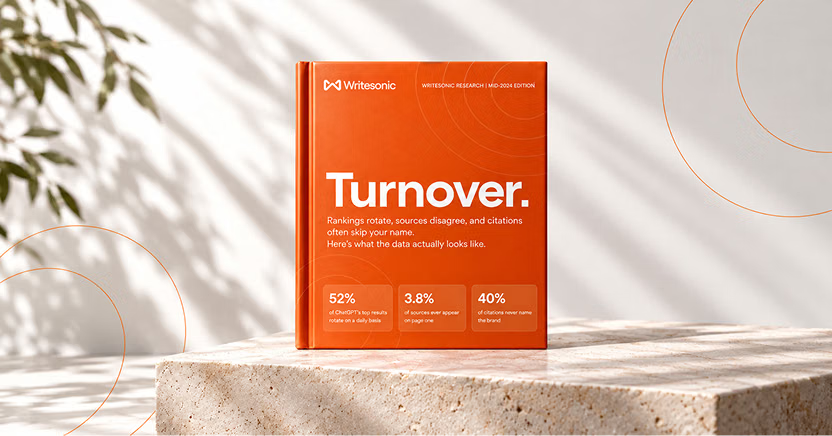
The #1 brand in ChatGPT changes 52% of the time.
Get the report and find out why.
Why The Numbers Never Match
Run the same keyword through both Ahrefs and Semrush and you'll see different volumes and difficulty scores. That's expected. Each company uses its own crawler, clickstream data, and proprietary models to estimate traffic.
Semrush, for example, estimates traffic using a panel of 200M+ anonymized users processed by a neural network. Ahrefs builds its traffic estimates from its own organic search index of 541M keywords. Neither number is "true." These are different platforms and they use different methodologies, so their outputs won't be the same.
But where does that leave your team?
You need to benchmark performance, and that means sticking with one tool and monitoring how the numbers change over time. A keyword's difficulty rising from 20 to 35 in the same tool tells you something useful. Comparing Ahrefs' keyword difficulty score of 20 to Semrush's 35 tells you nothing.
Ahrefs Vs. Semrush Pricing: What You'll Actually Pay
Ahrefs and Semrush both publish their prices publicly, but what you see isn't always what you get. After seats and add-ons, you could pay much more than the base price.
Both Ahrefs and Semrush offer monthly and annual billing, with savings of around 17% if you pay annually. Here's an idea of what you'll pay with each platform.
Prices pulled from Ahrefs and Semrush pricing pages as of October, 2026. Features and pricing change, so check with each platform for up-to-date pricing.
| Plan level | Ahrefs (monthly) | Semrush (monthly |
|---|---|---|
| Entry | Starter $29, Lite $129 | SEO $139 / $117.33 |
| Mid | Standard $249 | Starter $199 / $165.17, Pro+ $299 / $248.17 |
| Top | Advanced $449, Enterprise $1,499 (annual only) | Advanced $549 / $455.67, Enterprise custom |
| Extra seats | $40 to $100 per user | $45 to $100 per user |
| Free trial | None | 7 days |
| Free tool | Ahrefs Free (Site Explorer, Site Audit) | Free plan (10 reports a day) |
Hidden costs to budget for
List prices leave out a lot. You'll see a higher monthly total with add-ons like:
- Seats: Both Ahrefs and Semrush base prices cover one user. But if you need to grant access to multiple people, Ahrefs charges $40 to $80 per user on core plans, and Semrush One charges $45 to $100.
- Ahrefs credits: Lite includes 1,000 credits per user each month, while Standard and above are unlimited. Heavy backlink research can burn through Lite's allowance. Tufail, a small-business user, noted that "Reports eat up credits very fast when doing deep competitor backlink analysis."
- Ahrefs Project Boost: Project Boost gives you access to always-on audits, IndexNow submission, and AI tools within Site Audit. Still, Pro costs $20 per project per month and Max costs $200.
- Ahrefs Brand Radar: You'll pay $199 per platform or $699 for all platforms each month.
- Semrush toolkits: Local SEO features run $30 to $60 per location, Content costs $60, and Traffic & Market costs $289 per user. The AI Visibility Toolkit is $99 on its own or bundled into Semrush One.
These features can absolutely be worth the price, but you need to know what you're paying for. If you're budgeting for AI search, neither option gives you much for the money. If you're doubling down on your AI search presence, Writesonic bundles visibility tracking across multiple engines into its plans, starting at $79/mo billed annually.
Three realistic scenarios
Sorting through Ahrefs and Semrush's features and pricing isn't always simple. Sometimes the math favors one platform over the other. Here's what different teams can expect.
| Scenario | Ahrefs | Semrush |
|---|---|---|
| Solo SEO professional (1 user) | Lite: $129/mo, or Standard: $249/mo to avoid credit limits | SEO: $139/mo, or Starter: $199/mo with AI visibility |
| In-house team (3 users) | Standard ($249) + 2 seats ($120) + Brand Radar ($199) = $568/mo | Pro+ ($299) + 2 seats ($160) + Content Toolkit ($60) = $519/mo |
| Agency (5 users, 10+ client sites) | Advanced ($449) + 4 seats ($320) + Report Builder ($99) + Brand Radar ($699) = $1,567/mo | Advanced $549 + 4 seats ($400) + Local Base for 5 locations ($150) = $1,099 |
Seats, features, and your workflow all affect how much you pay. Since every business is different, it's best to customize each software package to your needs so you can make a fair comparison between Ahrefs and Semrush.
Keep in mind that these estimates combine monthly subscription prices with monthly equivalents for annually billed add-ons. Your total will depend on the billing options you choose.
Why is Semrush so expensive, and is there a cheaper option?
Semrush prices by toolkit, so each extra feature adds a line item to your bill. Shannon, a small-business user, called it "incredibly nickel and dimey."
If you only need core SEO data, go with Ahrefs Starter at $29/mo or the free plans from either Ahrefs or Semrush.
What to watch under Adobe
Adobe completed its Semrush acquisition in April 2026 after announcing a deal worth about $1.9B. Semrush says there are no changes to existing contracts for now. Its packages could change as Adobe connects Semrush to its other products, so check pricing before you renew.
Final Verdict: How To Choose Between Ahrefs And Semrush
Consider these common scenarios to decide which tool is the better fit.
Link builders and PR-led SEO
Pick: Ahrefs
Do you practically live inside backlink reports? Ahrefs has the fresher link index and more trusted link data.
Agencies running many verified client domains
Pick: Ahrefs
Ahrefs includes unlimited verified projects on every core plan, plus API access. Semrush caps Advanced plans at 40 websites.
In-house teams that also run paid search
Pick: Semrush
Semrush covers organic and paid search in one place, plus traffic and market data. That means your SEO and PPC people can share one tool.
Local and multi-location businesses
Pick: Semrush
The Local Toolkit and GBP AI Agent handle listings, reviews, and map rankings per location. Ahrefs has nothing comparable.
Ecommerce stores
Pick: Ahrefs for large catalogs, and Semrush if paid shopping campaigns drive most revenue.
Large stores need deep technical audits and strong keyword data across thousands of product pages. Ahrefs' Advanced plan audits up to 250K pages per project, making it a better pick for large sites. Semrush can be useful here, too, especially if you need more support for paid and organic content.
Beginners
Pick: Ahrefs
Ahrefs has fewer tools and a cleaner interface. Its free plan also lets you practice on your own site first.
Teams focused on AI search visibility
Pick: Writesonic, and keep Ahrefs or Semrush if you still need traditional SEO data.
Ahrefs and Semrush are built for SEO, not for AI search or optimization. Writesonic, on the other hand, was built to improve your AI visibility. Use this platform to identify AI mentions and citations and to get a prioritized list of fixes.
Do you need both?
For most teams, no. Ahrefs and Semrush keyword and backlink data overlap enough that one tool will cover most of your work. The exceptions are agencies that sell both link building and PPC services, or enterprise teams that want a second data source.
The verdict
For most teams doing SEO across content, technical, and some paid search, Semrush is the better single buy. Its breadth covers more features at a competitive price.
Still, Semrush isn't for everyone. Choose Ahrefs instead if backlinks and keyword research are the core of your SEO strategy.
Writesonic Turns AI Visibility Data Into Action
Compared to Writesonic, Ahrefs and Semrush both treat AI visibility as an add-on. Their tools are good at measuring where your brand appears in search, but they can't tell you what to change. That means you're on your own when trying to earn more AI engine mentions and citations.
Writesonic bridges that gap. It works alongside whichever SEO platform you choose, offering:
- Wider engine coverage: Writesonic tracks up to eight AI platforms, including ChatGPT, Perplexity, Gemini, Claude, Copilot, Grok, Google AI Mode, and Google AI Overviews.
- Action Center: This isn't a passive tool that just spots problems. Writesonic also identifies opportunities and suggests fixes. It ranks every opportunity by visibility and citation impact so you can see the most important fixes first.
- Agentic workflows: Writesonic agents refresh pages for AI search, add FAQ blocks and comparison tables, and draft citation outreach with the author's contact details.
- Sentiment detail: See how AI engines talk about your brand. With Writesonic, you can break sentiment down by theme, competitor, and AI model.
SEO still matters, but your customers are increasingly using AI search to find brands, products, and services. Align your SEO efforts with AI search to find customers where they already are online.
Start your free Writesonic trial now.
Ahrefs Vs. Semrush FAQs
Is Ahrefs better than Semrush?
It depends on the job. Ahrefs is better for backlink research, technical audits, and multi-site SEO. Semrush is better for teams that need SEO, PPC, local, and content tools in one place.
Which is cheaper, Ahrefs or Semrush?
Ahrefs is cheaper to start, at $29/mo for Starter and $129/mo for Lite. Semrush starts at $139/mo or $117.33 a month billed annually.
However, pricing varies if you need more user seats or add-on features. Why is Semrush so expensive?
Semrush sells separate toolkits for SEO, AI visibility, local, content, and market data. These tools are helpful, but you'll pay more if you want access to everything. Extra seats on higher plans also cost up to $100 per user each month.
Is there a cheaper alternative to Semrush?
Yes. Ahrefs Starter costs $29/mo, and both vendors offer free plans with limited data. For more options, see these Ahrefs alternatives.
Which is better for beginners?
Ahrefs is usually easier to learn because it has fewer tools and a cleaner layout. Semrush's 7-day free trial is useful for testing before you buy, but it still has a steep learning curve.
Do I need both Ahrefs and Semrush?
Most teams don't. The data overlaps enough that one tool covers most SEO work. Agencies selling both link building and PPC services are the exception.
Can I migrate data or projects from one to the other?
Yes. The easiest way to migrate data between Ahrefs and Semrush is by exporting your data as a CSV file. From there, you re-import the data into the new tool. Make sure you carry over keyword lists, tracked keywords, and ranking history so you don't have to start from scratch.
Did Adobe buy Semrush, and what does it mean for users?
Yes. Adobe announced the deal in November 2025 and completed it in April 2026. Semrush says contracts and services aren't changing for now, but watch for changes as Adobe integrates its products with Semrush.
Which is better for AI search visibility?
Semrush has the edge for most teams because its toolkit costs less and includes sentiment analysis. Ahrefs Brand Radar has a larger prompt database and suits teams already on Ahrefs, although there are plenty of Brand Radar alternatives to consider, too.
However, neither Ahrefs nor Semrush is designed for AI search visibility. Writesonic is the best choice here because it tracks more AI engines and includes a prioritized list of actions for boosting visibility.
The #1 brand in ChatGPT changes 52% of the time.
Get the report and find out why.

Director of Growth Marketing
Cody Slingerland is the Director of Growth Marketing at Writesonic. He leads SEO and AI search (AEO) strategy. He has over 12 years of search experience, helping companies like Zapier, Instapage, Nutshell, CloudZero, and others improve their visibility and position in organic search.