Most of blogger outreach is busywork. You hunt for relevant sites and dig up the right email. Then you write a pitch that doesn't sound like a template and track who needs a follow-up. Replies are what pay for all of it.
Blogger outreach tools compress that busywork so your time goes into relevance and personalization. The stakes are also higher now. The blogs, roundups, and review sites you pitch are the same sources ChatGPT, Perplexity, Gemini, and Google AI Overviews pull from when they recommend brands.
This guide covers how these tools fit the outreach workflow and how to choose one. You'll find 18 picks with a comparison table, starter stacks by budget, and answers to common buying questions.
TL;DR
- Best overall for AI-era outreach: Writesonic uses its extensive AI search dataset to help marketers identify the publishers and companies worth reaching out to, based on the pages AI engines already cite.
- Best traditional all-in-one: BuzzStream for small teams, Pitchbox for agencies running volume.
- Best free stack: Google search operators, Hunter's free plan, and Streak's free Gmail mail merge.
- Most teams don't need one giant platform. A small stack covering prospecting, contact finding, and sending usually wins.
- Deliverability is where campaigns fall apart. Set up a separate sending domain, verify every list, and meet Gmail and Yahoo's sender rules before you send.
What Blogger Outreach Tools Do (And How To Choose One)
A blogger outreach tool helps you find websites worth pitching and reach the right person there. It also tracks each conversation until you land a link or a mention.
Every campaign moves through the same five stages:
- Prospecting: Finding relevant blogs, third-party websites, roundups, and resource pages.
- Finding contacts and verifying emails: Getting a working email for the right editor or author.
- Pitching and sequencing: Sending personalized emails and scheduled follow-ups.
- Relationship management: Tracking who you've contacted, who replied, and what you agreed on.
- Reporting: Measuring replies, placements, and cost.
A few platforms try to cover every stage. Most tools do one stage very well. That's why many teams run a small stack instead of buying a single platform.
How to evaluate a blogger outreach tool
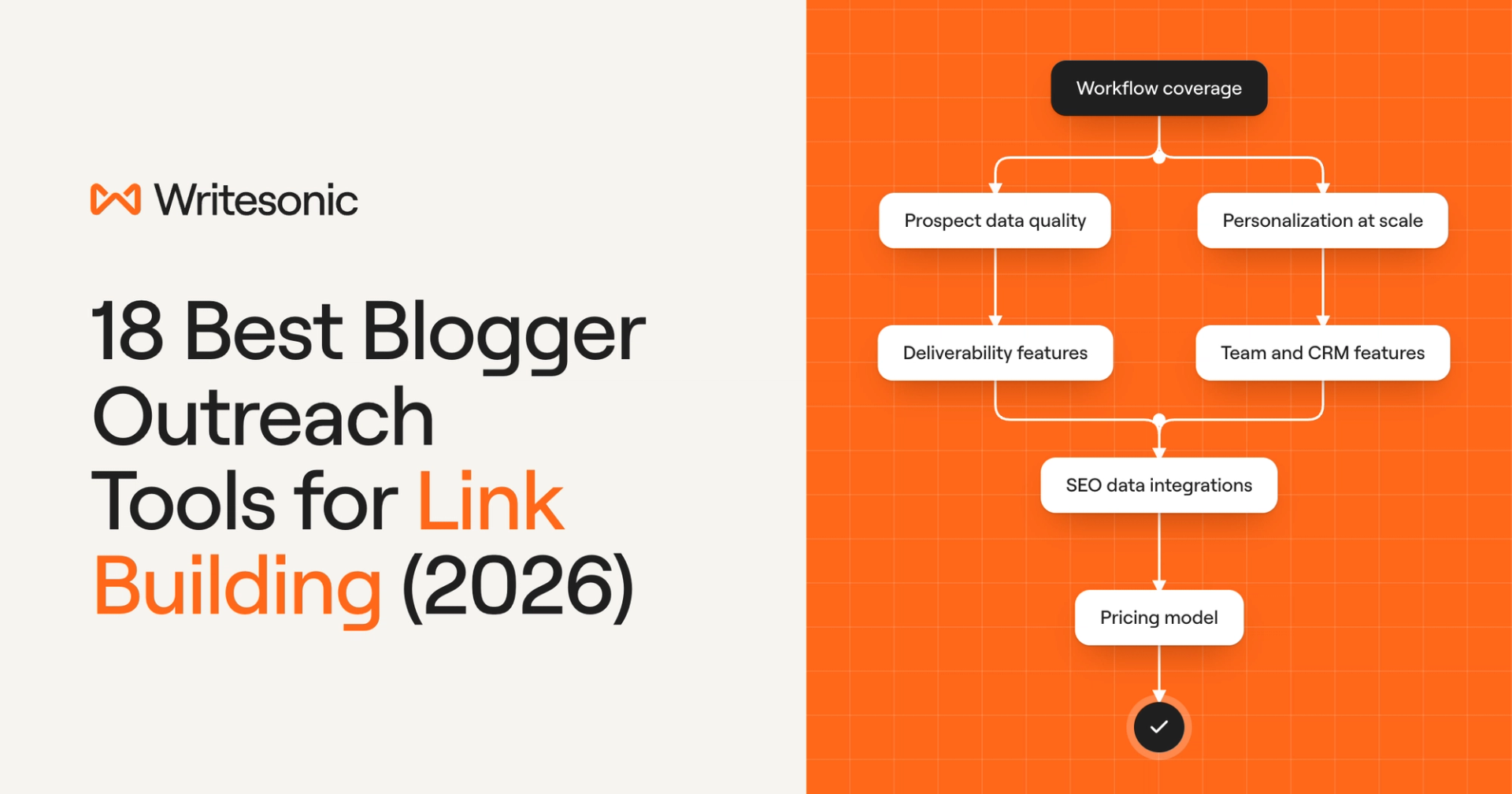
Use these seven factors to compare options before you look at any list.
| Factor | What to look for |
|---|---|
| Workflow coverage | Which of the five stages it handles, and how well. |
| Prospect data quality | How fresh the site and contact data is. Stale data means bounced emails and dead leads. |
| Personalization at scale | AI-assisted first lines and templates help. They still need a human edit. Generic AI pitches are easy to spot. |
| Deliverability features | Warm-up, inbox rotation, sending limits, and list verification. |
| Team and CRM features | Shared inboxes, assignments, and contact history across campaigns. |
| SEO data integrations | Links to metrics from Ahrefs, Semrush, or Moz so you can filter prospects by authority. |
| Pricing model | Per seat, per contact, credits, or pay-per-placement. Credit-based tools can get expensive once volume grows. |
Deliverability: where outreach campaigns fall apart
You can write the perfect pitch and still land in spam. Deliverability problems rarely announce themselves, so your reply rate just slides.
Consider a separate sending domain for outreach to reduce risk to your main company's email reputation. This is a precaution, not a guarantee of protection. Warm up any new inbox gradually before you send campaigns from it.
Verify every list before it goes out. Bounces signal to inbox providers that you're sending to scraped or stale addresses.
Then meet the sender rules that Gmail and Yahoo started enforcing in February 2024. Google's sender guidelines require every sender to set up SPF or DKIM and keep spam rates below 0.3%. Anyone sending more than 5,000 messages a day to personal Gmail accounts also needs SPF, DKIM, and DMARC, plus one-click unsubscribe for marketing emails.
Google recommends keeping your spam rate under 0.10%. Yahoo's sender best practices add that bulk senders must honor unsubscribes within two days. Many blogger outreach campaigns stay well below 5,000 emails a day, but authentication and low complaint rates still apply to everyone.
The 18 Best Blogger Outreach Tools in 2026
The 18 tools below are grouped by the job each one does in a campaign. Numbering runs continuously across categories.
Quick picks
- Best all-in-one: BuzzStream
- Best for agencies: Pitchbox
- Best for beginners: Streak
- Best free stack: Search operators, Hunter Free, and Streak Free
- Best for AI citation outreach: Writesonic
| Tool | Subcategory | Best for | Workflow stages covered | Free plan or trial | Starting price |
|---|---|---|---|---|---|
| Writesonic | All-in-one | Earning backlinks and AI citations | Prospecting, pitching, tracking | Free trial | $79/mo (annual); outreach requires Growth / Enterprise |
| BuzzStream | All-in-one | Small teams and digital PR | Prospecting, contacts, pitching, CRM, reporting | Free trial | $49/mo |
| Pitchbox | All-in-one | Agencies at volume | All five | Trial via demo | $210/mo (billed annually) |
| Respona | All-in-one | Teams buying done-for-you placements | Prospecting, pitching (managed) | 14-day trial (software) | $100 per placement |
| Streak | All-in-one | Gmail-based solo outreach | Pitching, CRM, tracking | Free plan | $49/user/mo (billed annually) |
| Ahrefs | Prospecting | Backlink-based prospecting | Prospecting | Free plan | $29/mo |
| Semrush | Prospecting | Prospecting plus basic outreach | Prospecting, pitching | Free plan | $139/mo |
| BuzzSumo | Prospecting | Content and journalist research | Prospecting, contacts | Free trial | $199/mo (billed yearly) |
| Brand24 | Prospecting | Mention monitoring | Prospecting, reporting | 14-day trial | $199/mo (billed annually) |
| Hunter | Email finder | Finding and verifying emails | Contacts, pitching | Free plan | $34/mo (billed annually) |
| Snov.io | Email finder | Budget all-in-one data | Contacts, pitching | Free plan | $39/mo |
| ZeroBounce | Email verifier | List verification | Verification | 100 free credits/mo | $39 for 2,000 checks |
| lemlist | Sending | Personalized sequences | Pitching | 14-day trial | $55/mo |
| Mailshake | Sending | Simple cold email | Pitching | Free plan | $45/user/mo (billed annually) |
| GMass | Sending | Gmail-native sending | Pitching | None listed | $29.95/mo |
| Upfluence | Database | Large creator programs | Prospecting, CRM | Trial after a call | Not publicly listed |
| Muck Rack | Database | Journalist and media outreach | Prospecting, pitching | Demo | Not publicly listed |
| Modash | Database | Social creator outreach | Prospecting, contacts, pitching | 14-day trial | $199/mo |
All-in-one outreach platforms
These platforms cover several stages in one place. Writesonic is the best pick for AI-citation outreach, and BuzzStream is the runner-up for traditional link building.
1. Writesonic
Overview: Writesonic is an AI search visibility platform with an Outreach Agent built for citation outreach. It finds the blogs, listicles, third-party websites, and community threads AI engines already cite for your tracked prompts and topics, including pages that mention competitors but not you. Then it helps you pitch those pages to earn a placement.
Best for: Teams that want outreach to win both backlinks and AI citations.
Standout feature: The Action Center lists each third-party page citing competitors. Each entry shows its Domain Rating, the competitors it mentions, and which AI platforms cite it. Per Writesonic's documentation, you can draft the email, send it from the platform, and see when the citation goes live.
Limitation: The full Action Center is an Enterprise feature. Self-serve Growth plan gets a trial of five off-page actions a month.
Pricing: Platform plans start at $79/month billed annually (Starter). For self-serve outreach access, choose Growth; full Action Center access is available on Enterprise with custom pricing.
2. BuzzStream
Overview: BuzzStream is an outreach CRM for link building and digital PR. It combines prospecting, contact research, email outreach, and relationship tracking in one shared workspace.
Best for: Small teams and digital PR pros who want structure without enterprise pricing.
Standout feature: Research, pitching, and relationship tracking live in one shared workspace. Pearl, an SEO and digital PR manager, wrote on G2 that "it helps me stay organized and track my digital PR efforts easily."
Limitation: The Starter plan caps you at 500 contacts and one user. Growing teams will likely jump to Growth quickly.
Pricing: From $49/month (Starter), per third-party pricing data. Growth is $174/month for three users.
3. Pitchbox
Overview: Pitchbox is a link building and outreach platform built for agencies and large in-house teams. It covers prospecting, personalized sequences, and reporting. It now markets itself as an outreach platform for link building and AI search.
Best for: Agencies running many campaigns across multiple clients.
Standout feature: AI personalization and an AI Reply Agent help teams handle replies at volume.
Limitation: All plans require a one-year commitment. Trials are only available after booking a demo.
Pricing: Pro is $210/month on an annual plan, or $300/month paid monthly (still a one-year commitment). It includes two users and 2,000 outreach emails a month.
4. Respona
Overview: Respona now leads with a pay-per-result model. Its team pitches publishers and secures placements, and you pay per link. Self-serve software plans are still listed on a separate DIY pricing page.
Best for: Teams that want placements without running campaigns themselves.
Standout feature: Placement pricing is tied to publisher authority, from Domain Rating 20+ up to 60+. You know the cost before you commit.
Limitation: Buying placements means buying links. Google's spam policies require paid links to carry rel="sponsored" or rel="nofollow."
Pricing: From $100 per placement on the managed service. DIY software starts at $198/month.
5. Streak
Overview: Streak is a CRM that runs inside Gmail. You can send mail merges with automatic follow-ups, track opens, and move prospects through pipelines without leaving your inbox.
Best for: Solo outreach pros and beginners who already live in Gmail.
Standout feature: The free plan includes 50 mail merge sends a day plus email tracking.
Limitation: It is built around Gmail, and its free email tools do not include the full CRM. You'll need a paid plan for pipelines and relationship management.
Pricing: Free plan available. Pro is $49/user/month billed annually, or $59 monthly.
Prospecting and research tools
These tools tell you which sites to pitch. Ahrefs is the best pick for backlink-based prospecting, and Semrush is the runner-up.
6. Ahrefs
Overview: Ahrefs is an SEO platform with an index of 35 trillion live backlinks. Outreach teams use it to find sites that already link to similar content.
Best for: SEO teams prospecting by backlinks and authority.
Standout feature: Link Intersect finds sites linking to your competitors but not to you. Those sites already accept links on your topic.
Limitation: There's no built-in email outreach. You'll export prospects to another tool for contact finding and sending.
Pricing: Ahrefs Free covers limited Site Explorer data. Paid plans start at $29/month (Starter), and Lite is $129/month.
7. Semrush
Overview: Semrush is an SEO and AI search suite, now owned by Adobe. Its Link Building Tool builds a prospect list from your competitors and keywords.
Best for: Teams already paying for Semrush who want light outreach in the same tool.
Standout feature: You can start an email outreach campaign from the Link Building Tool itself.
Limitation: Outreach features are basic next to a dedicated platform. Many add-ons cost extra on top of the base plan.
Pricing: Free plan with 10 reports a day. Paid SEO plans start at $139/month.
8. BuzzSumo
Overview: BuzzSumo shows which content gets attention on a topic and who wrote it. Its PR plans add a media database for finding and engaging journalists.
Best for: Digital PR teams pitching data-led stories to writers and journalists.
Standout feature: You can search a topic and see the most-shared articles and their authors. That makes it easy to find writers who already cover your angle.
Limitation: The media database is still marked Beta. It's only included from the PR & Comms plan up.
Pricing: From $199/month billed yearly (Content Creation). PR & Comms is $299/month.
9. Brand24
Overview: Brand24 is a social listening tool that tracks mentions of your brand and competitors across news, blogs, forums, and social media.
Best for: Finding unlinked brand mentions and blogs already covering competitors.
Standout feature: Competitor mention tracking surfaces fresh outreach targets as new posts appear. Someone writing about your rival this month is a warm prospect.
Limitation: The Individual plan tracks only three keywords. That covers your brand and two competitors at most.
Pricing: From $199/month billed annually ($249 monthly). There's a 14-day free trial with no card required.
Email finders and verifiers
These tools get you a working email for the right person. Hunter is the best pick, and Snov.io is the runner-up for budget teams.
10. Hunter
Overview: Hunter finds email addresses by domain or name and verifies them before you send. It also includes simple sequences for sending campaigns.
Best for: Anyone who needs fast, reliable email lookups.
Standout feature: Domain Search shows every public email at a website, along with likely email patterns.
Limitation: Coverage varies by site. Sebin, a business development executive, said that "Hunter occasionally provides incomplete results" for some domains.
Pricing: Free plan with 50 credits a month. Starter is $49/month, or $34/month billed annually.
11. Snov.io
Overview: Snov.io bundles an email finder, a verifier, warm-up, and drip campaigns. It's one of the cheapest ways to cover contacts and sending together.
Best for: Budget-conscious teams that want data and sending in one tool.
Standout feature: Email warm-up is included on every plan. Even the free tier warms up one inbox at 15 emails a day.
Limitation: Credits are shared across searches and verifications. Heavy verification eats into your lookup budget.
Pricing: A free trial plan renews monthly with 50 credits. Starter is $39/month, and annual billing saves 25%.
12. ZeroBounce
Overview: ZeroBounce verifies email lists and flags invalid, risky, and catch-all addresses before you send.
Best for: Cleaning lists exported from any prospecting or finder tool.
Standout feature: Pay-as-you-go credits mean you only pay when you verify a list.
Limitation: Its Email Finder uses 20 credits per query, so contact discovery can consume your credit balance quickly.
Pricing: 100 free credits a month. Paid verification starts at $39 for 2,000 emails.
Email sending and sequencing tools
These tools send your pitches and follow-ups. lemlist is the best pick for personalized sequences, and GMass is the runner-up for Gmail users.
13. lemlist
Overview: lemlist is a cold outreach platform for personalized email sequences. Higher plans add LinkedIn, SMS, and call steps.
Best for: Teams that want personalized sequences and strong deliverability tools.
Standout feature: The lemwarm warm-up tool and a deliverability hub come with every plan.
Limitation: Setup takes some learning. Jake, a sales consultant, said "the setup experience could be more intuitive and more beginner-friendly."
Pricing: The Email plan is $55/month on yearly billing. There's a 14-day free trial.
14. Mailshake
Overview: Mailshake is a straightforward cold email tool for sequences, follow-ups, and reply tracking.
Best for: Small teams that want simple campaigns without many settings.
Standout feature: Deliverability training and concierge onboarding are included.
Limitation: There's no free trial on paid plans. Payment is collected up front.
Pricing: Free Starter plan for one mail account. Email Outreach starts at $45/user/month, billed annually.
15. GMass
Overview: GMass turns Gmail into a mail merge and campaign tool. You build and send campaigns from your normal inbox.
Best for: Solo outreachers who want campaigns without leaving Gmail.
Standout feature: Free email verification is included on every plan.
Limitation: The cheapest Standard plan doesn't include sequences or automatic follow-ups. You need Premium for those.
Pricing: Standard is $29.95/month ($249/year). Premium, with follow-ups, is $39.95/month.
Blogger and influencer databases
These tools give you searchable lists of writers and creators. Muck Rack is the best pick for editorial outreach, and Modash is the runner-up for social creators.
16. Upfluence
Overview: Upfluence is an influencer marketing platform with a database of more than 14 million creators. It handles search, outreach, campaigns, and creator payments.
Best for: Brands running large, ongoing creator programs.
Standout feature: Its modular plans let you start with Find Creators and add campaign tools later.
Limitation: Contracts run for at least 12 months. That's a big commitment for a test campaign.
Pricing: Not publicly listed. Quotes depend on modules, team size, and volume.
17. Muck Rack
Overview: Muck Rack is a PR platform with a searchable media database, media lists, and email pitching.
Best for: Teams pitching journalists and editors at established publications.
Standout feature: AI-powered journalist recommendations on Standard and Premier plans help you find the right writer for each story.
Limitation: It's built for PR teams, and the pricing page doesn't mention bloggers. Check coverage of independent blogs during your demo.
Pricing: Not publicly listed. All three plans require contacting sales.
18. Modash
Overview: Modash searches more than 350 million creator profiles on Instagram, TikTok, and YouTube. It also includes email unlocks, an inbox, and sequences.
Best for: Brands pitching social creators alongside bloggers.
Standout feature: Built-in sequences with timing and exit rules let you run creator outreach inside the same tool.
Limitation: Essentials includes 150 email unlocks a month. Large campaigns can burn through that quickly.
Pricing: From $199/month (Essentials). There's a 14-day free trial with no card required.
Build Your Blogger Outreach Stack (And When To Use An Agency Instead)
You don't need 18 tools. Start with the stage that slows you down most, then add tools as volume grows.
| Your situation | Recommended stack |
|---|---|
| No budget yet | Google search operators, Hunter Free, Streak Free |
| Solo or small team | BuzzStream or Streak, plus ZeroBounce |
| Agency | Pitchbox, plus Ahrefs or Semrush, plus Hunter |
| Focused on AI visibility | Writesonic's Outreach Agent, plus ZeroBounce if needed |
The free stack works better than you'd expect. Search operators like "[your category]" intitle:best 2026 bring up this year's roundups worth pitching. Hunter's free plan covers 50 credits a month, and Streak sends 50 mail merges a day for free.
Tools vs. an outreach agency
Many people searching for outreach tools are also weighing an agency or paid placements. Tools cost less and give you full control over who you pitch and what you say. They also take up your time every week.
Agencies save time but cost more per link. The bigger risk is quality. Some services sell placements on private blog networks or link farms, and Google treats buying links for ranking purposes as spam.
As a rule of thumb, use tools when you have someone who can own outreach for a few hours each week. Use an agency when you don’t have that time, and vet every site they place you on.
Common mistakes to avoid
- Paying for an all-in-one platform before your volume justifies it.
- Over-automating follow-ups until every email reads like a bot wrote it.
- Skipping list verification and burning your sending domain.
- Not tracking reply and placement rates, so you can't tell which pitches work.
Metrics to track per campaign
- Reply rate: Replies divided by emails delivered.
- Positive reply rate: Replies that show interest, as a share of all replies.
- Placement rate: Links or mentions won per prospect contacted.
- Cost per placement: Total tool and labor cost divided by placements.
- AI citation pickup: Track whether your brand is added to the target page and whether it subsequently appears in AI answers for your tracked prompts.
The Final Verdict
Outreach is even more important now in the age of AI search. One placement on a trusted blog or "best of" roundup can now do three jobs at once: It can earn a backlink, referral traffic, and even a citation in AI-generated answers.
Most AI citations come from pages you don't control (e.g., third-party websites, social media, forums, etc). Writesonic's platform data shows 85% of AI citations come from sites you don't own. Our AI citations study found only about 40% come from top-10 search results.
Most outreach tools find blogs by keyword or backlink data. They can't tell you which pages ChatGPT or Perplexity cite when buyers ask questions around topics you care about. A high-authority blog that AI never cites may earn you a link but won’t help improve your AI visibility.
Writesonic fills that gap.
Writesonic tracks brand visibility across ChatGPT, Gemini, Claude, Google AI Overviews, Perplexity, and other AI engines. Its Action Center surfaces high-authority listicles, review pages, third-party websites, and community threads citing competitors but not you.
Our Outreach Agent then turns those gaps into pitches. It drafts outreach to the right pages, tracks which URLs you've contacted, and detects when a new citation goes live. That connects "where should we be mentioned?" directly to "we got mentioned."
For the full playbook, read Writesonic's guide on earning third-party placements and our 11 tested AI visibility strategies.
Ready to start? See which sites AI cites in your category with a free Writesonic trial, and start your outreach there.
The #1 brand in ChatGPT changes 52% of the time.
Get the report and find out why.

Director of Growth Marketing
Cody Slingerland is the Director of Growth Marketing at Writesonic. He leads SEO and AI search (AEO) strategy. He has over 12 years of search experience, helping companies like Zapier, Instapage, Nutshell, CloudZero, and others improve their visibility and position in organic search.