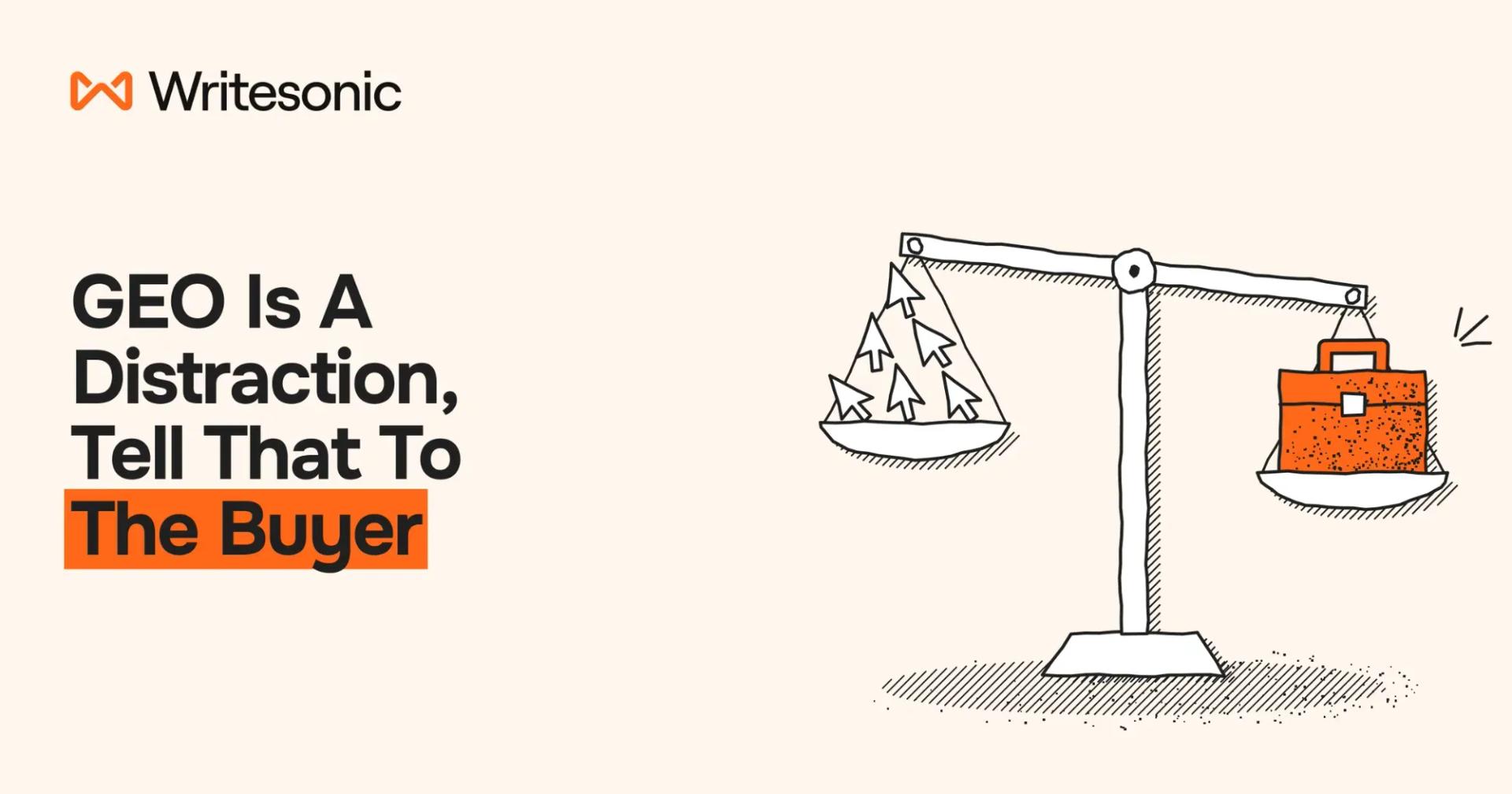
Marie Haynes's "GEO is a distraction" has been making the rounds in SEO circles. I came across it through Rand Fishkin's LinkedIn post.
The skepticism is fair. But the data tells a narrower story than the headline.
I work as a growth marketer at Writesonic. Here is how I see it.
How did "Google drives more traffic" become "GEO is a distraction"?
Marie looked at 100 different websites and more than 145 million sessions. Across the sites tracking conversions, Google organic drove 27 times as many conversions as all LLMs combined.
Nobody is arguing that businesses should stop investing in Google.
But if someone asks ChatGPT or any AI tool to compare three vendors, picks one, then Googles its name to book a demo, that visit comes from Google. The referral report does not tell you what the AI recommended or whether it helped them choose.
Google got the click. That doesn't mean it won the customer.
We do not know how often that happened across those 100 websites. The study does not answer that.
So yes, Google drove more conversions. But that alone is not a reason to dismiss the work that helps your business get recommended before someone searches for you by name.
Since When Did A Marketing Channel Have To Beat Google?
Take BlitzMetrics. Dennis Yu reports closing two clients worth $100K+ in annual contract value each within three months. Both said they discovered the company through AI recommendations.
If you sell contracts at that price, you do not need thousands of visits for a source of new business to deserve attention. You need to know whether it brings the right buyers and whether winning them is worth the effort.
Google could send ten times more traffic and those two clients would still matter. Its lead tells us nothing about whether BlitzMetrics should keep working on its AI visibility.
And discovery is only part of this. Sometimes a buyer already knows your company and turns to AI to decide whether to trust what you are selling. That is where Maestra's story gets interesting.
This $350K Deal Did Not Start With An AI Click
Maestra closed a $350K annual contract that began with cold outreach. Its head of marketing, Simon Semochkin, says the buyer researched Maestra using AI tools and told his team those answers influenced the decision.
I would not claim AI alone closed that deal. But the buyer said it mattered, and a report counting clicks from AI would miss that part of the sale.
If prospects are checking your product this way, it is worth knowing what they are being told.
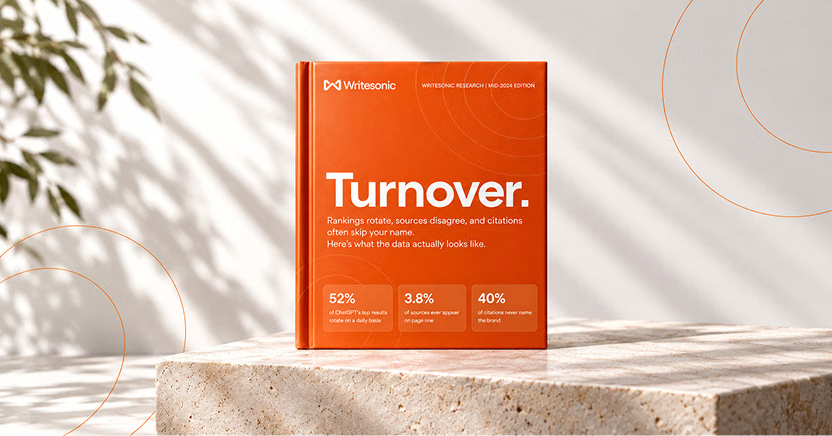
The #1 brand in ChatGPT changes 52% of the time.
Get the report and find out why.
"That's Just Good SEO" Does Not Make The Work Disappear
Some of the work needed to improve those answers will sound familiar to anyone who does SEO.
Keep product information accurate, publish useful content, make the site accessible and earn coverage people trust. No argument there.
But you still need to find out where an AI answer got its information. Your website might explain the product correctly while another source gets it wrong.
Our citation source study compared the websites cited by ChatGPT, Gemini, Perplexity and Google AI Overviews for the same questions. Comparing the platforms two at a time, only 12-24% of the websites in their combined source lists appeared in both platforms' answers, on average.
A Google ranking report will not show you those differences. You have to check the answers on each AI platform and follow the sources they cite.
That is the kind of work Jungo Solutions did for its client, Access College America. The agency checked questions prospective customers might ask AI, reviewed the cited sources, and improved content, reviews and business information. By month five, Jungo reports that the client could cut paid advertising spend by 50% without losing lead volume.
Jungo worked on SEO and AI visibility together, so we cannot give either one all the credit. What matters to the client is that it kept getting leads while spending less on ads.
That is the sort of result I want to see. A higher citation count on its own would not tell us nearly as much.
Bad GEO Deserves Criticism. Bad Measurement Does Too.
Our own ghost citation research, published with Nikki Lam, found that around 40% of citations did not name the source brand in the generated answer.
An answer can also name your product and then recommend a competitor. A rising mention count could include more of those answers.
So I want to know what the answer actually says about the product, whether it is accurate, and whether customers saw it before buying. I also want to see the result hold up across repeated checks, rather than celebrate one favorable response.
If someone promises guaranteed AI recommendations or calls a score from a handful of prompts your share of the market, ask them to explain how they measured it.
Referral counts need the same care. A drop could mean fewer people used AI to research the topic. It could also mean they got an answer and had no reason to click. The number alone does not tell us which.
If The Future Is Clickless, Why Are Clicks The Test?
Marie ends her article by discussing tools that let AI agents find and buy products without sending people to a website. I am interested in that too.
But if someone can compare products and buy one inside an AI platform, referral traffic will tell us even less about how that sale happened.
Making your product available for an agent to buy is only part of the job. The agent still has to choose it over the alternatives. Where it gets its information, and what that information says about your product, still matters.
If we are willing to explore a future where customers buy without visiting our websites, why dismiss work on AI recommendations because it sends fewer visits today?
Let The Work Earn Its Budget
I do not need GEO to replace SEO to take it seriously. I need to know whether the work helps us win business at a cost that makes sense.
That is the test. "Does it send more traffic than Google?" was never the requirement.
The #1 brand in ChatGPT changes 52% of the time.
Get the report and find out why.

Growth Marketer
Tanay covers the intersection of AI and marketing at Writesonic.
His work focuses on how LLMs and AI Agents are reshaping search, and how marketing teams can adapt their SEO and content strategies for an AI-first search landscape.