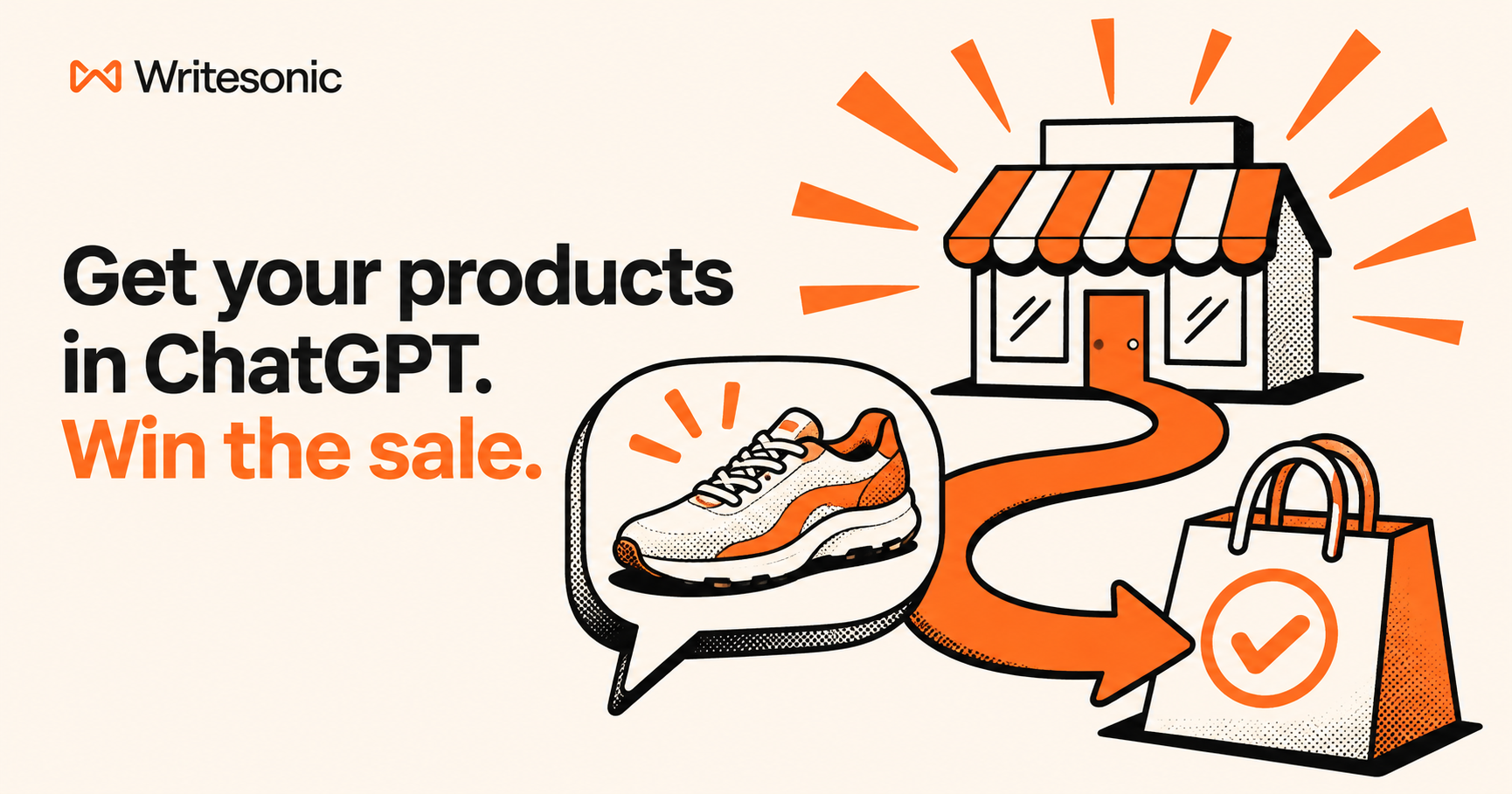
A shopper asks ChatGPT for the best running shoes for wide feet under $150.
Your shoe gets recommended. Great.
Then the shopper clicks Buy, and ChatGPT sends them to a competing retailer.
So who won?
Your brand got the recommendation. Someone else got the customer.
I think that distinction is going to become one of the most important things in ecommerce over the next few years. We've spent a long time thinking about how brands rank in Google.
AI shopping adds at least two more questions: which product does the assistant choose, and which merchant does it send the buyer to?
And now there's a third: can the customer or their agent actually finish the purchase?
OpenAI's new Commerce Partner Playbook makes this distinction unusually clear. It covers everything from product feeds and verified business profiles to cloud-browser access, payments, Sign in with ChatGPT, and plugins that can interact directly with a merchant's systems.
These are useful developments. But I'd resist the temptation to treat this like the old SEO checklist, where you tick off six technical tasks and expect to rank.
A business can have a perfect feed and still not be the best recommendation for a particular shopper. It can be recommended and lose the merchant link. And it can win the click but lose the sale because the wrong variant is shown or checkout fails.
The objective isn't simply to appear in ChatGPT. It's to be discovered for the right questions, selected for the right reasons, and make the buying experience work.
Here's how I'd approach it, both as a retail brand and as a retailer or marketplace selling other people's products.
How to get your products into ChatGPT Shopping: the short answer
For a retailer, the practical starting point is to make important product pages accessible to OAI-SearchBot, publish complete and accurate product and offer details, and use Shopify Catalog or an approved direct OpenAI product feed where eligible.
Keep variants, prices, stock, images, seller identity, shipping, and return policies current.
Then test the buying questions customers actually ask, separately measuring whether your product is recommended, whether your store receives the buy link, and whether the customer completes a purchase.
This improves discoverability and the quality of the shopping experience, not guaranteed ranking or placement. OpenAI describes organic shopping results as independent of ads. Its crawler documentation distinguishes search crawling from AI training and from cloud-browser visits on a user's behalf.
For Shopify stores, check Sales channels → Agentic and the ChatGPT channel eligibility requirements before creating an extra feed. Eligible products may already be shared through Shopify Catalog.
The three layers of ChatGPT commerce
When someone shops through ChatGPT, three related decisions can happen:
| Layer | The shopper's question | Who should measure it? |
|---|---|---|
| Product recommendation | Which running shoe should I buy? | Manufacturers and consumer brands |
| Merchant or offer selection | Where should I buy that shoe? | Retailers, marketplaces, and direct-to-consumer brands |
| Checkout completion | Can I get the right item, at the confirmed price, delivered to me? | Anyone taking the order |
These layers overlap, but they're not interchangeable.
For example, a cosmetics brand could receive strong product visibility while Amazon, Sephora, or another retailer receives most of the purchase links. That might be acceptable if its distribution strategy is retailer-led. It might be a major problem if it's trying to grow direct-to-consumer sales.
A marketplace has the opposite challenge. It may not manufacture a single product, yet it still needs ChatGPT to surface its store as a reliable place to buy.
That's why there's no single universal AI shopping score that captures whether every business is winning.
1. Make your business information accurate, and claim your profile
Start with ChatGPT Business Hub and OpenAI's claim-your-business guide.
If your business is eligible, claim it, verify it, and check the information customers may see: business name, category, website, current product positioning, key policies, and the details relevant to your company.
This sounds basic, but it's an issue that can linger for years. Companies change product lines, discontinue items, expand into new categories, or move away from old positioning. Yet outdated descriptions remain scattered across the web.
A verified business profile gives OpenAI a more direct source of current information. That's valuable. But let's be precise: claiming a profile does not guarantee product placement or override independent recommendations. OpenAI can still consider other information, and submitted changes can be reviewed before they appear.
For retailers, I'd audit the mismatch between what the business says today and what shoppers could find elsewhere. Do old review sites still list discontinued offers? Are store policies consistent? Are your location and delivery coverage accurate?
If your business sells physical products, business information is only the beginning. The catalog is where the more technical work starts.
2. Give ChatGPT a catalog it can actually understand
OpenAI's product-feed guide describes direct catalog submission for eligible retailers through Business Hub. The documented delivery choices include manual uploads, hosted HTTPS feeds, and SFTP, depending on the merchant's access and setup. Product-feed onboarding and certain integrations may require approval.
And a useful distinction: a product feed helps discovery. It does not update a live shopping cart, guarantee an offer is shown, or complete the purchase. Price, inventory, and checkout still need live verification when someone acts.
If your store uses Shopify, check the Shopify Catalog path and the options exposed to your business. Don't assume every Shopify merchant has to upload a second feed, or that every merchant automatically has access to direct uploads.
Start with stable item and offer identities
OpenAI's product schema defines fields such as item_id, title, URL, brand, seller, price, images, availability, country targeting, and variant details.
For a simple product, an ID needs to remain stable as the price or stock changes. For a product sold in multiple colors or sizes, represent the specific variants rather than burying them inside a vague product description.
The distinction between identifiers matters:
item_ididentifies the specific sellable item or variant.group_idcan associate variants of the same parent product.offer_idcan distinguish seller offers where appropriate.
Imagine two retailers selling the same pair of black shoes in size 10. It's the same underlying product, but not necessarily the same offer. The price, delivery date, return policy, and stock can differ.
A catalog that confuses product, variant, and merchant offer identity can make downstream recommendations and purchasing harder to get right.
Give buyers facts, not adjectives
Compare these two descriptions:
Weak: Premium lightweight shoes with unmatched comfort and style.
Useful: Men's road-running shoe, wide fit, breathable mesh upper, 8 mm heel-to-toe drop, available in sizes 7–13, machine wash not recommended.
The second description gives a shopping assistant actual criteria to work with. If a buyer asks for wide-fit road shoes, it can assess whether the product is relevant. The first is mostly marketing language.
Don't invent specifications or pack AI keywords into every field. Accurate, consistent data is the point.
I'd prioritize exact dimensions and compatibility for electronics, material and fit for apparel, ingredients and safety information for beauty, and delivery coverage and seller identity for marketplaces.
Freshness is a business issue
Review the timing of inventory updates, promotions, price changes, and discontinued variants. Make sure the feed, product page, and checkout agree, especially when inventory depends on country or location.
A product card advertising a great price is useless if that offer expired yesterday.
3. Don't forget the website that an AI agent may actually visit
Here's something that's easy to miss amid the talk about feeds.
OpenAI's cloud-browser access guidance says ChatGPT can use a browser on behalf of a customer to open sites, click through pages, and complete supported actions. That's separate from product feeds and separate from OpenAI's search crawlers.
For search discovery, first verify that your public product pages aren't blocked to OAI-SearchBot in robots.txt or by your CDN. That's distinct from GPTBot (used for model training) and the separate cloud-browser visits involved in agent-assisted purchasing. Accurate product data isn't useful if the relevant search crawler can't retrieve it.
Your product might be discoverable, but the customer journey can still break if your CDN or firewall unintentionally blocks a legitimate browser session.
I would test the flow from a real product question all the way to a checkout handoff:
- Can the product page load and show its options?
- Can the agent select the correct color, size, or other variant?
- Can it confirm shipping availability and the full price?
- Can it manage cart state reliably?
- Can the customer review the final order and complete the transaction?
OpenAI says you don't need a feed or plugin merely for its cloud browser to navigate your site. And don't disable security across the board to accommodate agents. Investigate verified browser traffic and fix unintended blocks while preserving fraud protection, permissions, and customer approval.
This is a new category of conversion optimization: is your website usable by a legitimate agent acting with the customer's authorization?
4. Prepare checkout and payments for assisted purchases
OpenAI's payment guide explains that supported customers can use ChatGPT Wallet on merchants' existing websites, with customer review and approval. The retailer still handles the real payment processing, order fulfillment, support, and fraud decisions.
The important nuance is that a Wallet-specific integration isn't necessarily required for an existing checkout. OpenAI describes compatibility with ordinary payment forms, subject to availability and successful browser access.
That doesn't mean every transaction works automatically. Risk systems may reject a new browser environment, the customer may need additional verification, or a payment method might not be supported for a particular checkout.
Test price changes at checkout, tax and shipping calculation, payment failures, session expiry, and post-purchase confirmation. If your analytics only count completed purchases, also measure where initiated purchases fail.
I wouldn't optimize for “one-click buying” at the expense of correctness. A failed or mistaken purchase is a much worse experience than asking the shopper one more question.
5. Decide whether your business needs a plugin
This is where the engineering decisions become more interesting.
OpenAI's commerce plugin guide describes exposing structured tools that can look up live product offers, create and update carts, prepare checkout, and support orders or reordering where applicable.
Rather than a browser guessing which button to press, the plugin can call the merchant's own backend directly and get structured results.
For a retailer, that might mean:
- Looking up the exact SKU and offer for a customer's location.
- Returning current, location-aware price and stock.
- Building a cart without immediately requiring sign-in.
- Preserving the cart after login.
- Sending the customer to a safe checkout handoff if in-chat checkout isn't supported.
These are powerful capabilities, but they are not mandatory for basic product discovery. A plugin introduces more integration and operational work. For many businesses, getting the catalog right and making the existing site accessible is the more useful first investment.
If you do build one, keep the distinction between finding a product, creating a cart, and authorizing a purchase. A tool call should never quietly turn one into another.
The #1 brand in ChatGPT changes 52% of the time.
Get the report and find out why.
6. Make account access painless, without confusing identity and purchase approval
OpenAI also documents Sign in with ChatGPT for eligible commercial partners.
It's intended to reduce friction when a retailer needs a customer to sign into an account, access saved information, track orders, or connect a shopping cart to an existing profile.
The integration is subject to partner availability and review. And the customer's identity is not the same thing as permission to place an order.
For a good implementation, returning shoppers should not accidentally create duplicate merchant accounts, and carts should not disappear during sign-in. The merchant remains responsible for consent, security, and the actual purchasing rules.
Put differently: don't make shoppers start over because the assistant handed them off to a login page.
A brand and a marketplace need different AI shopping strategies
This is where I think a lot of ecommerce GEO advice becomes too generic.
If you make products, you care whether the assistant recommends them. If you sell products made by others, you care whether the assistant chooses you as the place to buy. If you do both, you need to measure both.
| Question | Consumer brand / manufacturer | Retailer / marketplace |
|---|---|---|
| Primary success | Relevant SKU recommendations | Store/offer selection and qualified purchases |
| Missing opportunity | Competitor product recommended instead | Product shown, but competitor merchant gets the link |
| Catalog risk | Wrong variant, specs, or brand association | Wrong seller, price, delivery, availability, policy |
| Useful benchmark | Product share of voice, ranking, SKU accuracy | Merchant share, direct-buy link share, seller selection |
| Next action | Improve product data and credible evidence | Improve offers, fulfillment clarity, availability, checkout |
Let's use a sneaker example. The brand's product could appear first in an AI shopping answer. Yet the buyer might be sent to a marketplace instead of the brand's own store.
If I'm running that brand's store, I'd want to know why. A direct purchase can let us keep more of the margin instead of paying marketplace fees or sharing it with a retail partner.
It also gives us a direct relationship with the customer. The useful comparison is what we keep after fulfillment, returns, and support—not just whether we avoided a fee.
The marketplace wants that same shopper to land on its website and complete the purchase there. It may sell the exact same shoe, so getting the product recommended isn't enough.
It needs ChatGPT to choose its offer and send the buy link to its store. Price, availability, delivery, and returns all become part of that competition.
Neither outcome is automatically better for every brand. If the distribution strategy is retailer-led, a marketplace order may be exactly what the brand wants. But if the goal is to grow direct sales and protect margin, strong product visibility can hide the fact that someone else keeps getting the order.
This is why a blanket AI visibility score isn't enough to tell a retailer whether they're winning.
The part most implementation guides leave out: measure the shopping questions you're losing
OpenAI's technical steps help you participate in the commerce experience. They don't tell you which prompts you're losing to competitors, which products appear with wrong specifications, or who receives the purchase links.
I'd start a recurring audit with a real set of customer questions, not random searches designed to make your brand look good.
For a running-shoe brand, that might mean questions about running on pavement, wide feet, trail grip, foot pain, waterproofing, and budget.
For a retailer, I'd add: “Where can I buy this exact model with delivery to [region]?” and “Which store has this in my size and accepts returns?”
Separate the observations into a few measurable events:
- Shopping-trigger rate: Did the AI answer show shopping cards at all?
- Product appearance and rank: Was your exact SKU included, and in what position?
- Competitor substitution: Was an alternative brand recommended instead?
- Merchant appearance: Did your store appear as a purchasing option?
- Direct-buy link share: What share of buy links for your products directed buyers to your own website?
- Data accuracy: Did the shown variant, price, merchant, and product details match reality?
- Paid visibility: Was there a separately labeled ad, and which merchant or brand paid for it?
- Outcomes: Did referral visits, carts, purchases, and revenue move in your own analytics?
A clean study should compare prompts by intent, country, platform, and time. Don't mistake a single answer for the market.
This is also where our work on AI Shopping Analytics fits naturally. In Writesonic, the rebuilt Shopping experience lets teams examine Brand, Merchants, and Competitors views, investigate individual products and merchants, and look at which stores receive the buy links.
To add your catalog, the current Shopping setup guide offers a one-time Shopify import or a CSV upload in Google Merchant Center format. Later changes in Shopify do not automatically sync to Writesonic.
For example, a manufacturer can inspect individual SKUs in All Products to see which appear and which retailers receive the links. A marketplace can use All Merchants to see where it is winning or losing as a purchase destination.
If you sell your own products and distribute third-party brands, you'll want both perspectives.
The important distinction: importing a catalog into a tracking product is for identifying and analyzing your products. It is not the same thing as submitting a product feed directly to OpenAI.
Our Shopping metrics documentation explains shopping visibility, direct buy link percentage, shopping rank, and average merchant rank. Those are a helpful illustration of what to measure, but your measurement framework should be useful regardless of which software you use.
Don't confuse sponsored placement with an organic recommendation
OpenAI distinguishes product recommendations from advertising. A business shouldn't assume that claiming a profile, submitting a feed, or advertising guarantees organic product selection.
But paid visibility is still worth measuring separately.
If you see a sponsored product or merchant placement, record the query, position, advertiser, landing URL, and whether the same product was also recommended organically. Compare the two streams instead of combining them into one visibility score.
For context, our AI Ads Tracker monitors paid placements across supported ChatGPT and Google AI search experiences. It's useful alongside shopping analytics when a category becomes more competitive, but ads are a distinct signal from independent recommendations.
SEO, GEO, and retailer operations now have to work together
I wouldn't describe this as “SEO is dead.” Strong product pages, crawlable information, reliable reviews, and useful category content still matter. Google and other platforms have their own commerce infrastructure, and Google Merchant Center's AI performance insights now give retailers another platform-specific view of discovery.
But more of the shopping journey can now happen inside a conversational interface.
That puts work that used to live in separate teams on the same critical path: ecommerce merchandising, SEO, catalog operations, engineering, performance marketing, and customer support.
A broken size variant isn't merely an operations issue if it makes an assistant recommend the wrong item. An outdated return policy isn't just documentation debt if it prevents someone from choosing your store.
And a negative third-party review might matter to a buying recommendation even when your product page is technically perfect.
This is where citation analysis and AI visibility measurement have practical value: they help identify what AI is relying on and whether your work changes the outcome.
Black Friday and Cyber Monday 2026: a seasonal stress test for AI shopping
With Black Friday on November 27 and Cyber Monday on November 30 close, there isn't a month to get ready. I'd focus first on the products and purchase journeys that matter most for those dates.
Holiday shopping adds fast-moving discounts, short-lived inventory, variant shortages, and shoppers who care about delivery cutoffs. Those conditions expose the gaps that ordinary product visibility reports can miss.
The work doesn't stop after Cyber Monday. Christmas shopping keeps those same pressures in play, with delivery promises becoming more important as December 25 approaches.
If I were preparing an online store this week, I would focus on five things:
- Validate the exact sale offer. Check that the relevant SKU, currency, regular
price, and optionalsale_pricematch the product page and checkout. OpenAI's feed schema requires a valid regular price and documentssale_priceseparately. Changes need to be reflected when sales begin and end. - Audit the products most likely to sell out. Track stock and availability at variant level, not just at parent-product level. Make sure a sold-out size doesn't keep appearing as buyable in the feed or on the site.
- Keep promotional offers current. Use the delivery methods available in your OpenAI product-feed setup, and update prices and availability when an offer starts or ends. Confirm that any discount conditions also appear accurately on the product page and at checkout. Rewriting descriptions to say “Black Friday deal” is not a substitute for accurate offer data.
- Test holiday buyer prompts. Try realistic requests such as “Best noise-cancelling headphones under $200 on Black Friday, deliverable before December 5” and “Which store has this exact laptop model with easy returns?” Record product choices, seller links, sponsored placements, and whether offer details are accurate.
- Verify checkout under real conditions. Test holiday shipping, total price after taxes, discounts, delivery promises, payment authorization, and cloud-browser accessibility. The buy link is not the sale.
I wouldn't turn the entire AI shopping strategy into a Black Friday tactic. I'd use the season as a stress test, then keep the catalog, site accessibility, and measurement improvements in place year-round.
A practical plan for Black Friday and the holiday season
I wouldn't try to squeeze every integration in this guide into the short run-up to Black Friday. I'd get the essentials right for November 27, then use what we learn to improve the rest of the holiday season.
Now through November 20: Fix the essentials. Prioritize your bestsellers and planned offers. Check stable variant and offer IDs, feed status, prices, stock, merchant links, and whether important product pages are accessible. Start claiming your business if eligible, while fixing the gaps already within your control.
Start with missing bestsellers, wrong variants, outdated prices, and checkout failures. Address inaccurate information on relevant third-party pages where you reasonably can.
November 21–26: Test the buying journey. Run a focused set of category, comparison, SKU, and “where to buy” questions. Record product and merchant selections, then test the path to checkout, including sale prices, delivery promises, and returns. Prioritize fixes you can verify before the sale starts.
November 27–30: Monitor the sale as it happens. Watch your priority products for price changes, sold-out variants, broken buy links, and checkout problems. Keep the feed, product page, and checkout aligned. Rerun comparable prompts and check actual traffic, carts, and purchases rather than treating a favorable screenshot as a win.
December 1–24: Apply what you learned to Christmas shopping. Review which products and merchants won the buy links over Black Friday and Cyber Monday. Fix recurring gaps, refresh gift-oriented prompts, and keep delivery cutoffs and remaining stock accurate by market. As those cutoffs pass, make sure shoppers can see what can still arrive in time.
After Christmas: Review the full season. Compare product visibility, merchant selection, referral visits, and completed orders. Factor in returns where you can. Keep the improvements that helped, and use the quieter period for larger feed, plugin, or checkout projects that need more testing.
I think this is where AI shopping becomes a serious discipline. Not a once-a-quarter audit. Not a checklist of files uploaded. A continuous loop between what buyers ask, what assistants show, what your business can fulfill, and what customers actually do.
My bigger takeaway
There's a temptation to think the next ecommerce race is about how to get your products into ChatGPT.
That's necessary. But it's not the whole job.
A retailer can be present and still not be selected. A brand can be recommended and still lose the purchasing link. And an agent can start a checkout but fail to deliver the right order.
Being discoverable, being chosen, and completing the sale are three different problems.
The businesses that treat them separately, and then connect the data, will be better prepared as AI shopping evolves.
And I suspect the hardest work will be quite unglamorous: correct product data, trustworthy sources, accurate local offers, reliable checkout flows, and disciplined measurement.
That's usually how meaningful product advantages are built. Not through a single clever optimization, but by getting a lot of small details right.
Frequently asked questions
The #1 brand in ChatGPT changes 52% of the time.
Get the report and find out why.

Founder @ Writesonic
Samanyou is the founder of Writesonic, a platform that helps you track & boost your brand’s visibility in AI search. Two years before the launch of ChatGPT, Writesonic was already at the forefront, helping organizations automate their entire marketing workflow through specialized AI agents for SEO and content. Samanyou is a Forbes 30 Under 30 awardee and a winner of the 2019 Global Undergraduate Awards, often referred to as the junior Nobel Prize.