Did you know that SEO for AI search engines matters now more than ever?
AI is changing how search works faster than ever before. AI Overviews have grown from 25% to 49% of search results between August 2024 and May 2025. This move toward artificial intelligence search engine optimization creates new opportunities for businesses.
In this blog, you’ll discover proven strategies to adapt your SEO approach for this AI-driven world. Let’s get started.
The Incoming Change Lies in SEO for AI Search Engines
AI-powered platforms are changing faster how people find information online. The search landscape looks different now. These changes need a new way to think about SERP strategies by implementing SEO for AI search engines.
The rise of Perplexity, ChatGPT, and Gemini
Search has grown beyond Google’s blue links as new players join the AI search market. Perplexity AI launched a dedicated AI search service. OpenAI added web search to ChatGPT. Google introduced its AI Overviews technology. Microsoft improved Bing with ChatGPT, and Google released Gemini.
These platforms work differently from regular search engines. They don’t just match keywords to webpages. Instead, they use sophisticated large language models (LLMs) to understand context, interpret meaning, and give conversational responses. This change marks a milestone in the digital information era and fixes many problems with keyword-based searches.
Each platform has its own special features. Perplexity uses carefully chosen reliable sources instead of a huge index like Google’s. It focuses on up-to-date information and uses advanced natural language processing to understand what users ask. ChatGPT uses its powerful language model with Bing’s search features. Gemini combines traditional ranking signals with AI-powered understanding to find helpful and trustworthy information. Google’s Search Generative Experience (SGE), now known as AI Overviews, shows key information snapshots, understands complex questions, and helps shoppers by providing detailed product information.
Another rising player in the AI search sector is Writesonic SEO AI Agent – Chatsonic. This tool is a comprehensive suite that both identifies and implements content improvements that can boost rankings and engagement, as well as addresses queries backed by structured data.
How optimizing SEO for AI search engines affect visibility and traffic
The AI search revolution already shows measurable effects. About 60% of searches now get no clicks because AI-generated answers help users right on the search results page. This “zero-click” trend is changing how traffic flows across the web. Websites with how-to guides and tutorials feel the biggest impact because AI summaries give complete answers in search results.
AI search brings some exciting opportunities despite these challenges:
- Higher conversion value: AI search visitors convert 4.4 times more often than traditional organic search visitors. This happens because LLMs give users detailed information before they click, making them more likely to buy when they visit a site.
- Citation opportunities: Content showing deep expertise, getting recognition beyond your website, and focusing on real value over self-promotion gets cited more often.
- Targeted visibility: Businesses can reach their exact audience with amazing precision — if they follow the new rules.
This change is happening faster than expected. AI search traffic might become bigger than traditional organic search traffic for many topics by early 2028 — maybe sooner if Google makes AI Mode the default. Traditional SEO still matters because ranking in standard search results helps get citations in AI systems.
SEO for AI Search Engines: How AI Understands and Ranks Content
AI search engine optimization requires a deep understanding of how these systems work. Traditional search engines match keywords, but SEO for AI search engines use advanced technologies that rank and interpret content in completely different ways.
Natural language processing and context
NLP forms the foundation of SEO for AI search engines. This subfield of artificial intelligence helps computers understand and communicate in human language. The technology combines computational linguistics with machine learning and deep learning to recognize, interpret, and generate meaningful human language. AI search engines can now learn the subtleties of queries that go far beyond matching keywords.
Modern AI search systems look at word meanings and phrases through several advanced techniques:
- Entity recognition: Identifies specific elements like names, locations, and dates within text
- Sentiment analysis: Determines the emotional tone of content
- Dependency parsing: Analyzes grammatical relationships between words
- Topic modeling: Identifies themes across documents
These features help AI search engines understand complex queries and give accurate results even with vague or unclear searches. To cite an instance, see how they can tell the difference between “apple fruit” and “Apple Inc.” by looking at the context.
AI search now puts more weight on semantic relationships than keyword density. AI also reviews content through E-E-A-T (experience, expertise, authoritativeness, trustworthiness). It looks for signals like peer citations, institutional affiliation, and author expertise. Building credibility across platforms has become vital for optimizing SEO for AI search engines.
Real-time synthesis and personalization
AI search engines don’t just understand language – they excel at combining information and customizing results instantly. These engines use “query fan-out” to break down questions into subtopics and run multiple searches at once. The systems analyze behavior patterns like search history and click-through rates to build a rich understanding of individual interests. This enables:
- Search results tailored to past behavior
- User profiles that grow with more interaction
- Predictions based on previous searches and context
Advanced machine learning lets AI search engines adapt instantly by learning from user responses. The system notes when users click on recommendations and improves future suggestions. AI becomes more fluent in handling complex queries and fine-tuning results based on behavior, context, and intent. AI can now predict what information users need based on their search history, work context, or ongoing projects.
Now let’s look into how to optimize SEO for AI search engines.
Step 1: Create Content that Optimizes SEO for AI Search Engines
AI search engines have changed how we develop and optimize content. These platforms now prefer content that shows depth, expertise, and connects with readers. Here’s how to craft content that AI algorithms will likely cite and promote.
Use question-based and conversational formats
AI search engines learn from natural language and give priority to content that matches how people talk and search. The success of SEO for AI search engines now depends on a conversational approach rather than just keywords.
Your original content should revolve around common questions. People no longer type basic keywords – they ask complete questions with context. To get the best results:
- Frame headlines and subheadings as questions (e.g., “How do AI search engines work?” rather than “AI search engine functionality“)
- Place direct, concise answers (40-50 words) right below question headings
- Tools like Writesonic SEO AI Agent helps find relevant question-based keywords
- The content should sound natural, as if you’re explaining the topic to a friend
This strategy lines up with Google’s PAA (People Also Ask) boxes that help interpret user queries. Question formats also boost your chances of appearing in featured snippets — where AI often pulls citations from.
Include expert quotes and statistics
Credibility matters a lot in AI search engine optimization. These systems favor content that demonstrates expertise, authoritativeness, and trustworthiness — Google’s E-E-A-T principles.
Research shows original data gets cited 30-40% more often than general content. This visibility boost makes statistics crucial for AI search results. Primary sources and statistics should back every claim. This practice makes your content a trusted source and establishes topical authority that AI platforms can reference with confidence.
Write comprehensive, long-form content
AI search engines prefer detailed content over brief articles. Longer pieces get better results – content over 1,500 words receives up to 77% more social shares.
The best practices for AI search engines include:
- Writing substantial content (1500+ words) that shows deep knowledge
- Exploring topics from multiple angles
- Adding real-life examples, case studies, and current data
- Clear definitions of technical terms help both humans and AI understand
- A well-laid-out structure with descriptive headings
Detailed content has become essential to optimize SEO for AI search engines. For such content creation, you can use AI-based agents such as Writesonic AI Article Writer 6 with clear headings, content sub-sections, and FAQs.
Step 2: Use Visuals and Videos to Boost AI Citations
Visual elements have become powerful tools that boost content visibility in SEO for AI search engines. Text remains vital, but visual assets can boost your presence in AI-driven search results. Let’s see how smart use of visuals can improve your chances of getting cited by platforms like Perplexity and other AI search engines.
Embedding YouTube videos for better reach
YouTube videos on your pages can improve SEO in both traditional and AI search environments. Pages with embedded YouTube videos ranked for twice as many keywords on Google’s first page compared to those without videos. Videos do more than improve search rankings:
- They keep visitors on your page longer, which AI search engines see as valuable content
- They make content easier to understand with familiar video players
- Your content reaches more platforms without multiple uploads
- You save storage costs with free hosting on YouTube
Video placement matters a lot. Put videos at the top of the page above the fold to get the most engagement. Adding video schema markup helps search engines understand your video content better, including its title, description, and length.
Optimize image alt text and captions
Alt text serves two key purposes in AI search engine optimization. It makes content available to screen readers for visually impaired users. Search engines also use it to understand what’s in your images.
AI systems now read images better than ever. To optimize your alt text:
- Write useful descriptions with the right keywords
- Add specific product names and IDs for product images
- Make sure alt text matches what the image shows
- Use descriptive file names instead of default camera names (IMG_6005)
AI tools can now create good alt text quickly for many images. Microsoft’s products like PowerPoint and Word use AI to generate image captions automatically. Good visual content makes a big difference in AI search visibility.
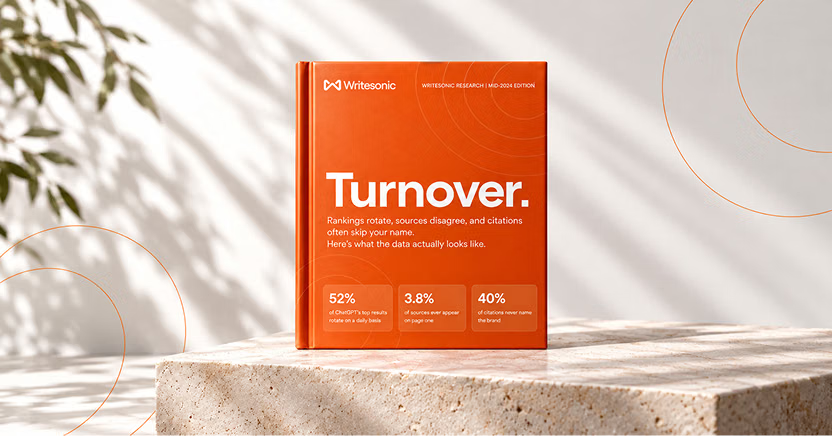
The #1 brand in ChatGPT changes 52% of the time.
Get the report and find out why.
Step 3: Structure Content for Easy Extraction
Good content structure makes a big difference in how AI search engines interpret and cite your material. Quick and simple content works best since AI systems timeout within 1-5 seconds when retrieving content. The right formatting can boost your visibility in AI-powered search results.
Use inverted pyramid writing style
The inverted pyramid style puts your most important information first. This structure, which started in journalism, helps AI systems extract your core message without reading entire articles.
Starting each section with the 5W and H (Who, What, When, Where, Why, and How) lets AI crawlers check relevance faster. This works great because research shows most users scan web pages instead of reading every word.
If we ask AI “What is the boiling point of water?”, your content should be arranged in a way that the first paragraph should give a complete overview, followed by supporting details and explanations.
“The boiling point of water is 100°C (212°F) at sea level. This temperature varies based on atmospheric pressure, with higher altitudes resulting in lower boiling points. The relationship between pressure and boiling point is described by the Clausius-Clapeyron equation.“
This method puts emphasis on “above-the-fold” content — what users see without scrolling — so AI doesn’t miss your vital information during extraction.
Add summaries and key takeaways
Summaries and key takeaways help boost AI search performance in several ways. They give AI systems short, easy-to-extract summaries that fit well in search results.
You should include:
- Brief summaries at the beginning of long articles
- Key takeaways at the end of major sections
- A detailed summary at the article’s end
These elements strengthen main points and give AI a clear reference. Keep summaries short (2-3 sentences or 30-50 words) and focus on key information with clear language.
Research shows that content optimized for featured snippets gets 42% more clicks.
Use bullet points and lists
Bullet points and numbered lists help organize information in AI-friendly ways. They split up dense text and help AI systems spot and extract key points quickly. Lists work better for SEO in both traditional and AI search. When making lists:
- Keep each point brief and focused
- Use parallel structure for consistency
- Start with the most important information
- Limit lists to 5-7 items for best readability
Good heading structure (H1-H6) and semantic elements like article, section, and nav tags make content extraction easier. Pages that clearly show services, benefits, and key details in a scannable way are more likely to appear in AI-generated responses.
Step 4: Optimize for Follow-Up and Voice Queries
SEO for AI search engines includes optimizing for conversational nature that opens new doors to content, predicting user needs and questions.
Anticipate follow-up questions
AI search engine optimization now needs to predict users’ next questions. AI platforms build relevant subgraphs of entities and relationships. These predict likely follow-up questions based on current and past user queries. You can take advantage of this by:
- Creating content that answers both main and logical follow-up questions
- Connecting related concepts to build semantic links
- Checking analytics to spot query patterns showing common follow-up questions
Use natural language for voice search
Voice search grows faster each day. Users talk to search engines in more conversational ways. Voice queries are usually longer, question-based, and come as complete sentences instead of keyword phrases.
Making your content voice-search friendly needs:
- A conversational tone with natural language
- Regular use of pronouns (I, we, you, us, they) in your content
- Simple terms instead of complex industry jargon
- Long-tail, question-based keywords
For example, a typed search might say “best pizza NYC” while someone might ask “What’s the best pizza place near me in New York City?“
Create FAQ sections based on AI prompts
FAQ sections are powerful yet underused tools for AI search optimization. A well-laid-out FAQ section can bring 20% of page clicks. Start by creating FAQs that tackle real user questions rather than promotional content. AI tools can help generate relevant questions about:
- Common support issues
- Industry questions
- Ordering and shipping
- Technical fixes
- Compatibility issues
Each FAQ should have clear question headers with short, direct answers to boost AI search visibility. This style increases your chances of being picked for voice search responses and makes the user experience better.
Step 5: Establish Authority Across Platforms
Your authority in AI search engines reaches way beyond your website. The evolution of AI search has made building trust on multiple platforms a vital factor for visibility in AI-generated responses.
Be present on industry-specific platforms
AI search engines look at your brand’s entire online presence, not just your website. AI models draw information from trusted, industry-specific sources when they put together answers. AI search engines give extra weight to specific platforms:
- Reddit and Quora for technical and long-tail queries
- LinkedIn for professional expertise
- YouTube for well-laid-out explainer content
Your business details must stay consistent across directories like Google Business Profile, Yelp, BBB, and industry-specific listings. Any differences in your business information can confuse users and AI systems, which ends up hurting your visibility.
Encourage user-generated content and reviews
User-generated content (UGC) plays a central role in AI search optimization because it offers genuine validation that brands can’t create on their own. Smart brands should:
- Ask customers to leave reviews on multiple platforms
- Add user-generated photos and videos next to product information
- Create ways to collect authentic customer testimonials
- Reply quickly to both good and bad reviews
People prefer businesses that respond to reviews. This creates a positive cycle of social proof that AI engines increasingly notice and reference.
Maintain consistent publishing and updates
Regular updates tell AI systems your brand stays relevant and trustworthy. Fresh statistics, links, and insights help maintain visibility as AI models learn continuously from the web.
Keeping your content current requires:
- Regular updates to your most important articles
- A steady publishing schedule
- Current listings across all platforms
- Accurate information throughout your digital presence
Brands with the widest online presence get cited more often in AI-generated responses.
Step 6: Track and Improve AI Search Performance
Traditional analytics tools can’t capture the new performance metrics needed to measure success in AI search. Your strategy towards SEO for AI search engines needs continuous adaptation as AI search evolves, and monitoring helps identify these opportunities.
Use tools to monitor AI-driven traffic
Generative Engine Optimization (GEO) is a great way to check if your content is being mentioned and cited by these AI search engines. GEO tools like the Writesonic GEO platform helps detect if AI engines like ChatGPT, Perplexity, Claude, or Google Gemini bring in any traffic to your published content.
Compare performance across AI platforms
The Writesonic GEO tool also shows brand mentions and website citations in different AI search engines. These metrics need regular monitoring to understand visibility trends and find content that resonates with AI systems.
Market share analysis reveals the brands and websites that lead AI search results for your tracked topics. This practical intelligence shows gaps in your AI search presence compared to competitors.
Refine content based on data insights
Content that brings AI traffic needs optimization in SEO for AI search engines based on data. Successful AI optimization strategies need regular content audits to update old information, which makes AI search bots more likely to scan your site.
Success metrics specific to AI like share of voice as compared to your competitors, how many prompts in AI engines mention your brand, and valid citation sources help assess your optimization efforts completely.
Conclusion: Leverage SEO for AI Search Engines in 2025
AI search engines have changed the SEO world. Success in this new environment needs a change from traditional keyword optimization to SEO for AI search engines that focuses on expertise and user intent with detailed content creation.
AI search optimization will keep evolving. Regular monitoring and adaptation with the help of GEO tools are vital to stay visible. Note that good AI search optimization isn’t about bagging algorithms. It’s about creating valuable content that both humans and AI systems see as authoritative and helpful.
Frequently Asked Questions (FAQs)
The #1 brand in ChatGPT changes 52% of the time.
Get the report and find out why.

Sumana Sarmah is a Content Writer @ Writesonic, with 5+ years of hands-on experience in B2B content writing and copywriting.
With a knack for creative brainstorming, she strategizes and curates impactful content that brings in exceptional engagement.