The world of search is changing fast. Not long ago, winning at digital visibility was all about classic SEO (Search Engine Optimization): getting your pages to the top of Google’s 10 blue links.
However, we’re now witnessing the rise of Answer Engines – AI-powered platforms such as Google’s AI Overviews, ChatGPT, Perplexity, and Bing Copilot. These platforms aren’t just displaying links but direct answers, often pulling from multiple sources.
This is where AEO (Answer Engine Optimization) comes into the picture, where the race is about being the answer, not just an option. But what’s the exact difference between SEO and AEO?
This blog post covers what makes AEO fundamentally different from SEO, why it matters now more than ever, and how Writesonic’s AI Visibility Tool puts you ahead of the curve.
Key Takeaways
- SEO focuses on ranking in traditional search results, while AEO is about getting featured as the direct answer in AI-powered search engines.
- SEO favors long-form, keyword-rich content; AEO works best with concise, structured, and schema-optimized answers.
- Success in SEO is measured by rankings and traffic, while AEO success is about citations and visibility in AI overviews.
- Both strategies complement each other—combining them maximizes reach across traditional and AI-driven search.
- Structured data, clear Q&A formatting, and trust signals are essential for winning in AEO.
What Is SEO (Search Engine Optimization)?
Search Engine Optimization (SEO) is the practice of increasing your website’s visibility in search engine results pages (SERPs) for queries your audience is searching for.
When you search for “Best Generative Engine Optimization tools” or “how to do GEO,” the list of blue links you see is the result of hundreds of factors working behind the scenes. SEO is the process of making your site one of those top results.
SEO is all about visibility, clicks, and traffic, driven by Google, Bing, and, to a lesser extent, other players.
Key Tactics of SEO:
- Researching and targeting keywords with search volume
- Writing comprehensive, high-quality content around those topics
- Optimizing on-page elements: titles, meta descriptions, headings, alt text
- Building backlinks from authoritative sources
- Improving technical factors: site speed, mobile-friendliness, crawlability
For years, these pillars drove organic traffic. The goal: Be visible where your audience is searching, get them to click, and convert.
But here’s the thing: search engines are no longer just engines for searching.
Read our blog on the best SEO tools.
What Is AEO (Answer Engine Optimization)?
Answer Engine Optimization (AEO) is about shaping your content for consumption by large language models (LLMs), the brains behind today’s answer engines. These models “read” billions of pages and synthesize responses, often picking just a handful of authoritative sources to quote or cite.
In simple terms, AEO is the process of making your content discoverable, trustworthy, and easy for AI-powered answer engines to surface in their responses.
It simply means your content isn’t just found, it’s cited, referenced, and included in the very answers that AI platforms deliver. The difference:
- SEO targets humans via search engine results pages (SERPs).
- AEO targets AI models that now provide direct answers to users’ questions.
Real Example:
Let’s say a user types, “What is the difference between SEO and AEO?” into Google.
- Traditional SEO: Your blog post might appear as Result #3 on page one. Users have to scroll and click to read your take.
- AEO: Google’s AI Overview instantly shows a summary, citing just two or three sources. If your content is cited, your brand appears in the answer, sometimes with a link, sometimes just a mention.
Key Tactics of AEO (also SEO!):
- Structuring content to directly answer questions
- Using schema markup (FAQ, HowTo, Article, Product)
- Demonstrating E-E-A-T (Experience, Expertise, Authoritativeness, Trustworthiness)
- Writing with clarity, conciseness, and context
- Optimizing for “zero-click search” scenarios
SEO vs AEO: What’s Changing? (And Why It Matters Now)
Here’s a quick glimpse of how AEO is different from SEO:
| Aspect | SEO (Search Engine Optimization) | AEO (Answer Engine Optimization) |
| Primary Goal | Rank web pages in search engine results (SERPs) | Get content selected as the answer by AI/answer engines |
| User Experience | User gets search results, clicks a link to learn more | User receives an instant answer, often without clicking any link |
| Content Focus | Long-form, in-depth, keyword-optimized pages | Concise, direct, context-rich answers to specific questions |
| Optimization Strategy | Keywords, metadata, internal/external linking, content depth | Structured data, schema markup, E-E-A-T, clear Q&A formatting |
| Success Metric | High rankings and organic traffic/click-through rate (CTR) | Content citations, featured snippets, voice/AI assistant mentions |
| Visibility | Appearing in the top 10 organic results | Cited or summarized in AI Overviews, featured answers, and voice output |
| Example Result | Blog post listed on page 1 | Site quoted directly in Google SGE, Bing Copilot, or Perplexity |
Pro tip:
The most future-proof brands are those who combine both, using SEO to stay discoverable, and AEO to become the definitive answer everywhere people (and AI) are searching.
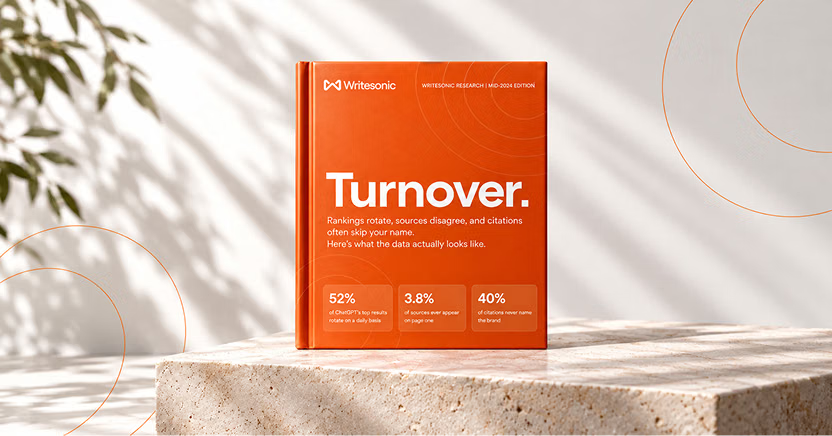
The #1 brand in ChatGPT changes 52% of the time.
Get the report and find out why.
Why AEO Is Exploding Right Now
Here’s why Answer Engine Optimization (AEO) is exploding and why brands that ignore it are already falling behind:
1. AI Is Changing Search Forever
Google AIOs, Bing Copilot, and Perplexity now provide direct answers using generative AI, which means more users get answers without ever clicking a link. These engines summarize, synthesize, and pull answers straight from authoritative content, not just whoever is #1 in classic SERPs.
For many queries, especially “how to,” “best,” or fact-based questions, users receive the answer immediately, along with sources cited, sometimes. (often as inline links or footnotes).
Writesonic’s own analysis: In a study of 1 million AI Overviews, 40.58% of AI citations come from Google’s Top 10 results. Authority and answer quality matter more than raw rank!
2. Zero-Click Searches Are the New Normal
Remember when a high Google ranking guaranteed traffic? Not anymore.
Today, more than 65% of searches end without a single click because users get their answer instantly on the results page.
This means if you aren’t the answer, you might as well be invisible. So, if you’re only optimizing for clicks, you’re missing out on where and how users actually consume info.
3. User Expectations Have Changed
Now, people want answers, not endless options.
No more users want to scroll through 10 different links, scan, and piece the information together. Gen Z and millennials expect search engines, chatbots, and virtual assistants to just give them what they need, instantly, accurately, and in context.
4. AI Trusts Authority, Not Just Rankings
AI-powered engines are trained to find credible, up-to-date, and well-structured answers, not just whatever sits at the top of the results.
That means clear, expert-backed, and structured content often surpasses bigger brands and older “top 10” results.
AEO is exploding because the search itself has changed. It’s no longer just about being found; it’s about being trusted, cited, and surfaced instantly by the algorithms and AI that shape modern discovery.
If you want your brand to be visible where people (and AI) are actually looking for answers, the time to start with AEO is now.
How to Optimize for AEO
Optimizing for AEO is about making your content easy for AI and answer engines to find, understand, and trust. Here’s how to get started:
1. Find Real User Questions: Start by discovering what your audience is actually asking. Use tools like Google’s People Also Ask, Answer the Public, or Writesonic to find genuine, frequently-asked questions. Don’t just focus on keywords, focus on intent.
2. Lead With Direct, Concise Answers: AEO rewards content that gets to the point. Begin your page or section with a clear 1–3 sentence answer to the main question, before diving into details. If possible, use bullet points, checklists, or tables to make information scannable and easy for AI to extract.
3. Add Structure for AI and Humans: Answer engines love content that’s well-organized. How you structure your content, how you use headings, short paragraphs, and lists. Also, add schema markup (FAQ, HowTo, Product) to your pages so AI and search engines can easily understand and cite your answers.
4. Showcase Expertise and Trust: Modern search engines and AI only want answers from trustworthy sources. Highlight your credentials, cite reputable sources, and update your content regularly to signal authority and freshness.
5. Write for Real Conversations: Answer engines mimic how people talk. Use a friendly, natural tone and address follow-up questions right on your page, just like you would in a chat or voice search.
6. Leverage Writesonic’s Generative Engine Tools: Scale your AEO efforts with Writesonic:
- Instantly generate Q&A sections
- Monitor where your content is cited in AI Overviews
- Get smart suggestions to keep content up to date
In short, AEO is about answering real questions, clearly and authoritatively, in a format both users and AI understand. With the right structure, tone, and automation, your content can be the answer that stands out everywhere.
How to Optimize for Both SEO & AEO: Actionable Strategies
Mastering both SEO and AEO doesn’t have to be overwhelming. Focus on these core tactics:
1. Lead with Answers: Start each section with a direct, clear answer; make it easy for both users and AI to find what matters.
2. Structure Smartly: Use FAQs, bullet points, and subheadings like “What is…” or “How to…” This format is favored by both search engines and answer engines.
3. Add Original Insights: Include fresh data, unique perspectives, or proprietary research. AI answer engines love citing original information.
4. Mark Up with Schema: Implement FAQ and HowTo schema to make your content machine-readable, boosting your chances of being cited.
5. Keep It Updated: Refresh your key pages regularly with the latest facts and insights, AI prioritizes current information.
Bonus:
Use Writesonic’s Generative Engine Tool to audit your content, optimize for AI readability, and track your citations. Blending these strategies helps you rank higher, get cited more, and stay visible as both SEO and AEO evolve.
What Makes Writesonic’s GEO Tool Stand Out
Writesonic’s Generative Engine Optimization (GEO) tool gives you a competitive edge in the world of AI-powered search. Here’s what sets it apart:
- Brand & Competitor Visibility: Instantly track how often your brand and your competitors appear in AI-generated answers across Google AI Overviews, ChatGPT, Bing Copilot, Perplexity, and more.
- AI Conversation Insights: See exactly how AI platforms describe and mention your business, products, and key topics so you can spot opportunities and fix messaging gaps.
- All-in-One Dashboard: Get a unified view of your brand’s presence, sentiment, and share of voice across every major AI assistant and generative platform, all in one place.
- Actionable Recommendations: GEO doesn’t just give you data, it offers clear guidance to improve your content, boost citations, and grow your authority in the age of answer engines.
With Writesonic, you’re not guessing. You’re tracking, optimizing, and owning your brand’s position across the future of search.
Get Ready for the AI Search Era With Writesonic
As search evolves from simple rankings to intelligent answers, the brands that win will be those who show up clearly and consistently in AI-generated results.
AEO is no longer optional; it’s essential. By combining smart strategy with tools like Writesonic, you can ensure your business isn’t just found, but featured wherever people (and AI) are looking for answers.
Ready to see your brand everywhere answers are given?
The #1 brand in ChatGPT changes 52% of the time.
Get the report and find out why.

Content Marketer
Pragati Gupta is a Content Marketer @Writesonic, specializing in AI, SEO, and strategic B2B writing. Leveraging the power of Generative AI, she produces high-impact content that drives superior ROI.