AI search is rewriting the rules of SEO. Traditional blue-link rankings are being replaced with direct answers, entity-driven citations, and AI summaries. In 2025, brand authority is quickly emerging as the most critical factor determining visibility, trust, and clicks.
But what is brand authority, and how does it compare to topical authority? And more importantly — how can you track it for AI-driven search results like Google’s SGE (AI Overviews), ChatGPT, and Perplexity?
This blog breaks it all down.
What is Brand Authority?
Brand authority refers to the overall trustworthiness, recognition, and influence that your brand has in the marketplace across multiple areas that LLMs refer to while mentioning or citing your brand in any of the AI answers. Unlike topical authority, brand authority isn’t limited to specific topics — it’s about your overall market standing and reputation.
Key components include:
- Overall brand recognition
- Consumer trust and loyalty
- Market influence and leadership
- Brand consistency across channels
- Quality of products/services
- Social proof and testimonials
On the other hand, topical authority is built by consistently producing high-quality, in-depth content on particular topics, answering key questions, and comprehensively covering related subtopics.
Brand Authority vs Topical Authority: Key Differences
While distinct, brand authority and topical authority have a symbiotic relationship:
- Growing your topical authority naturally contributes to your brand authority over time
- Strong brand authority makes it easier and quicker to establish topical authority in new areas
| Factor | Brand Authority | Topical Authority |
| Scope | Brand-wide | Topic-specific |
| Goal | Trust, recognition, influence | Expertise, content depth |
| Measured by | Mentions, citations, branded queries | Topical coverage, keyword rankings |
| Important for | AI search results, PR, Trust building | SEO rankings, content strategy |
| Examples | “Writesonic” cited by ChatGPT’s response | Writesonic ranking for “AI blog writer” keyword |
Why Brand Authority Matters More Than Ever
In short, topical authority helps you rank on Google, while brand authority helps you get cited by AI.
Generative AI tools like Google AI Overviews, ChatGPT, and Perplexity don’t just pull ranked URLs. They summarize trusted information and cite known entities. That means:
- A brand with high authority gets more citations, even if it doesn’t always rank #1.
- AI prioritizes trusted sources — those frequently mentioned, reviewed, and linked to.
- Brand trust = AI confidence = visibility in summaries and answers
For example: Perplexity might answer a query like “best AI tools for marketers” with:
“Writesonic, Jasper, and Copy.ai are top choices, according to reviews from TechRadar, G2, and Capterra.”
You don’t get there through keyword targeting; you get there through brand authority.
How to Track Brand Authority for AI Search
Measuring authority in the AI search landscape requires tracking both traditional metrics and new AI-specific indicators. Here are practical methods to monitor your brand authority:
1. Citation Tracking
What to track:
- Number of citations in AI search results
- Quality and context of citations
- Types of queries triggering your brand citations
- Competitor citation analysis
Tools and methods:
- Manual monitoring of AI search results for industry-relevant queries
- Citation tracking GEO tools like Writesonic
- Regular brand mention tracking across platforms
2. Brand Visibility in AI Overviews
What to track:
- Frequency of brand mentions in AI-generated summaries
- Sentiment analysis of how your brand is presented
- Position and prominence within AI overviews
Tools and methods:
- Regular searches for brand-related terms across AI search platforms
- Monitoring brand + product/service combinations
- Tracking changes after content or authority-building campaigns
3. Authority Metrics
What to track:
- Domain authority scores from tools like Writesonic SEO AI Audit tool
- Brand search volume trends
- Social media engagement and brand mentions
- Branded vs. non-branded traffic ratio
Tools and methods:
- SEO platforms with authority metrics
- Google Search Console for branded search analysis
- Social listening tools or Writesonic for brand mention monitoring
4. Content Performance Indicators
What to track:
- Content engagement metrics (time on page, bounce rate)
- Content sharing and amplification
- Content citation rates in responses with academic/professional contexts
- Coverage of your brand content by trusted publications and cited by AI
Tools and methods:
- Google Analytics for engagement metrics
- Content intelligence platforms
- Citation tracking via Writesonic
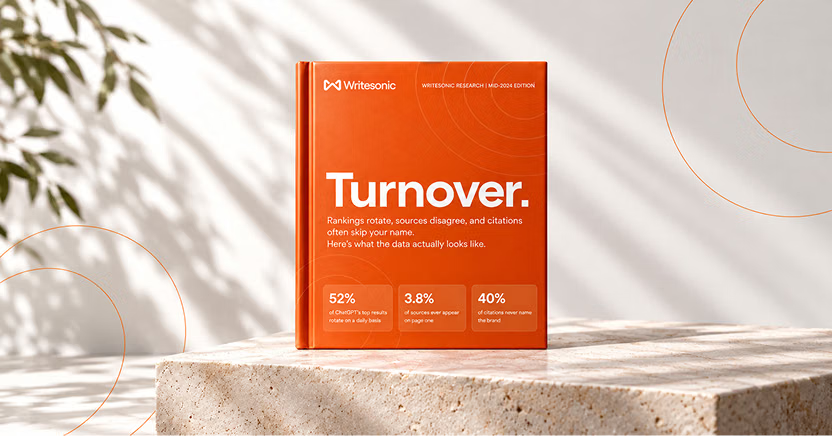
The #1 brand in ChatGPT changes 52% of the time.
Get the report and find out why.
Building Brand Authority for AI Search Success
1. Develop Thematic Content Clusters
Create interconnected content clusters that comprehensively explore various aspects of your core topics. AI search engines prioritize thematically connected content, also known as query fan-out, even when individual pieces don’t rank highly in traditional search.
- Identify core topics aligned with business goals
- Map subtopics and related questions
- Create pillar content and supporting cluster content
- Interlink related content with meaningful connections
- Update content regularly to maintain relevance
2. Focus on Comprehensive Topic Coverage
Move beyond keyword-focused content to develop genuine expertise that both users and search engines recognize:
- Address the complete user journey within each topic area
- Create content for awareness, consideration, decision, and retention stages
- Answer the “how, what, where” questions users might have before they ask
- Provide subject matter expertise and unique perspectives
3. Optimize for Citation-Worthiness
Make your content more likely to be cited by AI search engines:
- Position key information prominently (above the fold)
- Format content with clear, direct answers to specific questions
- Use authoritative data, research, and statistics
- Include quotable statements and concise definitions
- Structure content with clear headings that match common queries
4. Build External Authority Signals
Strengthen your brand authority through external validation:
- Earn high-quality backlinks from authoritative websites
- Secure mentions in industry publications
- Participate in thought leadership opportunities
- Collaborate with recognized experts in your field
- Obtain coverage in respected media outlets
Checklist to establish brand authority
- Earn quality citations: Get mentioned by authoritative media, blogs, influencers.
- Invest in PR and thought leadership: Publish on credible sites, speak at events.
- Be present in niche conversations: Reddit, Quora, Slack groups, YouTube, podcasts.
- Run branded campaigns: Promote content that makes people search for your brand.
- Claim your entity: Set up and optimize your Google Knowledge Panel.
- Get cited in AI engines: Use the Writesonic Tool to identify where you’re missing citations — and how to get them.
Writesonic: A Tool to Track Brand Authority for AI Search
Writesonic is the first-of-its-kind platform built to track how AI search engines perceive, cite, and recommend your brand.
Here’s how it works:
- AI Citation Tracking: GEO monitors your brand’s presence across major AI search platforms, tracking how often your brand is mentioned, in what context, and in response to which queries. It reveals when your brand is included or not in AI answers.
- Brand Visibility Score: GEO gives you a visibility score based on AI mentions, sentiment, frequency, and engine diversity. It helps benchmark your brand against competitors and track performance over time.
- Entity Recognition: GEO checks whether your brand is treated as a known entity by AI models. It tracks how confidently AI engines describe and recommend your brand, a strong indicator of trust and topical alignment.
- Missed Opportunity Alerts: The tool highlights queries where your competitors are getting cited but you’re not. This insight is gold for content strategy and digital PR; you’ll know exactly where you need to show up and why.
- Trend Analysis: Track AI mention trends over time to measure the effectiveness of content, campaigns, or PR pushes. See how specific actions increase brand inclusion across generative search engines.
- Actionable Optimization Tips: The GEO tool doesn’t just report data — it suggests what you can do to improve your brand authority. Whether that’s increasing citations or boosting mentions, GEO’s Action Center gives you the path forward.
Conclusion: Brand Authority is the New SEO
As generative engines replace traditional search, brand authority becomes the new currency. Unlike topical authority, which helps you rank, brand authority helps you get mentioned — even when no clickable results exist.
If your brand isn’t being cited by AI models, you’re losing visibility to competitors, even if your content is better. Start tracking your brand authority now, and use tools like Writesonic to own your visibility in the age of AI.
FAQs on Brand Authority
The #1 brand in ChatGPT changes 52% of the time.
Get the report and find out why.

Sumana Sarmah is a Content Writer @ Writesonic, with 5+ years of hands-on experience in B2B content writing and copywriting.
With a knack for creative brainstorming, she strategizes and curates impactful content that brings in exceptional engagement.