Promptwatch packs a lot of features into one tool. It tracks your brand across AI answers, reads your crawler logs, and writes content from citation data. For plenty of teams, that's enough.
Still, Promptwatch's entry plan only covers one site and 50 prompts. If you want city-level tracking, you need to upgrade to the pricey $579/mo plan.
Some teams shop for Promptwatch alternatives to get around these limitations. Others switch because they also want a tool that explains why they lost visibility before they take action.
If you've outgrown Promptwatch, check out this guide for alternatives compared side-by-side. You'll also find a cost-per-prompt comparison and a list of each tool's limitations so you can pick the best option for your team.
TL;DR
- Promptwatch is a capable all-in-one tracker. Teams usually leave because of site limits, response caps, gated content features, or limited city tracking.
- If your main goal is to track and boost AI visibility, Writesonic is the strongest pick.
- Peec AI fits teams that need a lot of seats, and Otterly.AI is one of the cheapest options.
- Semrush and Ahrefs users can track AI visibility with plan add-ons.
- Run 10-20 of your own prompts through two shortlisted tools before you cancel anything.
Why Teams Look For Promptwatch Alternatives (And When To Stay)
Every Promptwatch plan tracks your visibility, share of voice, and citations across seven engines, including:
Promptwatch has some nice features, but its plan limits are a big reason teams shop for alternatives.
Sites and prompts are tight on the entry plan
The Promptwatch Essential plan costs $95/mo, which includes 50 prompts and one site. Every plan now includes unlimited seats, but a second site or more prompts means upgrading to the Professional plan at $245/mo. The Business plan gives you five sites and 350 prompts for $579/mo.
Response caps grow with your prompt list
Each Promptwatch plan caps the number of AI responses per month. Essential allows 6,000 responses, Professional 18,000, and Business 42,000.
The problem is that if each engine's answer counts as one response, 50 prompts across 7 engines a day adds up to about 10,500 a month.
That's well over Essential's cap, so most teams have to upgrade to get any meaningful insights from Promptwatch. Tracking additional markets raises the cost even more.
Key features are only available on higher plans
Promptwatch's content writing and Agent Analytics features are only available starting on its Professional plan. If you want state and city tracking, Shopping Insights, and hourly tracking, you'll need the Business plan. Promptwatch is certainly not a budget pick, making it inaccessible for teams with fewer resources.
It writes content before diagnosis
Promptwatch's content agents look at which pages AI engines cite for your tracked prompts. They use that data to draft new articles or refresh your existing pages, which is helpful. The problem is that most teams want to know which page, source, or competitor cost them a prompt before they publish something new. Promptwatch doesn't do that, so you're missing out on a lot of insights if this is your only AI visibility tool.
When to stay with Promptwatch
- There are plenty of reasons to switch from Promptwatch, but it may be worth sticking with the platform if: You want crawler logs, citations, and clicks in one view. Its Agent Analytics combines all three per topic.
- You only monitor the seven engines included on the cheapest Promptwatch plan.
- You want content agents that publish straight to WordPress, Webflow, or Framer.
- You need city-level tracking and can justify the $579/mo Business plan.
Look, if it isn't broken, don't fix it. Promptwatch might be enough for your team, and that's okay. But if you're noticing gaps in your AI visibility strategy or the platform has priced you out of its better features, it's time to shop around.
The 13 Best Promptwatch Alternatives
Here's how the alternatives compare with Promptwatch at a glance. Prices are for entry-level plans as of November 2026.
| Tool | Best for | Engines on entry plan | Data collection | Seats on entry plan | Action or content layer | Starting price |
|---|---|---|---|---|---|---|
| Promptwatch | All-in-one tracking plus content | 7 | UI scraping | Unlimited | Content agents from Professional | $95/mo |
| Writesonic | Tracking and acting on AI visibility | 3 | Web interface | 1 | Action Center, agentic workflows, outreach recommendations | $79/mo (billed annually) |
| Profound | Enterprise brands | Up to 10 | Browser interfaces | Unlimited | Agents, AI Marketer | Custom |
| Peec AI | Teams that need many seats | 3 | UI scraping | Unlimited | Not listed | ~$95/mo |
| AthenaHQ | Wide engine coverage | 11 | Not disclosed | Unlimited | Content optimization agent | $295/mo |
| Scrunch | Technical teams and AI agents | 8 | Browser and API mix | 5 | Agent Experience Platform | $250/mo |
| AirOps | Content operations teams | ChatGPT only | Not disclosed | 1 | Content workflows and agents | Free Solo plan; Pro pricing not listed |
| Searchable | Teams wanting audits and content | 3 | Not disclosed | Unlimited | Agent, audits, articles | $100/mo (billed annually) |
| Otterly.AI | Small budgets | 4 | Web interfaces | Unlimited | Recommendations, GEO audits | ~$32/mo (€29) |
| LLMrefs | Agencies and SEO teams | 9 | Not disclosed | Unlimited | Weekly reports, free tools | $79/mo |
| ZipTie | Pay-as-you-go tracking | 7 | Not disclosed | Unlimited | Content add-on | From $25.65/mo |
| Promptmonitor | Citation outreach | 3 | Not disclosed | 1 | Publisher contacts | $39/mo |
| Semrush AI Visibility Toolkit | Existing Semrush users | 4 | Not disclosed | Per Semrush plan | AI search site audit | $99/mo per domain |
| Ahrefs Brand Radar | Existing Ahrefs users | 6 | Keyword-based prompt index | Per Ahrefs plan | None | From $199/mo |
How we evaluated these tools
We compared these AI visibility tools based on six factors:
- Engine coverage
- Prompt-level depth
- Citation insights
- Action workflows
- Location tracking
- Pricing at realistic prompt volumes
We also compared tools by data collection method, which matters more than you might expect. A Surfer data study found brand overlap between API answers and scraped consumer answers was only 15.5-23.8%. A tool that reads the interface your buyers see is closer to what actually displays. Because of that, we ranked platforms that collect interface data more highly.
1. Writesonic
Category: AI visibility platform with built-in actions
Writesonic tracks how AI engines mention, cite, and describe your brand. It then ranks the fixes most likely to win back lost prompts. You can drill into any single prompt to see the full answer, the brands named, and the sources cited, too.
The Action Center turns those gaps into a to-do list rated by impact and effort. It flags third-party pages that cite competitors but not you, plus robots.txt and indexing issues that keep AI crawlers out. Agentic workflows can then draft new content, refresh existing pages, and find author contacts for outreach, with AI articles included on every paid plan.
Enterprise unlocks the full Action Center, custom regions and languages, all 10 engines, real-time alerts, and SOC 2 Type II, HIPAA, GDPR, and SSO support.
- Engines tracked: ChatGPT, Gemini, and Google AI Overviews on self-serve plans. Enterprise covers 10, adding Perplexity, Claude, Grok, Google AI Mode, Muse Spark, Microsoft Copilot, and Meta AI.
- How it collects answers: It crawls each engine's web interface like a real user. It doesn't rely on APIs.
- Best for: Teams whose main goal is tracking AI visibility and acting on what they find.
- Notable feature: The Action Center ranks content, citation, and technical fixes by impact and effort.
- Limitation: Self-serve plans cover 3 engines. Sentiment and the Action Center start on the Growth plan.
- Pricing: Starter costs $79/mo billed annually for 50 prompts. Basic is $199/mo (100 prompts), Growth is $399/mo (200 prompts), and Enterprise is custom.
- Vs. Promptwatch: Promptwatch's entry plan covers more engines (7 vs. 3), but Writesonic Enterprise tracks 10, more than any Promptwatch plan. Writesonic also goes deeper on prompt-level diagnosis and ranked fixes.
2. Profound
Category: Enterprise AI visibility platform
Profound is built for large brands with the budget for a sales-led contract. It runs prompts daily through each engine's front-end interface. It also sells Prompt Volumes data based on what people ask AI.
- Engines tracked: The Enterprise plan covers up to 10 AI engines, including ChatGPT, Perplexity, AI Mode, Gemini, DeepSeek, Claude, Muse Spark, Qwen, and Exa Search.
- How it collects answers: User-facing browser interfaces.
- Best for: Enterprises that need single sign-on (SSO), SOC 2 compliance, and broader AI engine coverage.
- Notable feature: Agent Analytics shows how AI bots crawl, cite, and refer visitors to your site.
- Limitation: There's no published price or self-serve plan for brands, so you'll need a sales call to get started.
- Pricing: Custom Enterprise pricing only. Profound retired its Starter and Growth plans for brands in September 2026.
- Vs. Promptwatch: Profound is more expensive than Promptwatch and has less predictable pricing. However, it supports enterprise-grade compliance and can scale up with large businesses.
Still, Profound has its pros and cons. Our roundup of Profound alternatives covers its tradeoffs in more depth.
3. Peec AI
Category: Self-serve AI visibility tracker for marketing teams
Peec AI is a clean tracker that's popular with in-house teams. It scrapes engine interfaces as a logged-out user would and refreshes daily.
- Engines tracked: Pick 3 from ChatGPT, AI Mode, AI Overviews, Copilot, Gemini, and Naver AI. Perplexity is a paid add-on.
- How it collects answers: UI scraping.
- Best for: Teams that need a lot of collaborators without paying per seat.
- Notable feature: Unlimited users on every plan, plus country and language tracking at no extra cost.
- Limitation: You can only pick 3 engines per plan, and adding Perplexity costs extra.
- Pricing: About $95/mo for 50 prompts, according to GetApp. Pro is about $245/mo (150 prompts), and Advanced is about $495/mo (350 prompts).
- Vs. Promptwatch: Peec matches Promptwatch's entry price and unlimited seats, but it covers fewer engines per plan.
4. AthenaHQ
Category: Credit-based AI visibility platform
AthenaHQ bills by credits, where one credit equals one AI response. It pairs tracking with on-page and off-page actions to help boost your visibility.
- Engines tracked: Starter covers 11, including ChatGPT, Perplexity, AI Overviews, AI Mode, Gemini, Claude, Copilot, Grok, DeepSeek, Meta AI, and Mistral.
- How it collects answers: Not disclosed.
- Best for: Teams that want the most AI engine coverage on a self-serve plan.
- Notable feature: AthenaHQ's native GA4 and Google Search Console integrations can help you tie AI visibility to traffic.
- Limitation: It has more engines and prompts, but that means it burns through credits faster. With a realistic workload, that means higher costs than its advertised price.
- Pricing: A free Essential plan includes 300 credits. Starter costs $295/mo for 3,600 credits, and Enterprise is custom.
- Vs. Promptwatch: AthenaHQ covers more engines, but it costs roughly three times more than Promptwatch's entry plan.
5. Scrunch
Category: AI visibility plus AI agent experience
Scrunch tracks AI visibility and helps you get your website AI-ready. It sources data through a mix of automated browser sessions and official APIs, depending on the engine.
- Engines tracked: The Core plan covers ChatGPT, Perplexity, Gemini, Google AI Overviews, Google AI Mode, Microsoft Copilot, Grok, and Meta AI. Claude is an Enterprise add-on.
- How it collects answers: A mix of browser sessions and APIs.
- Best for: Technical teams that want to control how AI crawlers read their site.
- Notable feature: The Agent Experience Platform serves an AI-friendly version of your pages to agents.
- Limitation: Claude tracking is only available as an add-on on the Enterprise plan.
- Pricing: The Core plan costs $250/mo for 15,000 AI responses a month and 5 seats. Enterprise is custom.
- Vs. Promptwatch: Scrunch costs about the same as Promptwatch's Professional plan and adds AI agent tools. Its plan includes fewer responses, though (15,000 vs. 18,000).
6. AirOps
Category: Content operations platform with AI visibility insights
AirOps is a content workflow platform with AI visibility features tacked on. Its Insights layer tracks visibility, citations, and sentiment, then uses agents to write and refresh your pages.
- Engines tracked: The Solo plan covers ChatGPT only, but the Pro plan covers 10+ answer engines.
- How it collects answers: Not disclosed.
- Best for: Content teams that want to feed tracking directly into their publishing workflows.
- Notable feature: Agents route all content to an Inbox for human review before pushing content live.
- Limitation: It takes time to learn AirOps. Richard, an SEO and AEO strategist, wrote on G2 that it "has a steep learning curve, and it is not a plug and play [solution]."
- Pricing: Solo is free with 35,000 tasks. Pro and Enterprise prices aren't listed.
- Vs. Promptwatch: AirOps offers far more content automation. However, the company doesn't share its pricing publicly, so pricing is harder to predict.
7. Searchable
Category: AI visibility platform with audits and content
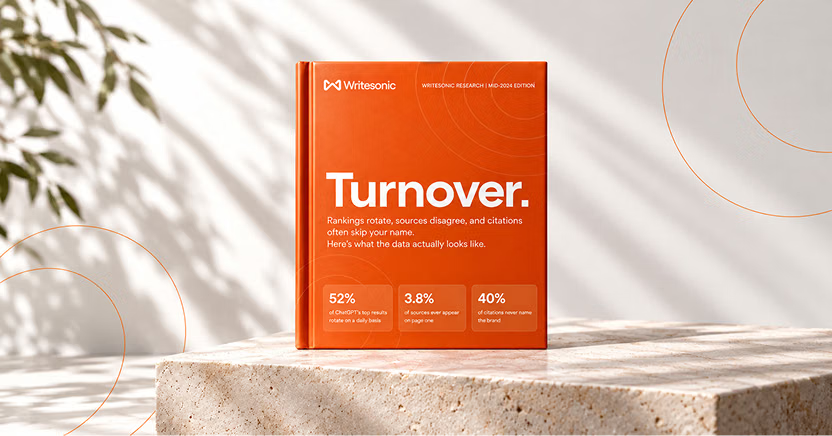
The #1 brand in ChatGPT changes 52% of the time.
Get the report and find out why.
Searchable combines tracking with technical audits and a content engine. It also connects to Google Analytics, Search Console, HubSpot, and Salesforce.
- Engines tracked: ChatGPT, Google AI Overviews, and Perplexity are included on every plan. AI Mode, Copilot, DeepSeek, Gemini, Claude, Grok, and Meta are paid add-ons.
- How it collects answers: Not disclosed.
- Best for: In-house teams that want audits, articles, and tracking in one subscription.
- Notable feature: The Pro plan includes 20 articles and 200 audits per month, plus unlimited seats.
- Limitation: Most engines beyond the first three cost extra.
- Pricing: Pro costs $100/mo billed annually for 100 prompts per model. Scale is $320/mo billed annually, and Enterprise is $799/mo billed annually.
- Vs. Promptwatch: While its plans cover fewer default engines than Promptwatch, Searchable adds 20 articles and 200 audits a month at a similar price.
8. Otterly.AI
Category: Budget AI visibility tracker
Otterly.AI is one of the cheapest ways to start tracking your AI visibility. It reads public web interfaces for most engines and uses an API to monitor Claude.
- Engines tracked: Each self-serve plan tracks 4 of 7 AI engines, and every check uses credits. A Claude check costs 3 credits.
- How it collects answers: Public web interfaces, except Claude, which it collects via API.
- Best for: Small teams and solo marketers that want to start monitoring AI visibility.
- Notable feature: Unlimited team members are included on every plan, including Lite.
- Limitation: Lite includes only 16 prompts, and you can't buy extra credits on that plan.
- Pricing: Lite costs ~$32/mo (€29) for 16 prompts, Standard ~$208/mo (€189) for 120 prompts, and Premium ~$537/mo (€489) for 403 prompts.
- Vs. Promptwatch: Otterly is one of the cheapest Promptwatch alternatives. It tracks fewer engines per plan than Promptwatch, but it's still a decent starting point if you're new to monitoring AI visibility.
9. LLMrefs
Category: Keyword-based AI rank tracker
LLMrefs starts with keywords, which is the way traditional SEO teams already work. This platform takes your keywords to report mentions, citations, and fan-out queries.
- Engines tracked: ChatGPT, AI Overviews, AI Mode, Gemini, Perplexity, Claude, Grok, Copilot, and Meta.
- How it collects answers: Not disclosed.
- Best for: Agencies managing several domains on one budget.
- Notable feature: Unlimited projects and team members under one subscription.
- Limitation: Reports refresh weekly instead of daily.
- Pricing: Its All in One plan is $79/mo. A 7-day free trial is available.
- Vs. Promptwatch: LLMrefs covers more engines for less money. In exchange, you get weekly reports instead of daily data.
10. ZipTie
Category: Usage-based AI visibility tracker
ZipTie monitors your brand's citations, mentions, and AI sentiment across multiple AI engines. With this platform, you pay per check, where one prompt on one engine costs $0.01.
- Engines tracked: ChatGPT, AI Overviews, Perplexity, AI Mode, Copilot, Bing AI Overview, and Gemini.
- How it collects answers: Not disclosed.
- Best for: Teams that want to set their own mix of prompts, engines, and refresh rates.
- Notable feature: It shows Google and Bing organic results next to AI Overviews.
- Limitation: ZipTie's usage-based pricing makes monthly costs hard to predict. Content generation is also an add-on.
- Pricing: Presets start from $25.65/mo. Tracking 50 daily, 300 weekly, and 1,000 monthly prompts across all 7 engines runs $184.76/mo paid annually.
- Vs. Promptwatch: ZipTie tracks the same engines as Promptwatch, but at a lower cost. The downside is that its content tools aren't included and require a paid add-on.
11. Promptmonitor
Category: Low-cost tracker with outreach data
Promptmonitor is a budget tracker built around earning citations. It can even pull the contact details for the publishers AI engines cite, which can speed up manual outreach.
- Engines tracked: The Starter plan covers ChatGPT, Gemini, and Perplexity. The Growth plan adds Claude and DeepSeek.
- How it collects answers: Not disclosed.
- Best for: Teams that plan to win citations through outreach.
- Notable feature: Promptmonitor provides publisher contact extraction on every plan.
- Limitation: The Starter plan only checks prompts twice a week.
- Pricing: Starter costs $39/mo (25 prompts), Growth $79/mo (50 prompts), and Pro $149/mo (150 prompts).
- Vs. Promptwatch: Promptmonitor is cheaper and better for outreach, but lighter on analytics.
12. Semrush AI Visibility Toolkit
Category: AI visibility add-on inside an SEO suite
The Semrush AI Visibility Toolkit adds AI tracking to the Semrush suite. It includes an AI Visibility Score, prompt research, and brand performance reports.
- Engines tracked: Daily tracking on ChatGPT, AI Mode, AI Overviews, and Gemini. Weekly brand reports add Perplexity.
- How it collects answers: Not disclosed.
- Best for: Teams that already have a Semrush subscription.
- Notable feature: Its AI search site audit flags issues on your site that block AI crawlers.
- Limitation: Brand Performance covers one domain and one location, and Semrush picks the competitors for you.
- Pricing: $99/mo per domain for 25 prompts. You'll have to pay $60/mo extra for an additional 50 prompts.
- Vs. Promptwatch: It's convenient for Semrush users, but costs more per prompt.
13. Ahrefs Brand Radar
Category: AI visibility index built on search data
Ahrefs Brand Radar works differently from prompt trackers. It builds an index of more than 462 million prompts from Ahrefs keyword data and tests them across AI engines.
- Engines tracked: AI Overviews, AI Mode, ChatGPT, Perplexity, Gemini, and Copilot. Claude is available for custom prompts.
- How it collects answers: A prompt index modeled from search keywords, re-tested monthly.
- Best for: Ahrefs users who want market-wide AI share of voice.
- Notable feature: Its 462 million-prompt index shows market-wide share of voice without a custom prompt list.
- Limitation: Index prompts come from keywords instead of your own prompt list. The index refreshes monthly, so you don't have the freshest data.
- Pricing: From $199/mo, or $699/mo for all platforms. Custom prompts start at $50/mo.
- Vs. Promptwatch: Brand Radar is better for market research, but it only refreshes its data monthly. Promptwatch, on the other hand, tracks your own prompts daily.
How To Choose The Right Promptwatch Alternative
Start with your own needs before you compare feature lists. Answer these questions to find the best alternative for your team:
- How many prompts and markets do you need? If you're tracking one market, you may be able to get away with just 50 prompts. But if your brand is in five countries, you may need 500+.
- How many people need access? Seat limits matter more than you might think. Some tools cap users by plan, while others, like Promptwatch and Peec AI, include unlimited seats.
- Which engines do your buyers use? ChatGPT has 900 million weekly users, so start there and add other engines as needed.
- Do you need monitoring or fixes? Some tools only report issues with your AI visibility. Others tell you what to change and even help you execute fixes.
Pick by scenario
Only you can decide which AI visibility tool will best fit your team's workflow. Still, you can narrow down your options by choosing a tool designed for businesses like yours:
- Agencies managing many clients: LLMrefs or ZipTie, for unlimited projects and seats.
- Enterprises with compliance needs: Profound or Writesonic Enterprise. Both are SOC 2 compliant, too.
- Semrush or Ahrefs users: If you already have the subscription, an add-on might make sense.
- Tight budgets: Otterly.AI or Promptmonitor.
- Teams that need to fix gaps, not just find them: Writesonic.
Compare cost per prompt at your volume
Entry-plan pricing can make AI visibility software look more affordable than it is, so compare tools by calculating cost per prompt. For example, here's a cost breakdown of how much you'll pay per 150 prompts with different tools:
| Tool | Plan | Prompts | Monthly cost | Cost per prompt |
|---|---|---|---|---|
| Promptwatch | Professional | 150 | $245 | $1.63 |
| Promptmonitor | Pro | 150 | $149 | $0.99 |
| Writesonic | Growth (annual) | 200 | $399 | $2.00 |
| Semrush AI Visibility Toolkit | Base plus 3 add-ons | 175 | $279 | $1.59 |
Of course, this is still a simplification. Cost per prompt tells you nothing about a platform's other features and the value it delivers. For example, Writesonic's plan is $2/prompt, but you also get:
- Sentiment tracking
- 50 AI articles
- Action Center tasks
That's a lot more value than the cheapest option on the list, Promptmonitor.
Engine counts and refresh rates differ too, so cost per prompt is just one consideration. After all, a cheap prompt checked weekly on three engines tells you less than one checked daily across seven engines.
Test before you switch
Don't cancel your Promptwatch subscription just yet. Before you switch, pick your two favorite alternative tools and test them against each other.
Run 10-20 of your own prompts through these tools for a week. Compare the results with a manual check in ChatGPT. The answers will vary a lot between runs, so check a few times.
SparkToro research found that the odds of getting the same brand list twice were under 1 in 100. Visibility rate across many runs is a more reliable signal than any single answer.
Before you cancel Promptwatch, export your prompt lists and history. Then run both tools side by side for 2-4 weeks so you don't lose your trend data. Our guide on how to identify prompts to track can help you rebuild your list.
Get Noticed With Writesonic
If you're leaving Promptwatch, you have good reasons for doing so. Still, a lot of alternative tools have the same gap as Promptwatch: they tell you where you're falling short in AI search, but they don't tell you what to do next.
Writesonic is different. It explains the why behind each prompt, showing you the full answer, every brand mentioned, and every source cited. It even breaks brand sentiment down by theme, competitor, and model, so you can see what AI says about you and where.
Visibility data is just one side of the coin. What sets Writesonic apart is its Action Center, which turns your visibility gaps into a prioritized to-do list. It flags third-party pages that cite competitors but not you, content gaps on your own site, and technical issues that block AI crawlers.
You don't have to fix everything yourself, either. Writesonic's agentic workflows can draft content or find author contacts for outreach. If you're considering switching from Promptwatch, compare the two side by side in our Writesonic vs. Promptwatch breakdown.
Or, if you're ready to see the difference firsthand, run your own prompts in Writesonic: Start your free trial now.
FAQ
What is Promptwatch, and how much does it cost?
Promptwatch is an AI visibility platform that tracks how AI engines mention and cite your brand. It also offers crawler analytics and content agents. Plans start at $95/mo for 50 prompts and one site, with advanced tiers costing $245/mo and $579/mo.
Which Promptwatch alternative is best for agencies?
LLMrefs and ZipTie both include unlimited projects and seats. But if you serve clients in multiple markets, Writesonic's Enterprise plan also gives you access to custom prompts, regions, and languages.
Are there free or low-cost Promptwatch alternatives?
Yes. AthenaHQ has a free Essential plan with 300 credits, and AirOps Solo is free with ChatGPT-only insights. Otterly.AI starts at about $32/mo (€29) and Promptmonitor at $39/mo.
Do Promptwatch alternatives include content generation?
Some do. Writesonic, Searchable, AirOps, and AthenaHQ include content tools.
How is AI visibility tracking different from traditional rank tracking?
Rank tracking checks where a page ranks for a keyword. AI visibility tracking checks whether an AI answer mentions or cites your brand when a user prompts an AI engine. AI answers change from run to run, so these tools measure how often you appear over time.
Can I use more than one AI visibility tool at the same time?
Yes, and it's smart to use multiple tools if you plan to switch. Running two tools side by side for a few weeks helps you compare data and keep your trend line intact.
The #1 brand in ChatGPT changes 52% of the time.
Get the report and find out why.

Director of Growth Marketing
Cody Slingerland is the Director of Growth Marketing at Writesonic. He leads SEO and AI search (AEO) strategy. He has over 12 years of search experience, helping companies like Zapier, Instapage, Nutshell, CloudZero, and others improve their visibility and position in organic search.