I've been at Writesonic for about three months now. What have I learned? One, we ship fast. Two, I will never, ever be caught up on the changelog. So I’m going to do what any marketer does when they’re behind. Write a blog post about it.
TL;DR. A year ago, AI search visibility tools answered: how often do you show up?
Still a good question. But our customers have started asking harder questions...
"What is AI saying about us? Is it true? Where did it get that idea?"
Today, we're shipping the answers: Fact Check, Sentiment (rebuilt), Citation Decay, Social citations. Along with a new interface, rebuilt Shopping visibility, and our first agent, Outreach, designed to make outreach easy.
Sam's writing about why it matters. I'm here to tell you what we actually shipped, feature by feature. And what you can do with it starting today.
Fact Check. See where AI confidently gets you wrong.
Somewhere, AI is wrong about your brand. Not always maliciously. It just read an old page and thought it was true. Stale pricing. A retired positioning line from two years ago. A feature you don’t sell anymore.
I know because it happened to us. Go ask some AI engines what Writesonic is. Some will still say we’re a content writing tool. We’re past that. But the internet doesn’t seem to have fully caught up.
Fact Check helps you see the claims AI is making about your brand that are wrong. Then it does the cool part. It traces each claim back to the page AI cited. So you don’t just know AI is wrong. You know which page it learned it from.
Rebuilt Sentiment. See if AI actually likes you.
Visibility means AI mentions you. Sentiment means AI believes about you. Different questions. First thing a CEO wants to know is if you’re showing up in AI engines. Second is what they’re saying about you.
We rebuilt Sentiment from the ground up. It now shows you how AI talks about your brand. By platform. By topic. See the positive and negative terms that are coming up most.
Maybe ChatGPT thinks you’re “reliable but pricey.” Maybe Google AI Overviews thinks you’re “great for small companies but not for enterprise.” Now you can see both. Side by side.
And the part I’m most excited about. The new sentiment view. Sentiment now traces each negative claim to the exact cited page and exact cited passage. Not "somewhere on Reddit."
Citation Decay. Citations aren't permanent.
Here's something you don't know when you start doing GEO. Getting a citation isn't the end. Pages that get a citation can lose it in weeks. And our research shows that no two AI engines agree on more than 24% of the sources they cite. So a page might decay on one engine but still be going strong on another.
Citation Decay gives every page AI cites a momentum status. You can toggle by status. By platform. By topic.
The two statuses that matter most:
- Faded. Page used to get citations, but doesn’t now. Priority refresh.
- Rising. Page is getting citations now.
If it’s a competitor page, prioritize your take. If it’s a creator or forum thread. Get in early before everyone else catches on.
This one started as a customer ask at brightonSEO San Diego. A customer told us what she needed. The team built it. Current customers have had this since September. Today it’s public. Credit where credit is due. This is as much our customers' feature as it is ours.
Social citations. AI is watching YouTube. You should be too.
We studied 2,000 brands. Brands mentioned on YouTube or Reddit were over 3x more likely to show up in an AI answer. Mention on your own website? 1.3x. Your website is important. But it’s arguably not the most important thing.
So we added a Social Media section under Citations. A page for YouTube. For LinkedIn. For Reddit. Personally, I’m most excited about YouTube. YouTube citations show which channels AI cites in your category. Which ones cite you. Which ones don’t. Which creators are cited most. You get engagement metrics and creator metrics. To help you prioritize outreach. Same for LinkedIn. Same for Reddit.
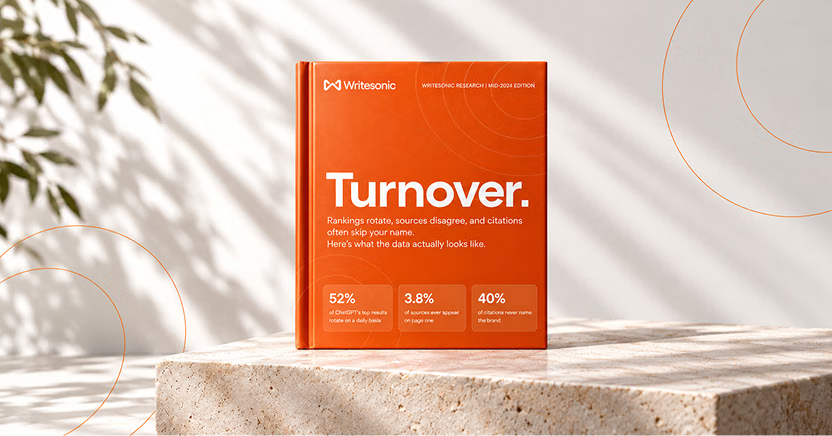
The #1 brand in ChatGPT changes 52% of the time.
Get the report and find out why.
Outreach Agent. Now, do something about it.
So you've got visibility. You know what's being said about you, and which page it came from. Now what?
Here's the problem with off-page work: you don't own the page. A wrong claim about you might live on a blogger's comparison post, a review site, or a YouTube video from 2023. Fixing it means tracking down a human, writing a thoughtful email, following up, and remembering who replied. For one page, that's an afternoon. For forty, it's a job nobody has time for. The Action Center already shows you which pages are worth that effort.
Outreach is the agent built for exactly that. It finds the author of the cited page, drafts a personalized email, sends it from within the platform, and flags the replies.
And the part I care most about: you stay involved the whole way. Tweak any message, approve each send one by one, or bulk select and let it run. The agent does the heavy lifting. You bring the humanity.
We rebuilt Writesonic as a platform where agents and people work together, and Outreach is the first of them. A first agent should do real work on day one, not demo well and then disappear.
Outreach Agent is an add-on. Request access in the platform and we'll get you set up.
Rebuilt Shopping. Down to the SKU.
AI is now a storefront.
So we rebuilt Shopping. Now we can show you how your products show up in AI shopping answers. Down to the SKU. With merchant-level data. And we know the difference between a brand selling their own products vs. a marketplace selling everyone else’s products.
That distinction matters, because the two get very different answers from AI. A brand wants to know how often the buy link points to its own site. A marketplace wants to know which of its listings AI surfaces, and where it ranks against the other places to buy. The rebuilt Shopping view covers both.
New look. Nothing removed.
I onboarded to Writesonic a few months ago, took lots of notes on the process. It’s so much easier now to get started day one in our platform. You can get started in minutes. Or fully set up in an afternoon.
No services retainer. No three-month onboarding to find out what ChatGPT thinks of you. I’ve sat through those onboardings. I’d rather you didn’t.
If you’re an existing customer, nothing’s been removed. And we’ve made your most common workflows easier.
The sidebar now follows the way the work actually goes:
- See. Visibility, with the Overview as your default home screen.
- Act. The Action Center, right alongside it.
- Share. Reports.
Who gets what starting today.
| Feature | Available | Current Enterprise Customers |
|---|---|---|
| Fact Check | Today | Included |
| Sentiment (rebuilt) | Today | Included |
| Citation Decay | Today | Included |
| Social citations | Today | Included |
| Shopping (rebuilt) | Today | Included |
| New interface and onboarding | Today | Nothing removed |
| Outreach Agent | Request access in the platform | Available on request |
See what AI says about you.
That’s it. Five ways to see what AI thinks about your brand. One agent to help change it. And a cleaner place to do the work.
I’ll be honest. 11 weeks in, this is exactly what I was hoping we’d ship. Not because it’s a long list of features. But because each one started as a customer or internal need.
If you're a customer, log in. It's all there. If not, start a trial and see for yourself. I'm confident you'll discover something new about your brand or your clients.
If AI gets you wrong, we'll help you get it right.
Shef Reynolds, VP of Marketing, Writesonic
Our founder Sam Garg wrote about why this matters, and what a year of customer questions taught us about building it: See what AI says about you. Change what it says next.
The #1 brand in ChatGPT changes 52% of the time.
Get the report and find out why.

VP of Marketing
Sheffield Reynolds is VP of Marketing at Writesonic, where he leads marketing for the platform 10,000+ brands and agencies use to see and change what AI says about them.